A low pH reading can make a pool owner want to fix the number immediately. That instinct is understandable. Water that feels uncomfortable, looks off, or will not hold a reading can quickly turn a calm afternoon into a shopping list. But pH is part of a larger water-balance picture. Adding a large amount of product before you confirm the test, check circulation, and look at total alkalinity can turn one low number into a second problem.
The careful approach is less dramatic and far more useful: take a fresh sample, confirm the reading, check the surrounding conditions, use a pool-specific pH increaser according to its current label, let the water circulate, and retest before deciding whether it needs another small correction. It is not exciting. Neither is fixing a pool twice because the first dose overshot.
This guide explains how to raise pH in a residential pool without treating a strip colour or a single test result as the whole story. It is for ordinary water-balance adjustments, not chemical spills, severe symptoms, contamination, or equipment failure. Those situations need qualified help before anyone gets back in the water.
Know what a low pH reading can mean
pH describes how acidic or alkaline the water is at the moment. In pool care, it matters because it can affect swimmer comfort, the way other treatment choices perform, and how the water behaves around surfaces and equipment. A low reading is a reason to pay attention, but it is not a diagnosis by itself. It does not automatically explain every case of cloudy water, eye irritation, rough surfaces, or a pool that seems difficult to maintain.
Start by looking at what changed. Heavy rain, a partial drain and refill, repeated use of an acid product, a recent water-balance adjustment, unusual swimmer use, fresh source water, or a change in circulation can all add context. If the pool has been through several changes in a short period, write them down. A brief note is enough. You are trying to avoid treating the latest number as though it appeared from nowhere.
The CDC's guidance for home pool treatment and testing is a helpful reminder that water care starts with routine testing and appropriate treatment, not with appearance alone. If the water is cloudy, harsh, causing symptoms, or has an unusually strong odour, keep swimmers out while you work out what the full test and the equipment are telling you.
Low pH and low total alkalinity often travel together, but they are not the same reading and they are not always corrected the same way. Total alkalinity helps resist sudden pH movement. A pool can have low pH with normal alkalinity, low alkalinity with pH that keeps moving, or a wider issue that needs a professional test. That is why a one-number fix can become a loop.
1. Confirm the pH reading before adding anything
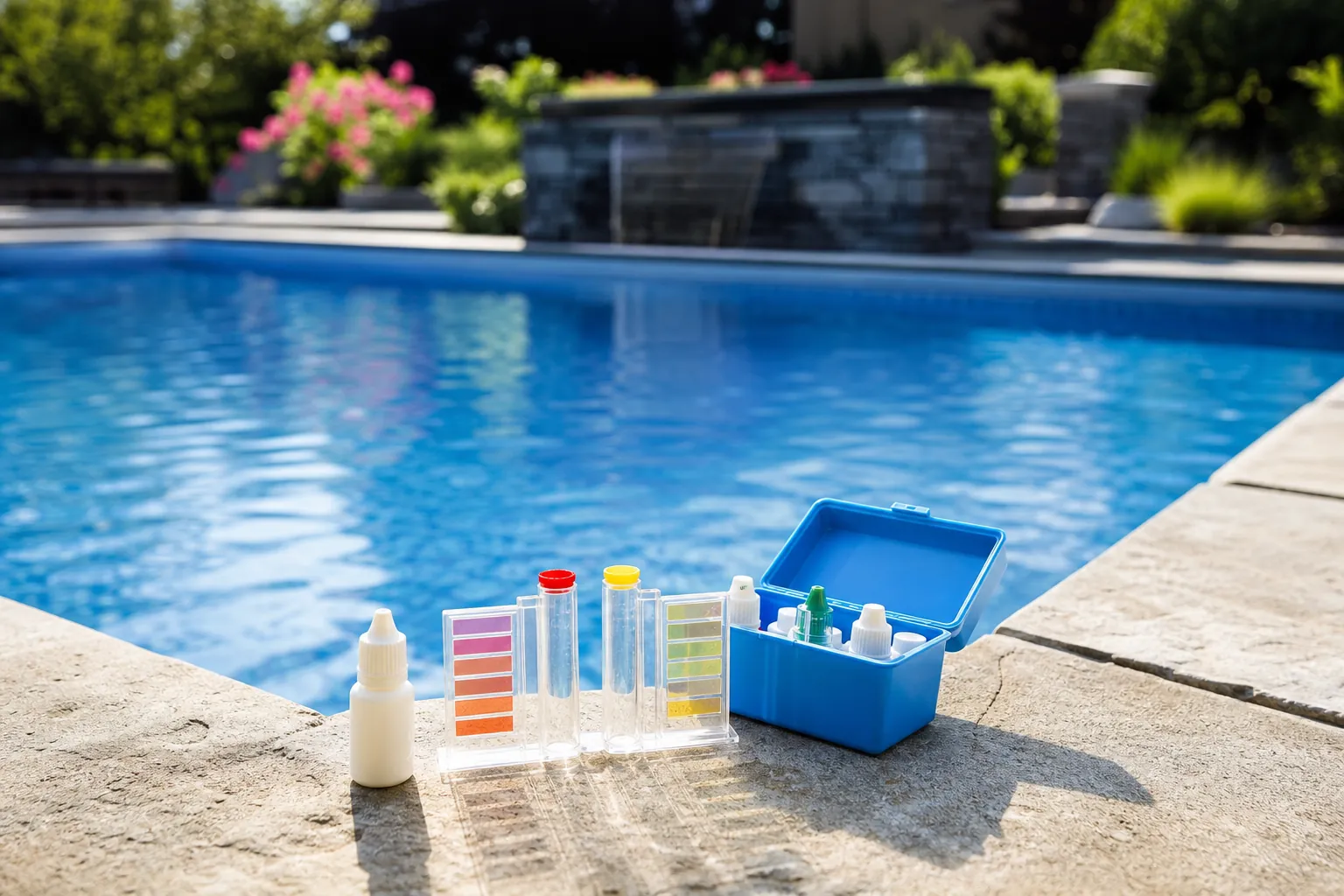
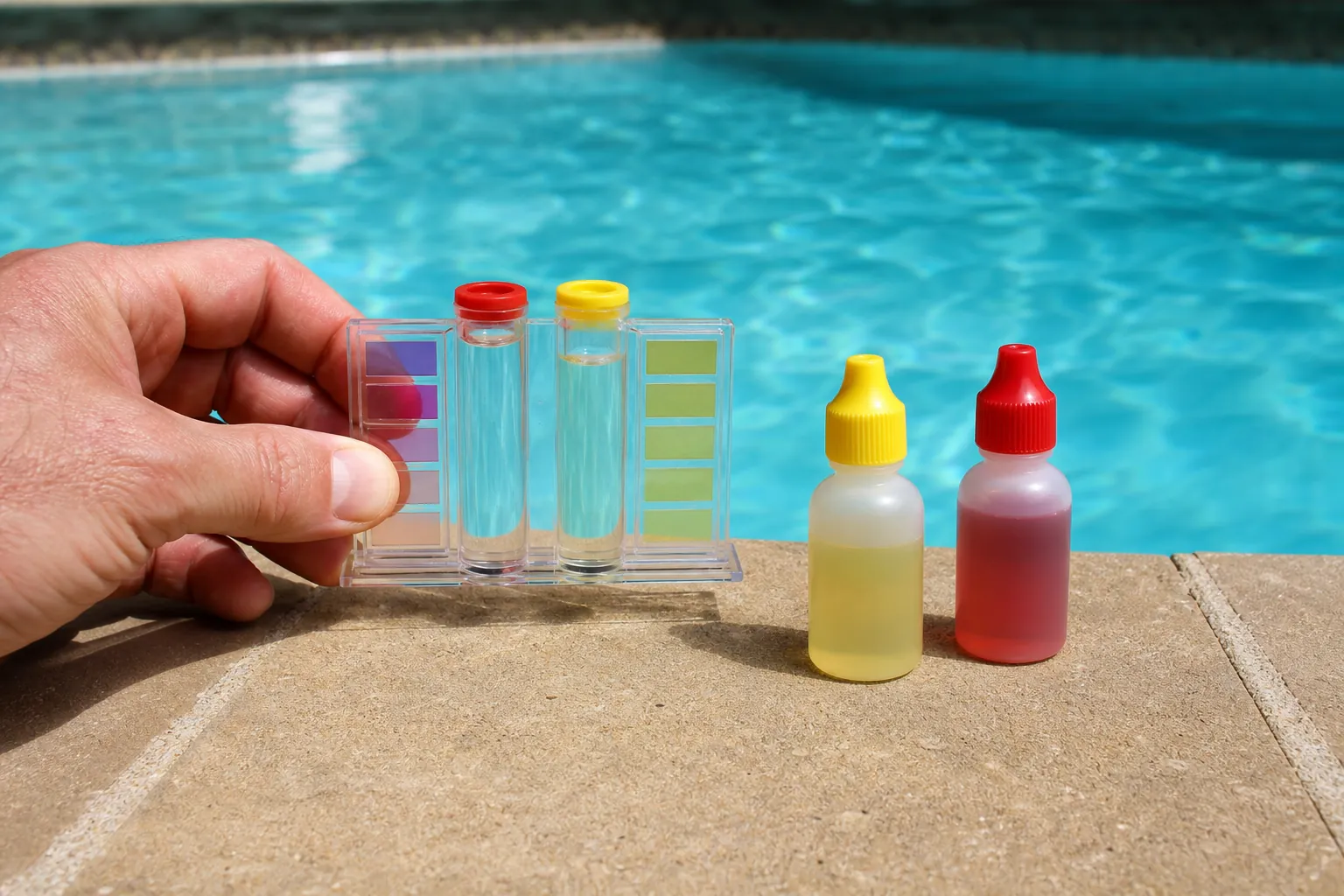
Use a fresh water sample and follow the timing instructions for your own test kit. Take the sample away from the skimmer, return jets, feeder, or salt cell, where the water may not represent the pool as a whole. If the result surprises you, test again instead of reaching for a product immediately. Old strips, a rushed colour match, a contaminated sample cup, and a sample taken beside a return can all send you in the wrong direction.
Check the rest of the readings your kit can provide. At a minimum, know the pH, total alkalinity, and free chlorine before making a correction. If chlorine terms are confusing, Aquastaser's guide to free chlorine in a pool explains what the reading actually means. If the pool smells harsh, the chloramines guide can help you separate a water-quality question from a simple pH adjustment.
Give the result a reality check. Does it match the way the pool has been behaving, or is it sharply different from a recent careful test? One isolated result can be a clue. Two consistent results give you a much better basis for action. A reliable drop-based kit or a professional water test is worth using when the pool has become hard to read or several products have been added recently.

2. Check total alkalinity and circulation first
Total alkalinity is the part of the water balance that helps pH stay steady. When alkalinity is low, pH can shift more easily. When it is high, pH can be difficult to adjust. That does not mean every pH problem is an alkalinity problem, but it does mean the two readings deserve to be reviewed together before you decide what to add.
If total alkalinity is low too, start with Aquastaser's guide to raising pool alkalinity safely. It explains why the pool's gallonage, product label, circulation time, and a fresh retest matter. Do not try to correct alkalinity and pH with a stack of products in one session. Make one purposeful change, give it time to distribute, then see what the water actually did.
Confirm that the pump and filter are operating normally before a pH correction. Water needs to move through the pool for a treatment to distribute. Empty baskets, remove obvious debris, and watch for normal flow at the returns. If the pump is losing prime, the filter is overdue for service, or the water is barely moving, deal with that mechanical issue first. Aquastaser's pool circulation guide can help you identify the skimmer, pump, filter, and return path.
3. Choose a pool-specific pH increaser
Use a product intended to raise pool pH, and read its current label before opening the container. Pool pH increasers commonly use sodium carbonate, often called soda ash, but the product form, concentration, safety directions, and amount for a particular pool can vary. Your pool's gallonage, starting pH, total alkalinity, surface, source water, and existing treatment method all affect what a sensible correction looks like.
Avoid generic online scoop counts and borrowed dose charts. A number that made sense for a small above-ground pool, a different product concentration, or somebody else's water can be wrong for yours. The goal is to reach a stable operating range, not to produce the fastest colour change on a strip. If the label provides a range, begin conservatively and leave room to retest.
Household baking soda may be discussed in pool conversations because it can influence pH and alkalinity. Arm & Hammer's pool-maintenance overview notes that baking soda can raise both. That is precisely why it should not be treated as a casual substitute for understanding the complete test. Choose a pool-appropriate product, follow the label, and avoid adding a kitchen ingredient simply because a search result made it sound easier.
Keep swimmers out while you make an adjustment. Wear the protective equipment the product label calls for, work in fresh air, keep containers closed until they are needed, and never mix pool chemicals or transfer them between containers. If there is any possibility that products have been mixed incorrectly, move away from the area and follow the emergency directions on the labels or contact local emergency services. Do not try to neutralize an unknown mixture.

4. Make one measured correction with the pump running
Calculate the pool volume as accurately as you can, then use the product directions for that volume and your confirmed starting reading. Do not estimate gallons from memory when the pool shape, depth, spa spillover, or water level makes a meaningful difference. If you are uncertain, a pool professional or the builder's paperwork can help you get closer before you add anything.
With circulation running, add the product only as its label specifies. Dry and liquid products can have different handling instructions, so do not assume one method applies to another. Do not pour a product into the skimmer unless the label and your equipment guidance explicitly say that is appropriate. Adding directly into an unsuitable part of the system can create a concentrated area and make it harder to understand what the pool received.
Once the product is in, resist the urge to add a second correction because the number has not changed immediately. Water balance is not a microwave setting. The first addition needs time to dissolve and move through the full body of water. A second large addition made too early can send pH past the target and leave you trying to undo your own work.
5. Circulate, then retest from a new sample
Follow the product label for its circulation and retesting window. Then take a fresh sample away from the application area and repeat the same careful test. Write down the new pH and total alkalinity readings beside the first ones. That small record gives you a better decision than trying to remember whether the colour looks a little different.
If the reading has moved into the intended range and the pool is behaving normally, stop. The result you want is stable water, not a perfect-looking test strip after three corrections. If the result is still low, use the product label and the new reading to decide whether another small correction is appropriate. If the number moved farther than expected, stop adding product and get qualified guidance before trying to push it back the other way.
Use the circulation time to check the pool's physical basics. Clear leaves and visible debris, empty baskets, check filter pressure against what is normal for your system, and make sure the return jets are moving water. Those simple checks help separate a normal water-balance adjustment from a pool that has an underlying filtration or flow problem.

Mistakes that can make a low pH problem worse
Do not correct pH based on a single hurried strip result. Retest first, especially when the reading does not match the pool's appearance, recent maintenance, or a previous careful test. One clean sample can prevent an unnecessary correction. Two matched samples are even better.
Do not add several balancing products at once. A pH increaser, alkalinity increaser, acid, shock, clarifier, and algaecide added close together may make it impossible to tell which change helped or hurt. It also increases the chance that a small issue becomes an expensive guessing game. Make one intentional adjustment, circulate, then retest.
Do not treat a harsh chlorine smell or swimmer irritation as proof that pH is low. A strong pool smell can be associated with chloramines, while irritation can have several causes. Test free chlorine, total chlorine, pH, water clarity, and the recent pool history before deciding which reading needs attention. The free chlorine versus total chlorine comparison explains why one chlorine number rarely tells the full story.
Do not assume a saltwater pool is exempt from pH and alkalinity checks. A saltwater system still produces chlorine and still depends on water balance, circulation, filtration, a healthy cell, and responsible testing. Aquastaser's saltwater versus chlorine pool guide explains what changes and what stays the same.
When low pH is not a DIY adjustment
Contact a qualified pool professional when pH keeps dropping after careful corrections, the water remains cloudy, equipment is leaking or losing flow, the pool surface shows possible damage, or you cannot confidently calculate the dose for the pool's gallonage. Bring the test results, the product labels, and a short note of what has changed. That information is more useful than one isolated reading after several product additions.
Keep swimmers out and treat symptoms as a health question first when anyone has trouble breathing, face or throat swelling, severe eye pain, a rapidly worsening rash, or other serious symptoms. The pool can wait. The same caution applies to a possible chemical mixing incident, visible contamination, or a diarrheal event. Aquastaser's Cryptosporidium pool-water guide explains why a routine water-balance correction is not the answer after a contamination concern.
A professional water test is also sensible when the home test keeps producing confusing results. It does not mean you have failed at pool ownership. It means you are choosing a clearer baseline before adding another product to water that has already had several changes.
Where Aquastaser fits
Raising pH is a normal maintenance correction, not a reason to replace a pool system overnight. First get the water stable, confirm the equipment is moving and filtering water properly, and resolve any safety or contamination concerns. Those basics matter regardless of how a pool is treated.
Aquastaser is for homeowners who are tired of an ongoing chlorine routine and want a different long-term approach to pool water care. It uses hydrodynamic cavitation in the return line after filtration, so a healthy pump, filter, practical plumbing access, and an honest look at the current pool condition still matter. It is not an emergency treatment, a shortcut around testing, or a substitute for a measured pH correction.
Once the pool is stable, homeowners can use the How It Works page and the chlorine-free pool system overview to understand the setup. Questions about pool size, flow, return-line plumbing, or an existing saltwater system are worth asking before buying, so Aquastaser support is available through the support page.
The bottom line
To raise pH in a pool safely, confirm the result, check total alkalinity and circulation, use a pool-specific increaser according to its label and your actual pool volume, circulate, then retest from a fresh sample. One measured correction gives you useful information. Several rushed corrections mostly give you more variables.
When the water will not settle, slow down. A clean test, a short maintenance note, and qualified help when the pattern is unclear will protect the pool, the people using it, and your weekend from turning into a chemistry project nobody wanted.
Frequently asked questions
What raises pH in a pool?
Use a pool-specific pH increaser according to its current label. These products commonly use sodium carbonate, often called soda ash, but the amount and handling depend on the product, pool volume, starting pH, total alkalinity, surface, and water condition.
Can I use baking soda to raise pool pH?
Baking soda can affect both pH and total alkalinity. It is not a casual substitute for a complete water test or a pool-product label. Check pH and alkalinity together, use a pool-appropriate product when needed, and make one measured correction at a time.
How quickly does pH increaser work in a pool?
Follow the product label for circulation and retesting time. Do not judge the result immediately after adding it. Let the water circulate, then retest from a fresh sample away from the skimmer and return jets before considering another correction.
Should I raise alkalinity or pH first?
Test both before deciding. Low total alkalinity can make pH unstable, but the right sequence depends on the complete readings and the product directions. Do not stack several correcting products in one session. Make a measured change, circulate, and retest.
Can I swim after adding pH increaser?
Follow the specific product label. Keep swimmers out while you make an adjustment and until the water has circulated for the stated time and a fresh test confirms that the pool is back in its appropriate operating range. If the water is cloudy, harsh, causing symptoms, or the result is unclear, wait and get qualified guidance.