Free chlorine is the portion available to disinfect pool water. Total chlorine includes that free chlorine plus chlorine that has already reacted with contaminants, known as combined chlorine. The difference between the two readings can tell you whether the water has been carrying more of a burden than the total number alone suggests.
That difference matters when the pool has a strong chemical smell, swimmers complain that the water feels harsh, chlorine seems to disappear quickly, or a test result does not match what you are seeing. It also matters when everything looks normal. A clean-looking pool can still benefit from a careful reading before you make another chemical adjustment.
This guide explains free chlorine vs. total chlorine in plain English. You will learn the simple calculation behind combined chlorine, what common result patterns mean, how to test without creating false confidence, and when a pool issue is more about circulation, contamination, or an overworked chlorine routine than one number on a strip.
The short answer: free chlorine is the working portion
Free chlorine is the chlorine that is available to disinfect the water. It has not already combined with contaminants, so it is the portion of the reading that tells you whether the pool has a usable chlorine residual. When people say a pool is "holding chlorine," they are generally talking about free chlorine.
Total chlorine is the full amount detected by the test: free chlorine plus chlorine that has already reacted with material in the water. That reacted portion is called combined chlorine. It is not a separate product you add. It is a clue that chlorine has been busy reacting with swimmer waste, debris, or other contaminants.
The Centers for Disease Control and Prevention recommends that home pool owners routinely check chlorine and pH. Its current guidance calls for pH between 7.0 and 7.8, at least 1 ppm chlorine in a pool, and at least 2 ppm in pools using cyanuric acid stabilizer. CDC's home-pool testing guidance is a good baseline, but always follow the operating range for your own equipment and products.
If you are new to the terms, start with Aquastaser's plain-English free chlorine guide. The important point here is simple: a total chlorine reading tells the whole story only when you also know how much of it is free.
Before you add anything, compare the three readings
Use one fresh water sample to test free chlorine, total chlorine, and pH. Then subtract free chlorine from total chlorine to find combined chlorine. Reading those three numbers together gives you a more useful starting point than treating one chlorine result as a complete answer.
If the difference is growing, or the pool smells harsh, looks cloudy, or feels uncomfortable for swimmers, slow down before adding another product. Confirm the test, check circulation and filtration, and look at what changed in the pool over the last day or two. That sequence helps you correct the actual problem instead of creating an avoidable overcorrection.
The calculation: total chlorine minus free chlorine equals combined chlorine
The relationship is straightforward: total chlorine minus free chlorine equals combined chlorine. If your total chlorine is 3.0 ppm and your free chlorine is 3.0 ppm, the difference is zero. That means the test is not showing a combined-chlorine gap.
If total chlorine is 3.0 ppm and free chlorine is 2.4 ppm, the difference is 0.6 ppm. That 0.6 ppm is combined chlorine. It does not automatically tell you to pour in a product, but it does tell you to stop treating total chlorine as a stand-alone green light.
CDC guidance for aquatic operators uses the same calculation and notes that many state and local health departments limit combined chlorine to 0.4 ppm or less. Homeowners are not running a public facility, but that threshold is still useful context: a widening gap deserves attention, especially when it comes with odor, eye irritation, cloudy water, unusual bather load, or a chlorine reading that will not stay where it should. CDC's chloramine guidance explains how to calculate the difference and why it matters.
| Test result | What it means | Useful next move |
|---|---|---|
| Free and total are equal | No combined-chlorine gap is showing on that test. | Check pH, clarity, circulation, and your normal maintenance schedule before changing anything. |
| Total is slightly higher than free | Some chlorine has combined with contaminants. | Retest carefully and look at recent swimmer load, debris, weather, and equipment before reacting. |
| Total is much higher than free | The combined-chlorine gap is larger and the pool may be under extra demand. | Pause swimming if the water is harsh or smelly, confirm the reading, and follow product or professional guidance for correction. |
| Free chlorine is low | The active chlorine residual may not be where it needs to be. | Do not use total chlorine alone as reassurance; test pH and identify why free chlorine dropped. |
Why a chlorine smell can point to the difference
A sharp "chlorine" smell is often misunderstood. It does not mean the pool has extra-clean water or that the chlorine level is necessarily high. Chloramines, which are a type of combined chlorine, can form when chlorine reacts with sweat, dirt, pee, and other body waste. In an indoor setting, they can also move into the air above the water and irritate eyes and airways.
That is why smell is a reason to test, not a reason to guess. Measure both free and total chlorine, subtract to find the combined amount, and inspect the rest of the water picture. A smell without a test result is not enough information to make a safe adjustment. A single number without pH, circulation, and recent pool use can be misleading too.
If swimmers have had itchy eyes, dry skin, or a rash after using the pool, do not assume chlorine alone is the cause. Aquastaser's guide to a chlorine rash from a pool explains the immediate steps, the pool checks that matter, and when a symptom should be treated as a medical question instead of a pool-care experiment.
What free and total chlorine readings can tell you
A good test result is not a scorecard. It is a clue about what the water has been dealing with. If free and total chlorine are nearly the same, the chlorine reading is not showing much of a combined-chlorine gap. That is helpful, but it does not prove every other part of the pool is perfect. pH, stabilizer, filter condition, flow, and water clarity still matter.
When the gap grows, start with what changed. Was there a crowded pool day? A storm that blew in leaves and dirt? A long time under a cover? A filter that needs cleaning? A new algaecide, cleaner, or other pool product? Was the pool recently shocked, opened, or treated for algae? Those details help explain demand before you add more chemicals.
Free chlorine can also drop because sunlight, hot weather, bather load, and contaminants consume it. The CDC notes that swimmer waste, sunlight, and hot-tub jets can reduce the chlorine concentration. That is why the right response is rarely "add more" without checking whether the pool is being asked to solve a mechanical or maintenance problem first.
If the immediate issue is an unusually high free-chlorine reading, do not use this guide as a shortcut to lower it. Start with Aquastaser's guide to lowering chlorine in pool water safely, which covers retesting, stopping the chlorine feed, and why a neutralizer should not be a casual first move.
Test both readings correctly before you correct the pool
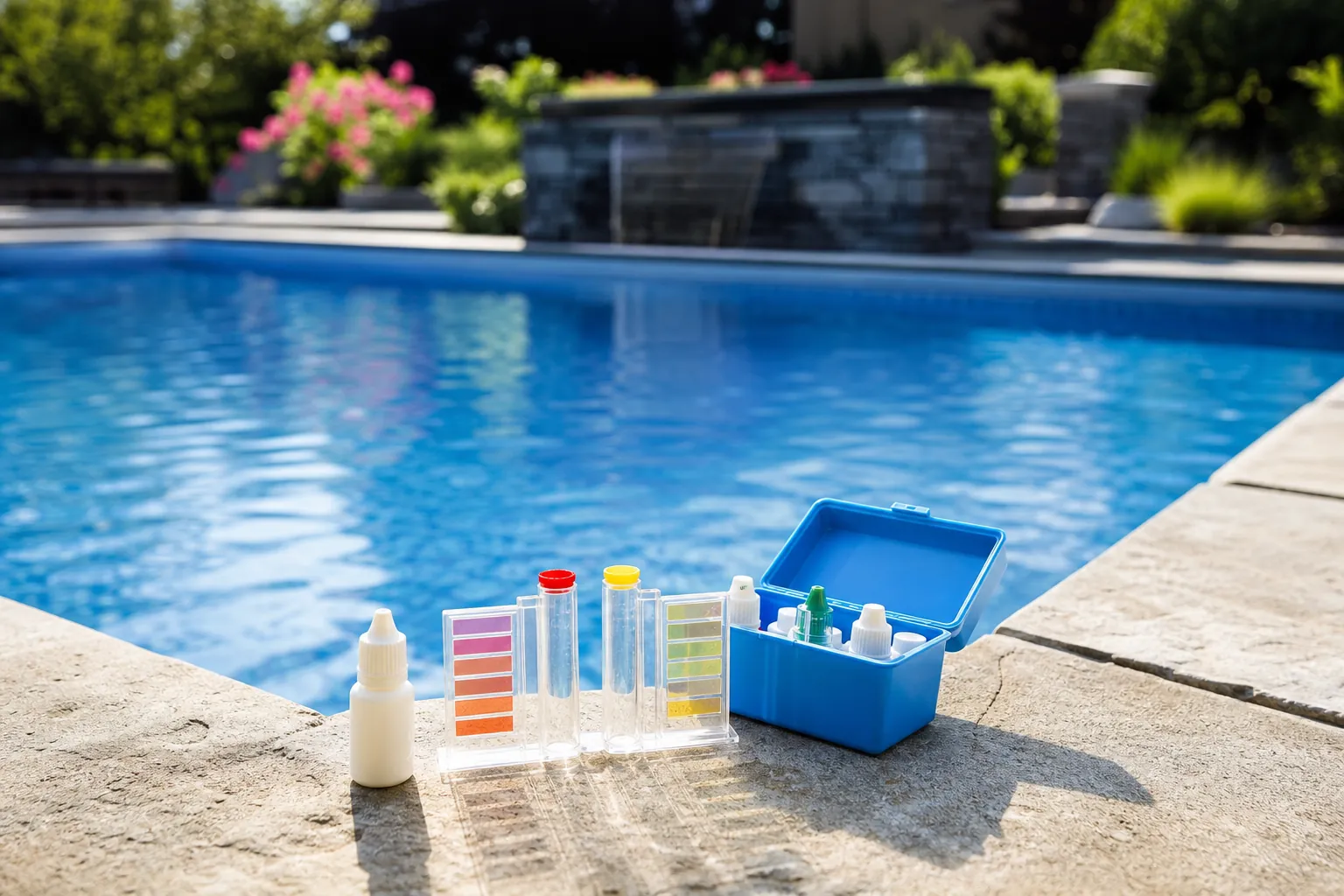
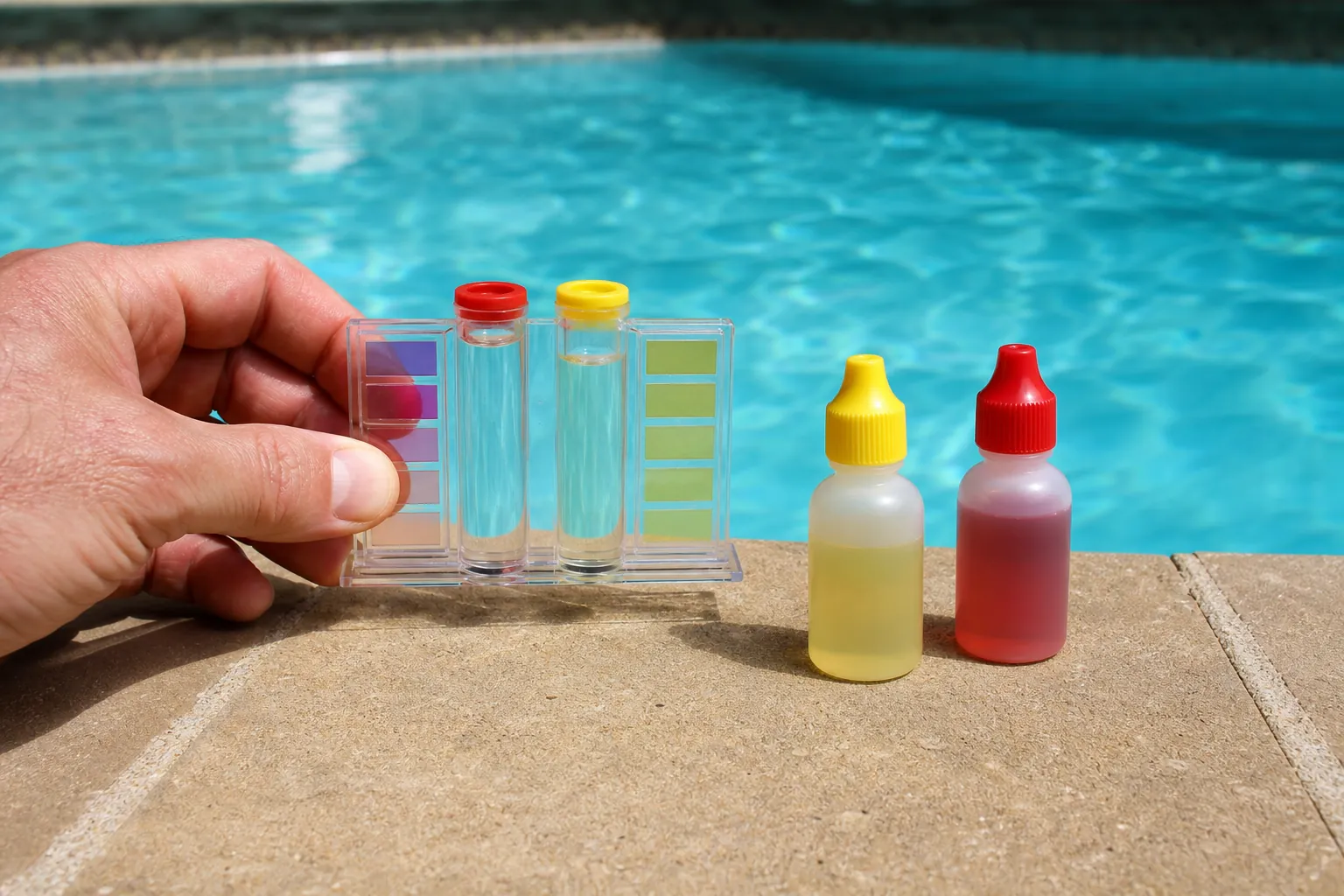
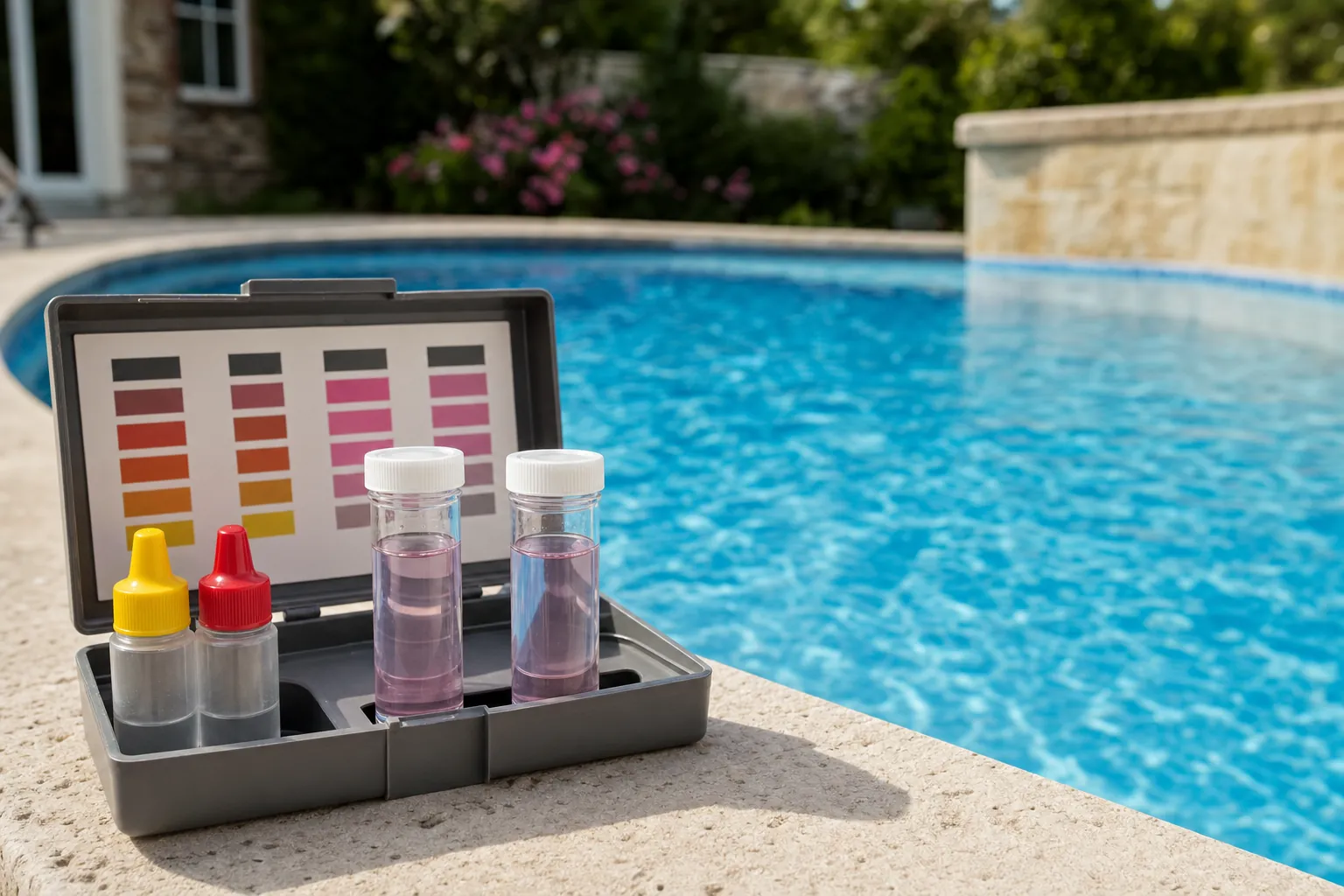
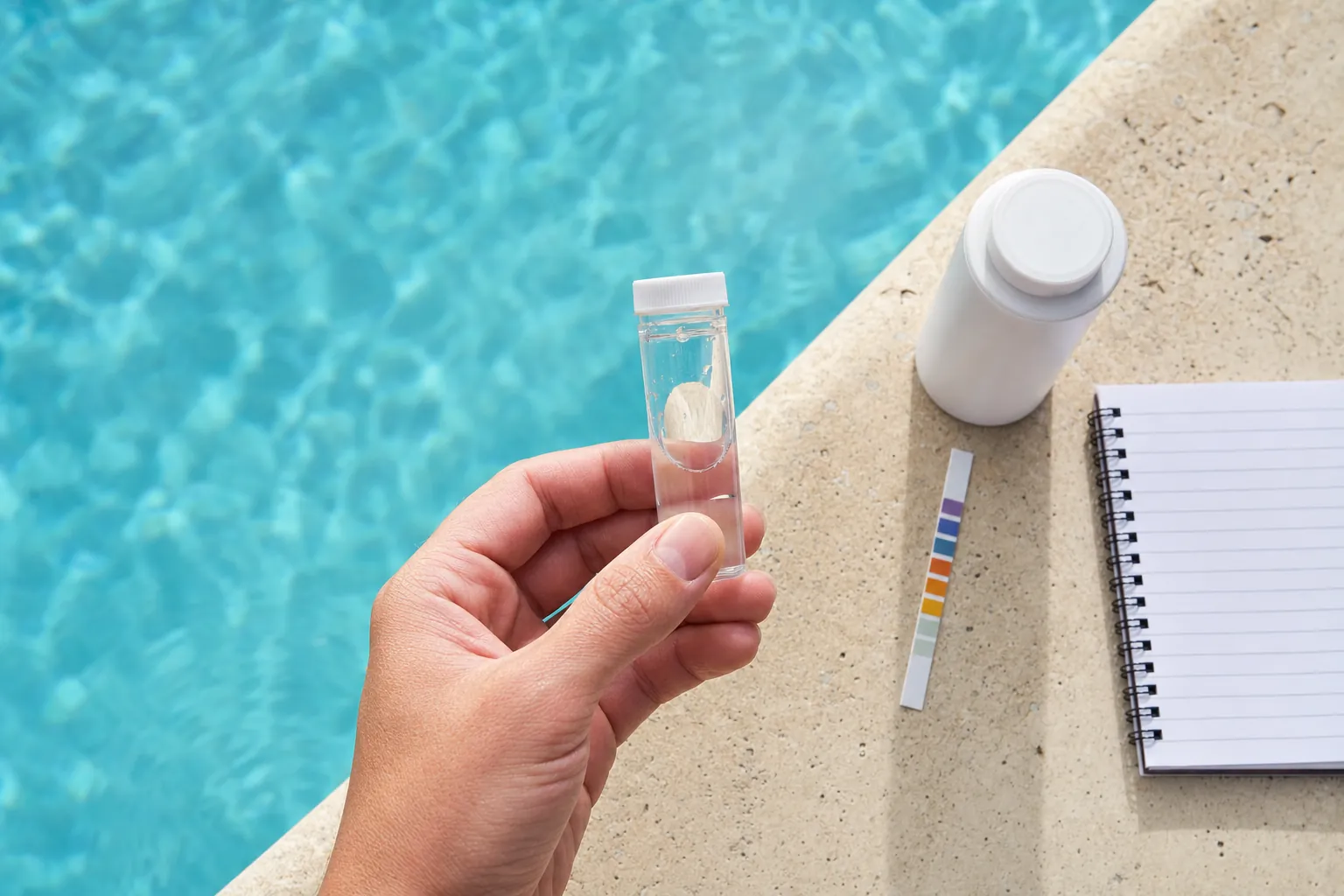
For a useful comparison, the free and total chlorine readings need to come from the same careful test. Take the water sample from elbow depth, away from the skimmer and return jets. Do not scoop from the surface, and do not test immediately beside a feeder or return where the reading can be unusually high or low.
Follow the timing and color comparison instructions that came with your kit. The CDC says DPD test kits are more accurate than strips for chlorine and pH, and it warns that a reading above 10 ppm can bleach some tests and produce a false low or zero result. If the result looks surprising, repeat the test before making a large correction.
Test strips can still be useful for routine checks when they are fresh, stored properly, and read on time. But if the numbers do not make sense, if the water is causing symptoms, or if you are about to make a major chemical adjustment, use a more reliable kit or have a qualified pool professional confirm the result.
A five-minute way to troubleshoot a confusing chlorine result
Start by slowing down. A confusing test does not need an instant chemical answer. First, make sure the pool is not actively being fed chlorine by a tablet feeder, salt cell, or dosing system while you are trying to understand the reading. You are not necessarily turning anything off permanently; you are making sure you know what the water is doing before another dose changes the picture.
Next, test free chlorine, total chlorine, and pH from the same sample. Write down the three numbers, even if you think you will remember them. Then subtract free chlorine from total chlorine. A small note such as "FC 2.5, TC 2.8, pH 7.6" is more useful than a vague memory that the chlorine "seemed a little off." It gives you a baseline for the next test and makes it easier to see whether the situation is getting better or worse.
Look at the pool itself before changing the water. Is it clear? Are there leaves, pollen, algae, or a heavy layer of debris? Is the skimmer pulling? Is the return jet moving water normally? Is filter pressure noticeably different from the usual clean-filter reading? Do not expect a chlorine number to correct a clogged basket, a neglected filter, or a pump that is not circulating enough water.
Then think about the previous day or two. A birthday party, a heat wave, a thunderstorm, sunscreen-heavy swimmers, a forgotten cover, or a newly added chemical can all raise demand. This does not mean one of those events is automatically the cause. It means the test result now has context. You can look for a reasonable explanation instead of stacking products because the pool feels different.
Finally, retest after the water has circulated and after any simple maintenance step you took, such as emptying baskets or cleaning the filter according to its instructions. If the free-chlorine number keeps dropping, the combined-chlorine gap keeps growing, or the water is causing irritation, stop treating the issue as routine guesswork. Check the product guidance or bring in a qualified pool professional before attempting a larger correction.
What not to do when the two numbers do not match
Do not add more chlorine just because total chlorine looks low or because the pool has an odor. Total chlorine can include combined chlorine, and odor can point toward chloramines rather than a simple shortage. More product may be appropriate in some situations, but it should follow a confirmed test and a clear reason, not replace them.
Do not drain water or use a neutralizer to solve a reading you have not confirmed. Both can be useful tools in the right situation. Both can also create more work when the original test was old, bleached out, taken from the wrong place, or read after the timing window passed. A second careful test is usually the cheaper move.
Do not use a public-pool procedure as a copy-and-paste recipe for a backyard pool. Public facilities operate under different rules, swimmer loads, equipment, and oversight. CDC's operator guidance is valuable for understanding chloramines and the calculation, but a residential pool owner should still follow the instructions for the pool's own equipment and chemicals.
Most importantly, do not ask swimmers to push through harsh water because the pool looks clear. Strong odor, burning eyes, persistent irritation, or unusual cloudiness are reasons to pause and investigate. A pool should be enjoyable, not an experiment in whether a number is close enough.
When to call for help instead of continuing to troubleshoot
Most pool owners can handle routine testing, debris removal, and basic maintenance. There is no prize for handling every water problem alone, though. Call a qualified pool professional when the water is cloudy and the cause is unclear, when a test result keeps changing in ways you cannot explain, when equipment is leaking or losing flow, or when the pool has been heavily treated without returning to a stable range.
Treat a contamination event differently from an ordinary chemistry question. If there has been fecal contamination, a serious illness concern, or a possible chemical mixing mistake, do not use a free-versus-total chlorine calculation as the whole answer. Follow local public-health guidance and get professional help before reopening the pool. The same caution applies if anyone experiences trouble breathing, face or throat swelling, severe eye pain, or a rapidly worsening skin reaction.
A professional can also help when the numbers are technically in range but the pool still feels wrong. They can check flow, filter condition, leaks, water balance, equipment settings, and the products being used together. That wider view matters because free chlorine and total chlorine are indicators, not a complete diagnosis.
Ask for help sooner when you have already made several corrections and the pool still will not settle. Repeatedly raising chlorine, lowering it, shocking again, or adding a different treatment can make the original cause harder to spot. A measured pause protects swimmers, avoids unnecessary expense, and gives you a better chance of finding the actual issue. Clear notes, a fresh water sample, and an honest account of what has been added are far more helpful than trying to make the pool look normal before someone sees it.
Bring your recent readings with you when you ask for help. A short log of free chlorine, total chlorine, pH, temperature, weather, swimmer load, and anything added to the pool makes the conversation much more useful. It gives the person helping you a sequence to work from instead of one isolated number after the fact. It also helps avoid repeating the same failed correction.
Do not ignore pH, stabilizer, filtration, and circulation
Free chlorine does not work in isolation. pH affects how chlorine performs and how water feels to swimmers. CDC guidance explains that chlorine becomes less effective at higher pH, while low pH can be hard on pool surfaces and equipment. If your free chlorine is not behaving as expected, check pH before changing your chlorine plan.
Cyanuric acid, often called stabilizer, changes the context too. Outdoor pools often use it to protect chlorine from sunlight, but it means the appropriate free-chlorine minimum is different. Do not copy a number from a neighbor's pool or an old forum post without knowing whether your pool uses stabilizer and what your product label recommends.
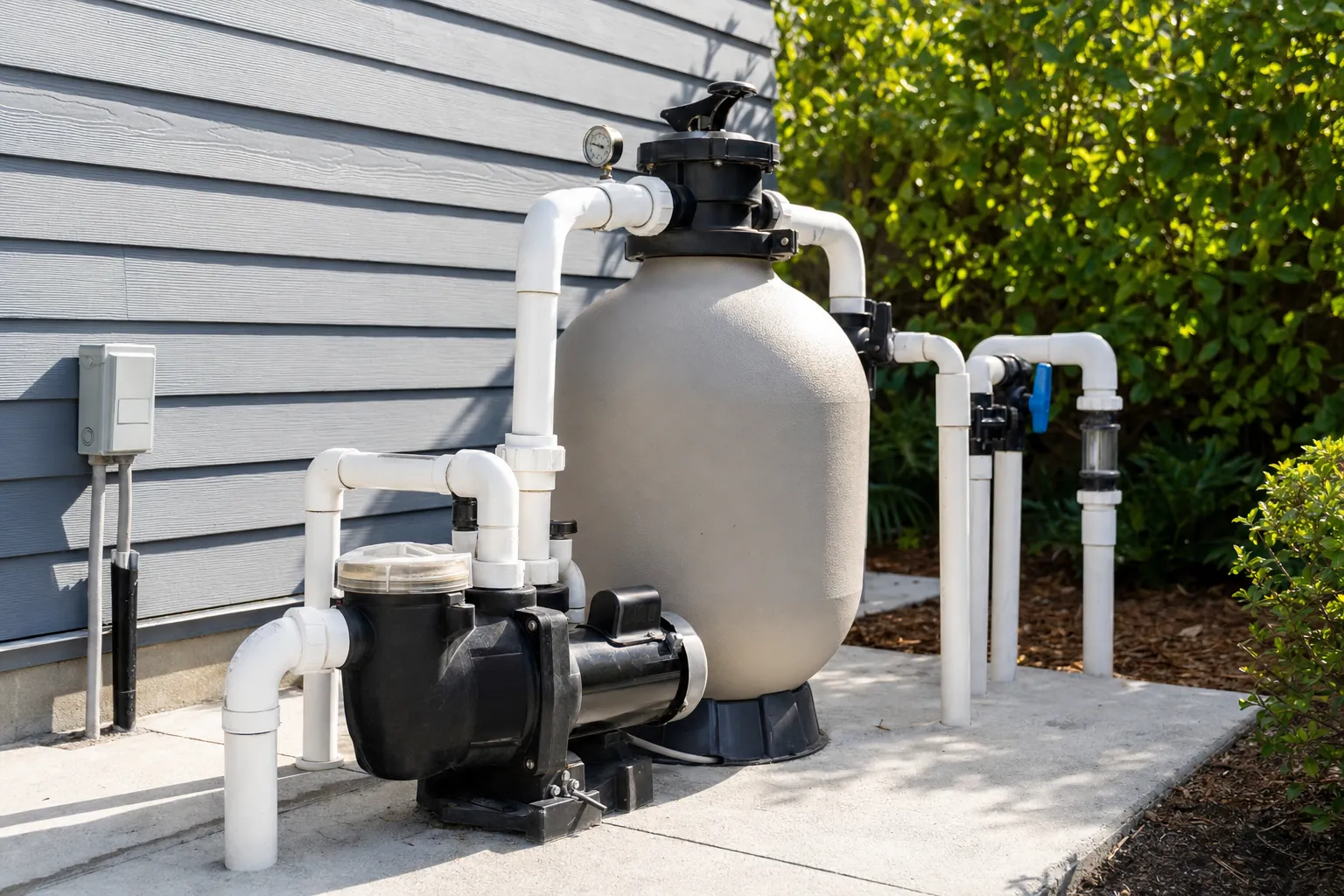
Filtration and flow are just as practical. Water that is not moving properly through the skimmer, pump, filter, and return line will not be treated consistently. Debris can linger, the filter can struggle, and the owner can end up adding product to compensate for a circulation problem. Aquastaser's pool circulation guide walks through the suction, filtration, and pressure sides of a typical residential system.
When a bigger combined-chlorine gap needs action
A rising combined-chlorine number is a prompt to investigate, not a license to improvise. If the water has a harsh odor, looks cloudy, causes irritation, or has been heavily used, keep swimmers out until you understand the reading and the water is back in a suitable operating range. Public pools have specific rules; home pools should follow their product labels and local guidance, and bring in a qualified professional when the correction is unclear.
CDC's operator guidance says to calculate combined chlorine by subtracting free chlorine from total chlorine. It describes superchlorination as one way to address high combined chlorine, but that is not a universal home-pool recipe. The needed response depends on the pool, the sanitizer, pH, stabilizer, temperature, equipment, and the source of the demand. Adding a large dose on a hunch can create a second problem: chlorine that is too high for comfortable swimming.
Before you treat a recurring gap, look for the cause. Clean the filter if it needs attention. Remove debris. Check circulation. Think about recent use and products. Retest. That sequence is less glamorous than pouring in a quick fix, but it is how you avoid turning a clear diagnosis into a cycle of overcorrection.
Saltwater pools still need the same comparison
A saltwater pool does not remove this question. A salt system generates chlorine, so free chlorine, total chlorine, pH, stabilizer, filtration, and circulation remain part of ordinary care. The delivery method is different; the need to understand the water is not.
That distinction matters for homeowners who are frustrated by a pool that still smells harsh, needs repeated shocking, or keeps producing confusing readings. Switching from tablets to salt does not automatically remove the chlorine routine. Aquastaser's saltwater pool vs. chlorine pool comparison explains what changes and what stays the same.
Where Aquastaser fits
Aquastaser is for owners who are looking beyond one test result and questioning the ongoing chlorine routine itself. It is a chlorine-free system designed to work after filtration in a residential pool's return plumbing. That makes healthy circulation, a working pump and filter, and a real pool-fit conversation important.
It is not an emergency response for unsafe water, an active contamination event, or a pool with an unresolved equipment problem. Bring those issues under control first. Then decide whether you want to continue managing free chlorine, total chlorine, stabilizer, and recurring chemical corrections as your normal routine.
For the full overview, see how Aquastaser works and the chlorine-free pool system page. If you want to discuss pool size, plumbing, flow, and fit before ordering, Aquastaser support can help through the contact page.
The bottom line
Free chlorine is the portion ready to work. Total chlorine includes both free chlorine and chlorine that has already combined with contaminants. The difference between them is combined chlorine, and that difference helps explain whether the water may be carrying more demand than the total number alone suggests.
Test carefully, subtract the two readings, and then look at pH, stabilizer, water clarity, filtration, circulation, swimmer load, and recent maintenance before you change the pool. A measured response keeps you from chasing a number with another number.
Frequently asked questions
What is the difference between free chlorine and total chlorine?
Free chlorine is the portion available to disinfect the water. Total chlorine includes both free chlorine and chlorine that has already combined with contaminants. The difference between total and free chlorine is called combined chlorine.
How do I calculate combined chlorine in my pool?
Subtract free chlorine from total chlorine. For example, if total chlorine is 3.0 ppm and free chlorine is 2.4 ppm, the combined chlorine reading is 0.6 ppm. Retest if the result is surprising before making a large adjustment.
Is total chlorine higher than free chlorine a problem?
A higher total chlorine reading means there is combined chlorine in the water. A small difference is a reason to keep an eye on the pool; a larger difference, especially with odor, irritation, cloudiness, or heavy recent use, is a reason to investigate the water and equipment before adding more chemicals.
Why does my pool smell strongly of chlorine?
A strong chemical smell can be caused by chloramines, which are a type of combined chlorine created when chlorine reacts with contaminants. Test free and total chlorine, check pH and circulation, and do not assume the smell means the water is especially clean.
Should I shock my pool when total chlorine is higher than free chlorine?
Do not treat every difference with the same home-pool recipe. The correct response depends on the size of the gap, pH, stabilizer, water condition, sanitizer, and the source of the demand. Confirm the reading, follow your product instructions, and get professional guidance when the correction is unclear or the water is causing symptoms.