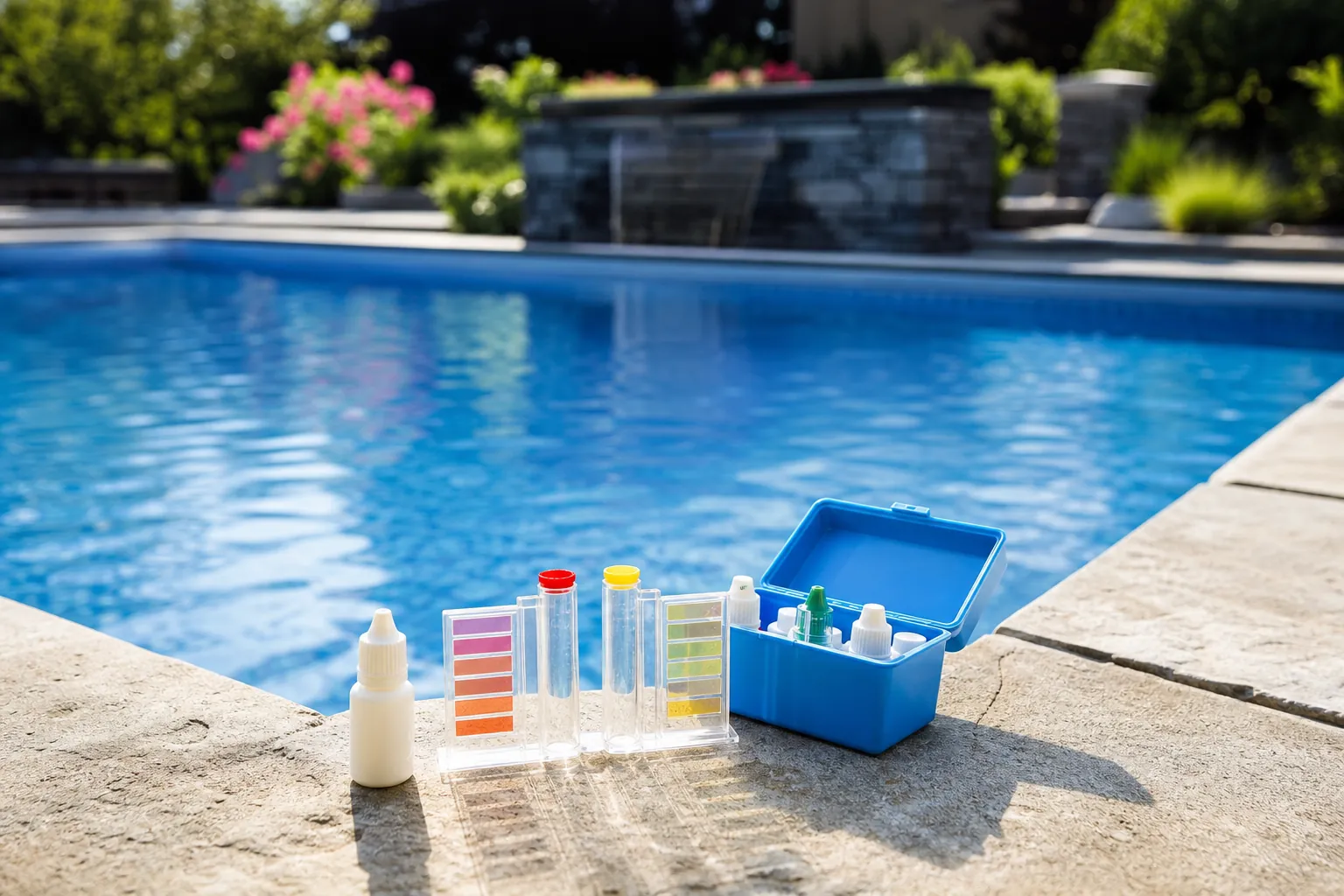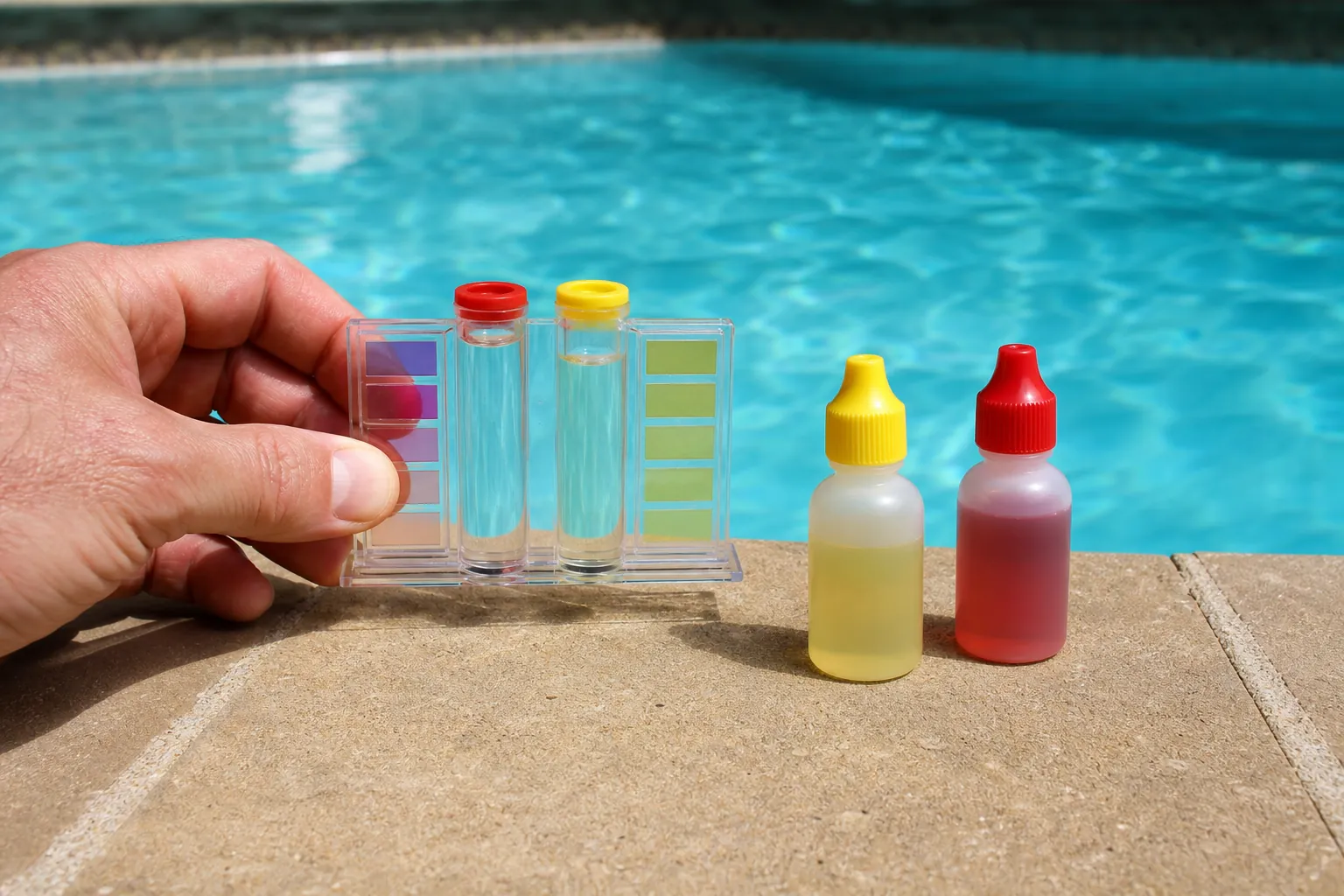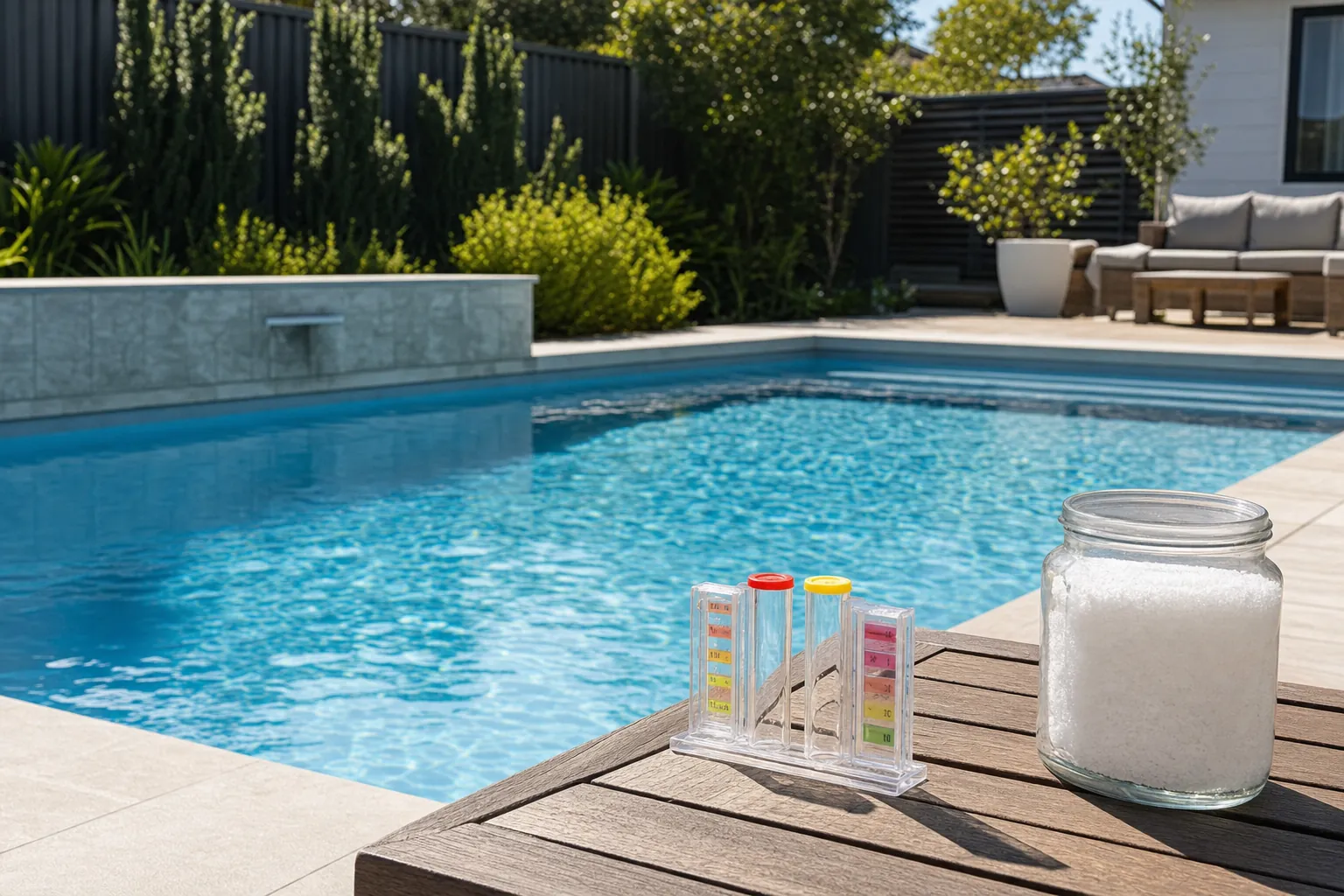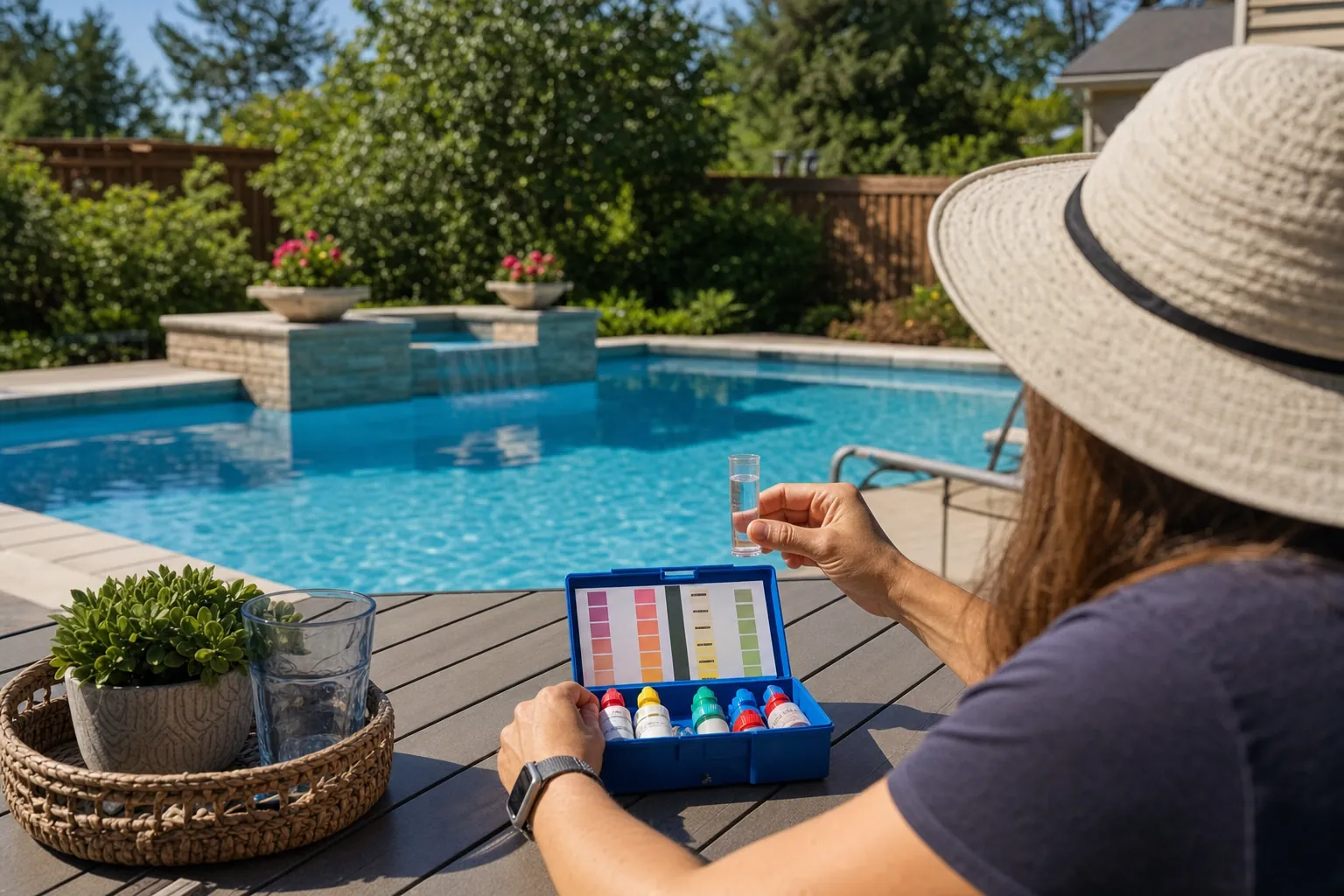
Low alkalinity can make a pool feel like it will not hold still. You correct pH, then it drifts again. The water may feel harsher than usual, a test result can seem to change quickly, and every new chemical addition starts to feel like another guess. The answer is not to add several products at once. It is to slow down, confirm the total alkalinity reading, and make one measured correction.
Total alkalinity acts as a buffer for pH. When it is too low, pH can move more easily than it should. When it is too high, pH may become difficult to adjust. This guide explains how to raise alkalinity in a residential pool without turning one low reading into a larger water-balance problem.
The practical sequence is simple: test carefully, know the pool's gallonage, choose a pool-appropriate alkalinity increaser, follow its dosage instructions, circulate, and retest. Those steps are deliberately less dramatic than a quick-fix recipe, but they give you a better chance of landing in range without overshooting it.
What total alkalinity does in a pool
Total alkalinity is the water's resistance to sudden pH change. Think of it as the part of the water balance that helps pH behave predictably. It is related to pH, but it is not the same reading. Trying to fix pH repeatedly without checking alkalinity can leave you treating the visible symptom while the underlying water balance is still unstable.
Many residential pool guides use 80 to 120 parts per million as a typical total-alkalinity range. The FROG pool water-balance guide uses that range and recommends setting the target according to the pool's own system. Your product directions, surface type, sanitizer, source water, and equipment can all matter, so use the range as a checkpoint rather than a reason to ignore the instructions that came with your pool products.
Low alkalinity can show up as pH that moves around, water that feels uncomfortable, or corrosion concerns over time. Those signs are not a diagnosis by themselves. A good test is the starting point. If the pool is cloudy, green, losing circulation, or causing persistent irritation, address those immediate issues too instead of assuming alkalinity is the only answer.
Confirm the low reading before adding anything
Take a fresh sample from elbow depth, away from the skimmer, return jets, tablet feeder, or salt cell. Follow the timing and color instructions for your own kit. If the number is surprising, test again before making a large change. A rushed strip reading, an old kit, or a sample taken from a high-flow spot can send you in the wrong direction.
Check pH at the same time and write both results down. The Centers for Disease Control and Prevention recommends routine chlorine and pH testing for home pools, with pH between 7.0 and 7.8. CDC home-pool testing guidance is useful context, but it does not replace the operating instructions for your own equipment and products.
If the chlorine part of the test is confusing too, start with Aquastaser's guide to free chlorine in a pool. Getting a clear baseline before adding an alkalinity product makes it much easier to see whether the next change actually helped.
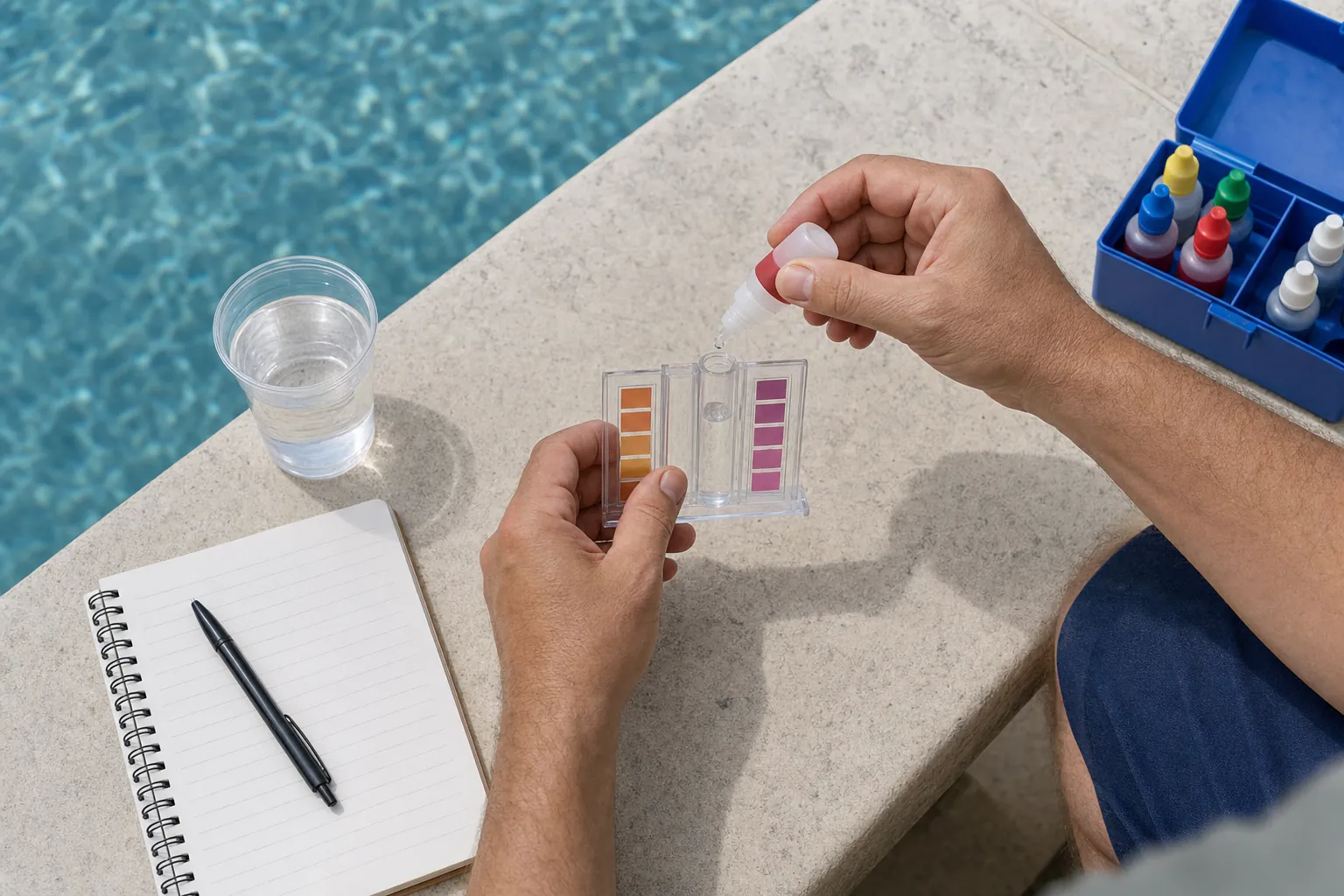
1. Set a realistic target for your pool
Before you calculate an amount, decide where you are trying to land. Do not treat the highest number on a test chart as automatically better. A typical target sits within the range recommended for your pool, sanitizer, and surface, and the goal is steady water, not a perfect-looking number achieved by overcorrecting.
Know the pool's approximate gallons first. The same scoop of product has a very different effect in a small plunge pool than in a large in-ground pool. If you do not know the volume, check the construction paperwork, use a trustworthy volume calculator, or ask a pool professional to help estimate it before dosing.
It also helps to think about what changed. Heavy rain, frequent top-offs, a partial drain and refill, acidic products, seasonal opening work, or an ongoing pH correction can all affect alkalinity. A brief note about the last few days gives the reading context and helps you avoid treating every low number as a mystery.
2. Choose a pool-appropriate alkalinity increaser
Use an alkalinity increaser that is intended for pool water, and follow its label for your pool volume and starting reading. Sodium bicarbonate is the active ingredient in many alkalinity increasers. Arm & Hammer's pool-maintenance guide also explains that sodium bicarbonate raises alkalinity and pH, which is why it should be measured rather than poured in casually.
Do not assume every household product, package size, or online dose chart is interchangeable. Product concentration and directions differ, and your current pH may change how a correction behaves. The useful number is the amount recommended by the product you are actually using for the gallons you actually have.
When the label gives a range, start conservatively. It is easier to add a second small amount after a retest than to unwind an overshoot. This is especially important when pH is already near the high end of its recommended range.
3. Add the product in portions with the pump running
Turn on normal circulation, then add the measured product in portions according to its directions. Distribute it broadly across the pool surface or use the method specified on the label. Avoid dumping a large amount in one spot, pouring it directly into the skimmer unless the instructions explicitly say to, or adding several balancing products together because the water did not change immediately.
Keep the container dry, use the supplied measuring method, and avoid dosing on a windy day if you are working with a powder. Do not mix pool products in a bucket or combine them before they reach the water. If a product label conflicts with advice in a blog, forum, or video, follow the label or ask a qualified pool professional.
A clean filter and normal flow matter here. An alkalinity correction cannot compensate for a pump that is losing prime, a clogged basket, or a filter that needs service. Aquastaser's pool circulation guide can help you identify the skimmer, pump, filter, and return path before you treat a circulation issue as a water-balance issue.
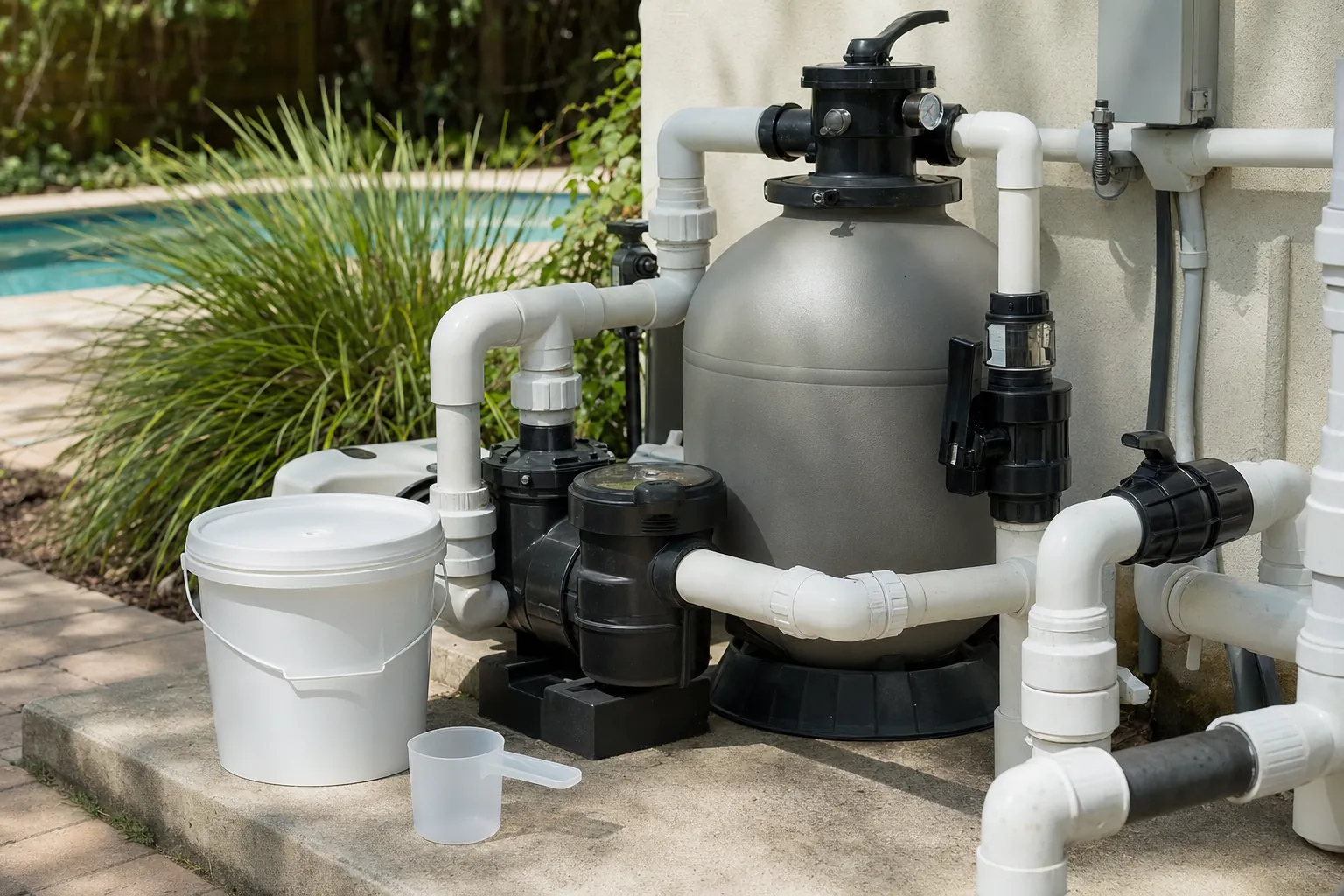
4. Give the pool time to circulate
Let the pump circulate the water before you judge the result. FROG recommends waiting at least six hours before retesting after an alkalinity addition. The right wait time can also depend on the product, so check the label and do not treat a just-added dose as a final reading.
Circulation is not a formality. It spreads the adjustment through the pool, moves water through the filter, and gives the next test a chance to represent the pool rather than one area near the addition. Watch for normal return flow, and address a weak stream, unusual filter pressure, or visible debris before assuming the chemistry is still the problem.
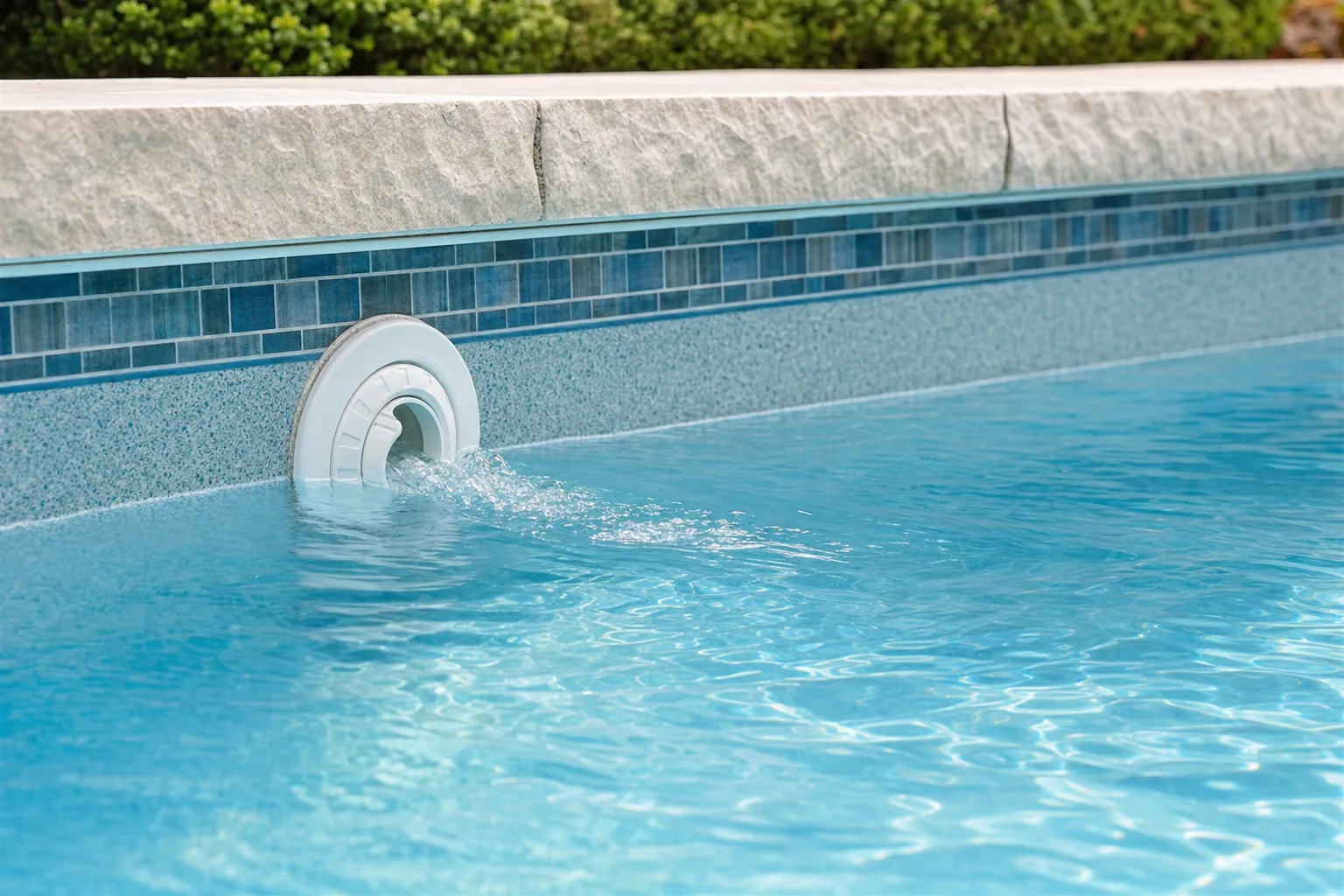
A healthy return jet is one simple visual sign that water is moving back into the pool. It is not proof that every part of the system is perfect, but it is a good reason to inspect the equipment before making another chemical correction.
5. Retest, then make only the next necessary adjustment
After the recommended circulation time, retest total alkalinity and pH from a fresh sample. Write down the new readings beside the first ones. If alkalinity is now in the intended range and pH is steady, stop. The best result is stable water, not a reason to keep adjusting until every test color looks identical to a chart.
If the reading is still low, use the product label to calculate the next small correction. Do not repeat the full first dose automatically. If alkalinity rises but pH also moves higher than expected, do not immediately add acid without checking the full water picture and the directions for the products already in the pool.
For a high free-chlorine reading, use Aquastaser's separate guide to lowering chlorine in a pool. That is a different problem with a different decision path, and combining corrections too quickly can make it harder to tell what changed the water.
What not to do when alkalinity is low
Do not chase a single strip result with a large dose. Retest first, especially if the water looks normal and the number does not fit the recent maintenance history. Do not add an alkalinity increaser, pH increaser, acid, shock, and clarifier in the same session just because the pool feels off. One clear change followed by circulation and a fresh test gives you a useful signal.
Do not use low alkalinity as an explanation for every pool problem. Cloudy water can involve filtration, particles, algae, or other water-balance factors. A harsh chlorine smell can point to combined chlorine and recent pool load. Aquastaser's chloramines guide explains why odor is a reason to test, not a reason to keep adding chlorine.
Do not assume saltwater pools are exempt. A saltwater system still produces chlorine, and its water still needs pH, alkalinity, filtration, and circulation checks. The saltwater versus chlorine pool comparison explains what changes and what does not.
Keep the first correction small enough to learn from it. If the pool moves toward the intended range after circulation, you have confirmed that the reading and dose were pointing in the right direction. If it does not, more product is not automatically the answer. Recheck the test, the pool volume, the product directions, and the equipment before repeating the same move.
When to pause and get help
Pause swimming and seek qualified help when water is cloudy, green, strongly odorous, causing burning eyes or persistent irritation, or when the source of the problem is unclear. A serious leak, electrical concern, pump failure, damaged plumbing, or repeated water-balance swing is not a situation to solve by adding more product.
Call a pool professional when alkalinity repeatedly falls after careful corrections, pH will not stay stable, the pool keeps consuming chlorine unusually fast, or you cannot confidently calculate the dose for the pool's gallonage. Bring your readings, the products used, and a short maintenance history. That is far more useful than one isolated number after several changes.
Treat contamination separately from routine maintenance. A diarrheal incident or illness concern needs specific public-health direction. Aquastaser's Cryptosporidium pool-water guide explains why ordinary pool care is not the right response to every contamination event.
Where Aquastaser fits after the pool is stable
Raising alkalinity is a normal maintenance correction, not a reason to replace a pool system overnight. First get active water and equipment problems under control. Then, if the household is tired of a chlorine routine that keeps calling for more products, more testing, and more troubleshooting, it can make sense to consider a different long-term approach.
Aquastaser is a chlorine-free pool system that works after filtration in the return plumbing. It still depends on healthy circulation, a functioning filter, and a real pool-fit conversation. The How It Works page explains the system, and the chlorine-free pool system overview helps families compare a different day-to-day routine.
For questions about pool size, plumbing, circulation, or whether the system fits your current setup, use the Aquastaser support page before ordering.
The bottom line
To raise alkalinity in a pool safely, confirm the test, know the pool's gallonage, use the product directions for that volume, add the correction with circulation running, wait, and retest before deciding on another dose.
That measured approach takes a little patience, but it keeps one low reading from becoming a cycle of overcorrection. Stable water comes from clear readings, working equipment, and one useful change at a time.
Frequently asked questions
What should total alkalinity be in a pool?
Many residential pool guides use 80 to 120 ppm as a typical range. The correct target can depend on the pool surface, sanitizer, source water, equipment, and product directions, so use the range alongside the instructions for your own pool.
What raises total alkalinity in a pool?
Pool alkalinity increasers commonly use sodium bicarbonate. Use a pool-appropriate product and follow its label for your pool's gallonage and current reading rather than relying on a generic dose from another pool.
How long should I wait to retest alkalinity after adding an increaser?
Follow the product label. A common recommendation is to let the pump circulate for at least six hours before retesting, which gives the addition time to dissolve and distribute through the water.
Will raising alkalinity also raise pH?
It can. Sodium bicarbonate and many alkalinity increasers can raise both total alkalinity and pH, which is why it is important to test both readings, start conservatively, circulate, and retest before adding another product.
Can I swim after adding alkalinity increaser?
Follow the product label for its specific safety directions. If the water is cloudy, harsh, causing irritation, or you are unsure whether the pool is balanced, keep swimmers out until you have confirmed the water condition or received qualified guidance.