A pool that smells strongly of chlorine can make people think the water has too much chlorine. Often, that is not the useful first conclusion. The smell can come from chloramines, compounds created after chlorine reacts with sweat, body oils, urine, dirt, and other contaminants in the water. In other words, the smell may be a sign that chlorine has already been busy, not that the pool has an especially strong supply ready to work.
For a homeowner, the right response is not to diagnose the water from the smell alone. Pause swimming if the water is harsh, cloudy, or causing burning eyes or persistent irritation. Then test both free chlorine and total chlorine, check pH and circulation, and look for obvious debris or a filter problem before adding anything. That fuller picture helps separate a short-lived maintenance issue from a pool that is being corrected over and over without finding the cause.
This guide explains what chloramines are, why they can make a pool smell harsh, how to calculate the combined-chlorine difference, and when it is time to stop guessing and get help. It is written for residential pool owners, not as a copy-and-paste public-pool treatment recipe.
Pool smells strongly of chlorine? What to do first
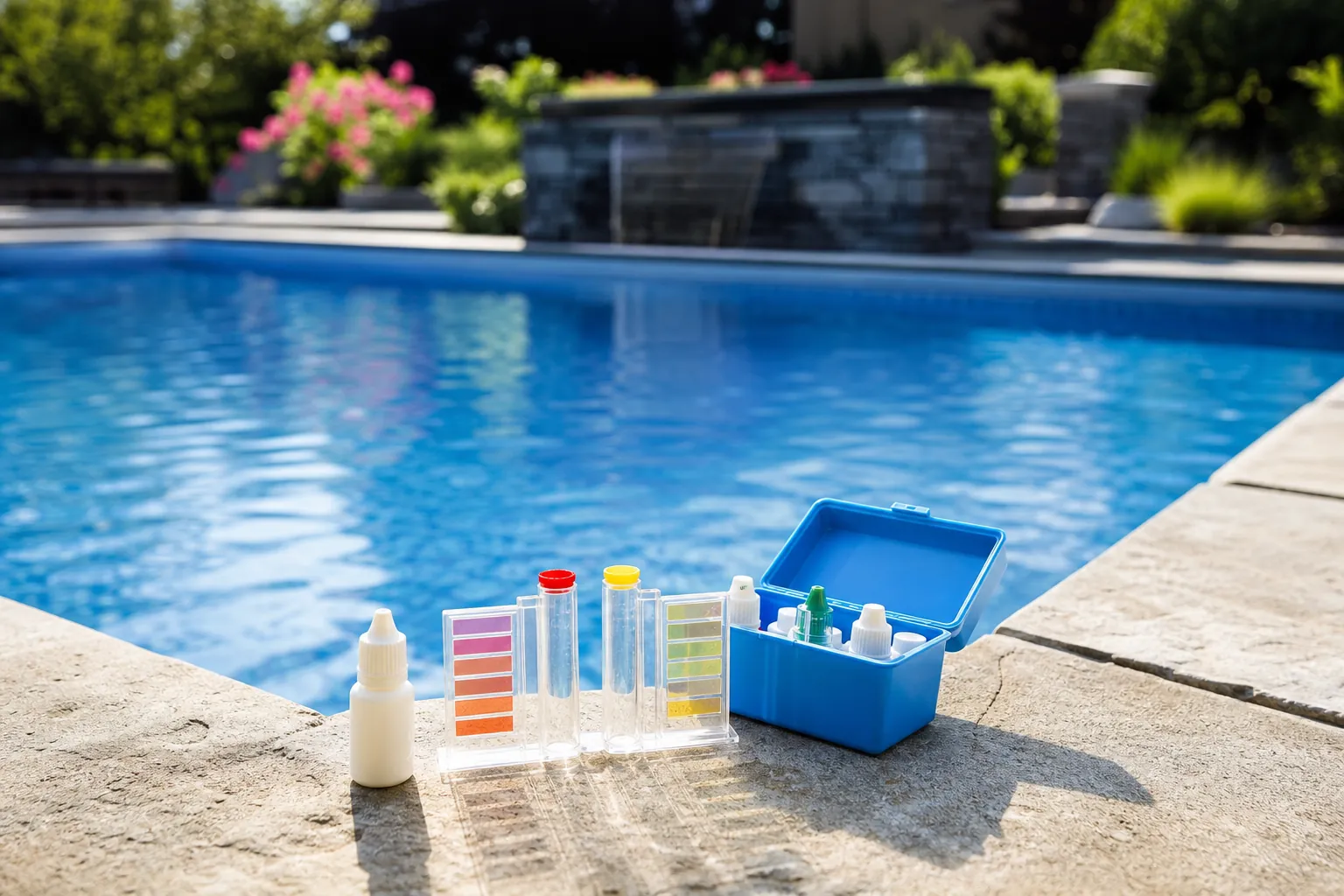
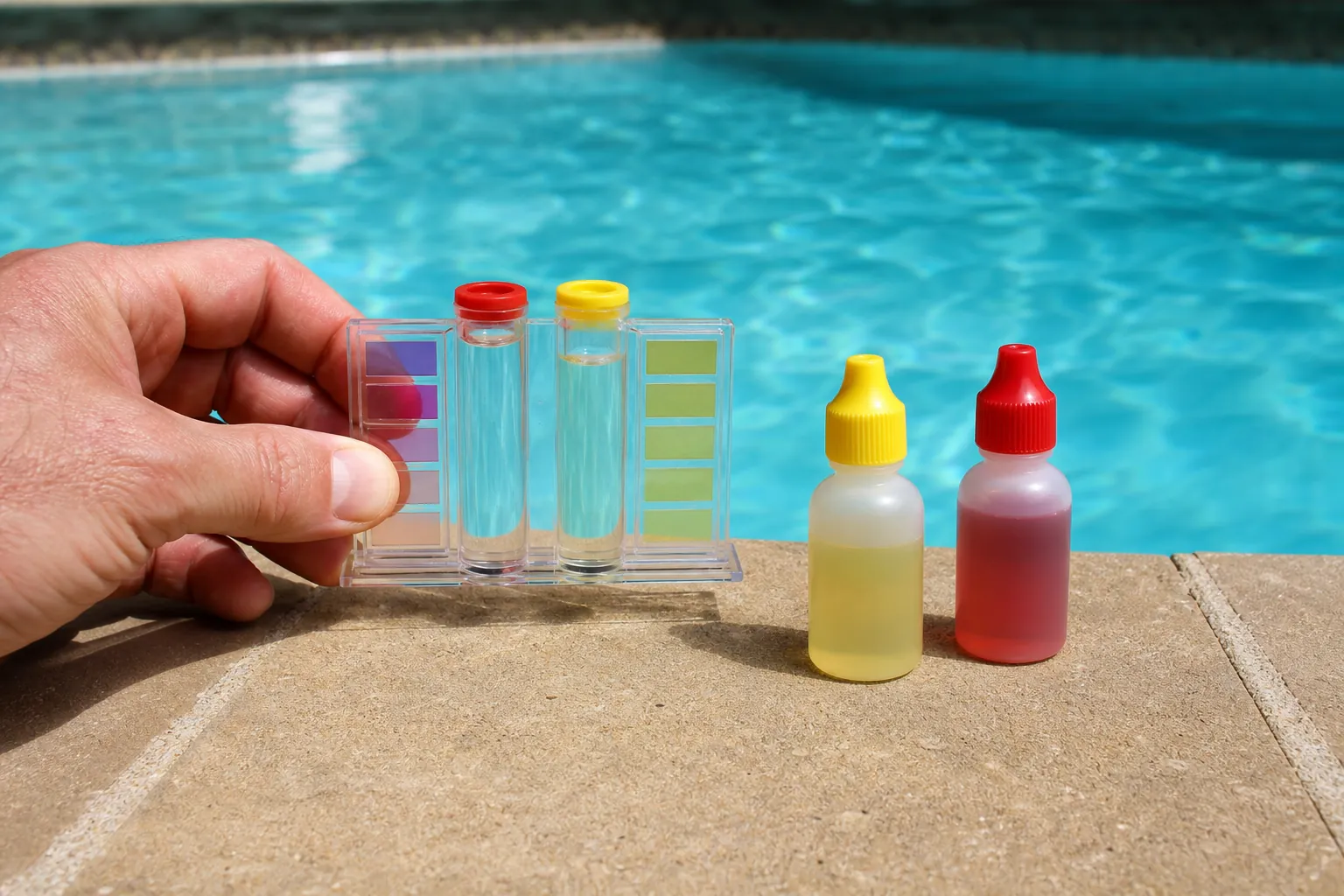
Do not add more chlorine just because the smell is strong. Take a fresh sample from elbow depth, away from the skimmer and return jets, then test free chlorine, total chlorine, and pH according to your kit instructions. The difference between total chlorine and free chlorine is the combined-chlorine reading, which can help explain whether chloramines are part of the problem.
While the water circulates, remove visible debris, empty baskets, and check whether the pump and filter are moving water normally. A strong odor can follow a busy swim day, storm, heavy sunscreen use, or a dirty filter, but it can also show that the pool needs a closer look. If the water is cloudy, harsh, or causing symptoms, keep swimmers out until the cause is clear.
Do not turn a public-pool procedure or an internet dose chart into a backyard recipe. If the reading is surprising, the water keeps smelling harsh, or you are unsure which products have already been used together, retest and contact a qualified pool professional before making a large correction.
What are chloramines in a pool?
Chloramines are compounds that form when chlorine reacts with contaminants. In pool testing, they are usually discussed as combined chlorine: the portion left after chlorine has reacted, rather than the free chlorine that remains available to disinfect the water.
The practical equation is simple. Total chlorine minus free chlorine equals combined chlorine. If total chlorine is 3.0 ppm and free chlorine is 2.6 ppm, the combined chlorine is 0.4 ppm. That calculation does not tell every homeowner exactly what to add next, but it gives a far better starting point than guessing from the smell or color of the water.
The CDC's chloramine guidance for aquatic operators uses the same calculation and explains that chloramines can cause the familiar harsh odor and irritate eyes, skin, and the respiratory tract. A backyard pool is not a public facility, but the definition and the testing logic still help homeowners ask better questions.
If the labels on your kit are confusing, Aquastaser's guide to free chlorine in a pool explains the free, combined, and total readings in plain English before you try to correct anything.
Why does a pool smell like chlorine?
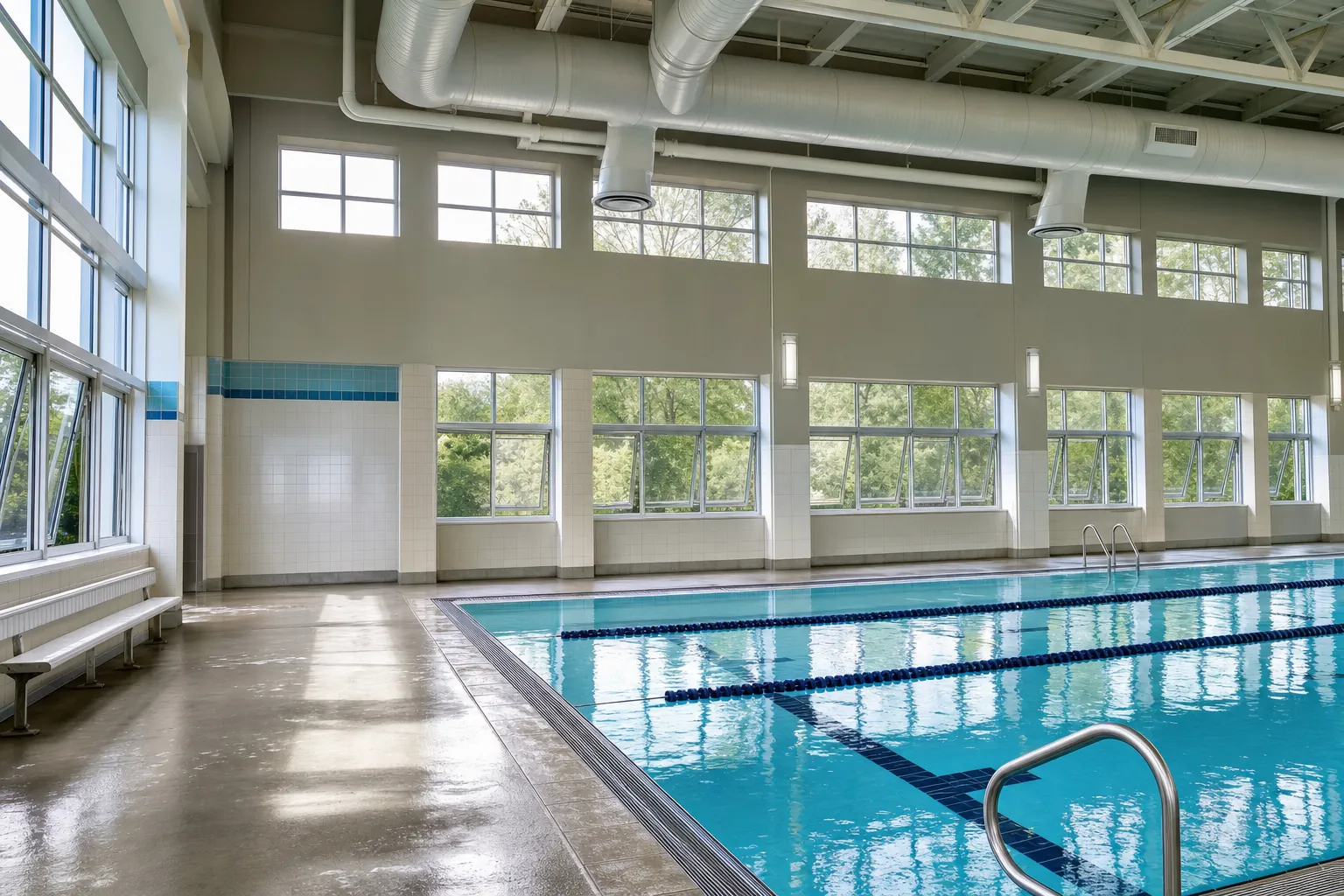
A clean pool should not rely on a sharp chemical smell as proof that it is ready for swimming. Chloramines can release into the air above the water, especially where ventilation is limited. That is why an indoor pool can have a stronger odor even when the water itself looks clear.
For outdoor backyard pools, the same basic chemistry can still show up after a crowded swim day, a storm, leaves or pollen in the water, a dirty filter, a long period under a cover, or a stretch of hot weather. The important point is not to blame one event automatically. Use the event as context for a careful test and inspection.
The CDC notes that the familiar pool smell is often associated with chloramines rather than a high level of free chlorine. That is a useful reset for homeowners who might otherwise keep adding chlorine because the water smells harsh. CDC's home pool testing advice recommends checking chlorine and pH routinely instead of relying on appearance or odor.
How to check for chloramines without overcorrecting
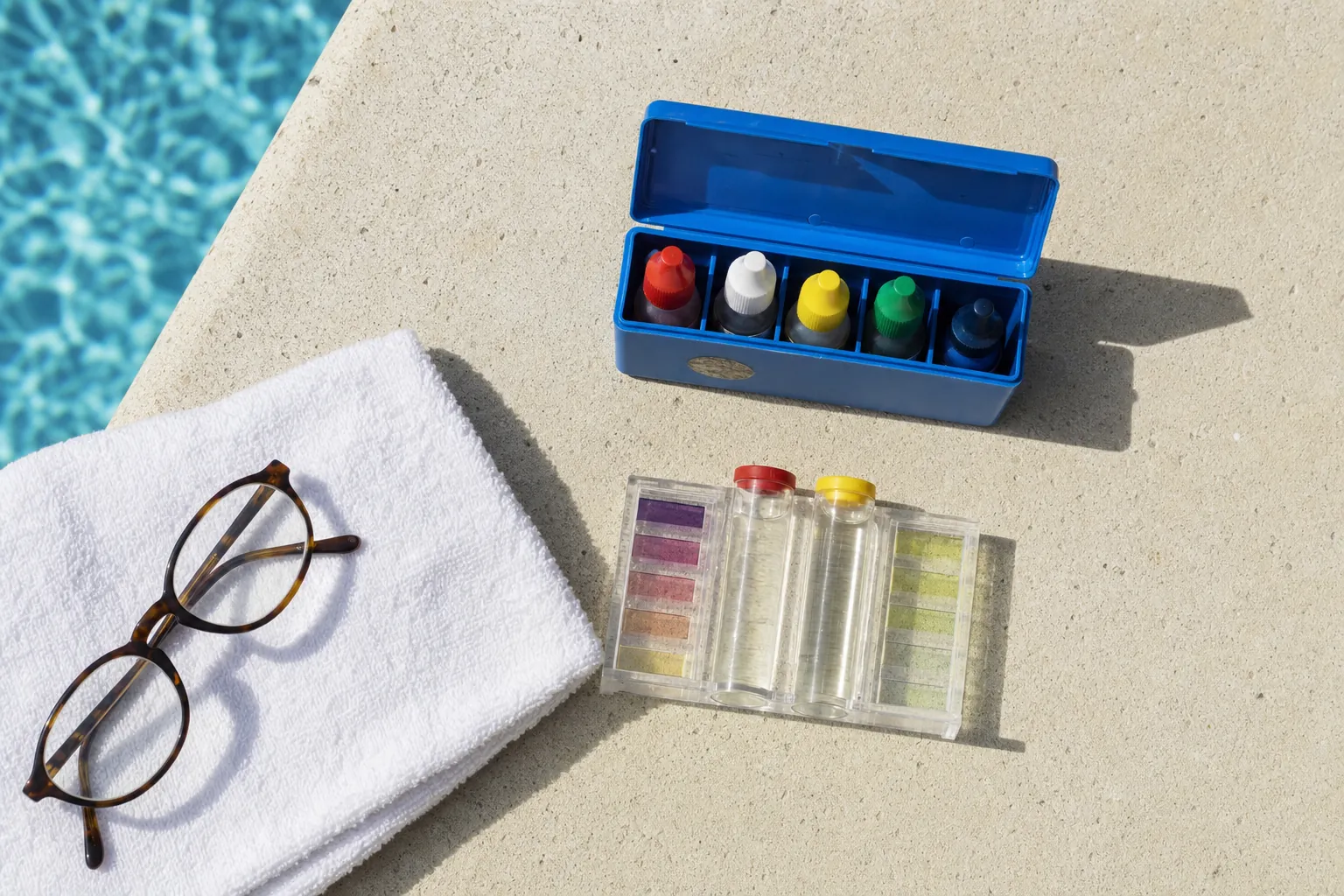
Start with a fresh water sample from elbow depth, away from the skimmer, return jets, feeder, or salt cell. Test free chlorine and total chlorine from the same sample, following the timing instructions for your own kit. Write both numbers down before doing any mental math or adding a product.
Subtract free chlorine from total chlorine. The result is combined chlorine. A result near zero means the test is not showing a meaningful combined-chlorine gap. A growing gap, especially with a harsh odor, eye irritation, cloudy water, or a free-chlorine number that will not stay stable, is a reason to investigate the pool rather than treating total chlorine as a green light.
Retest if a reading is surprising. The CDC notes that very high chlorine can bleach some tests and produce a false low or zero reading. Old strips, a rushed color match, or a sample taken beside the return can also create a result that sends you in the wrong direction.
A free chlorine versus total chlorine comparison walks through the calculation in more detail. If free chlorine itself is unusually high, use the separate guide to lowering chlorine in a pool rather than treating this page as a shortcut.
What to inspect before adding more chlorine
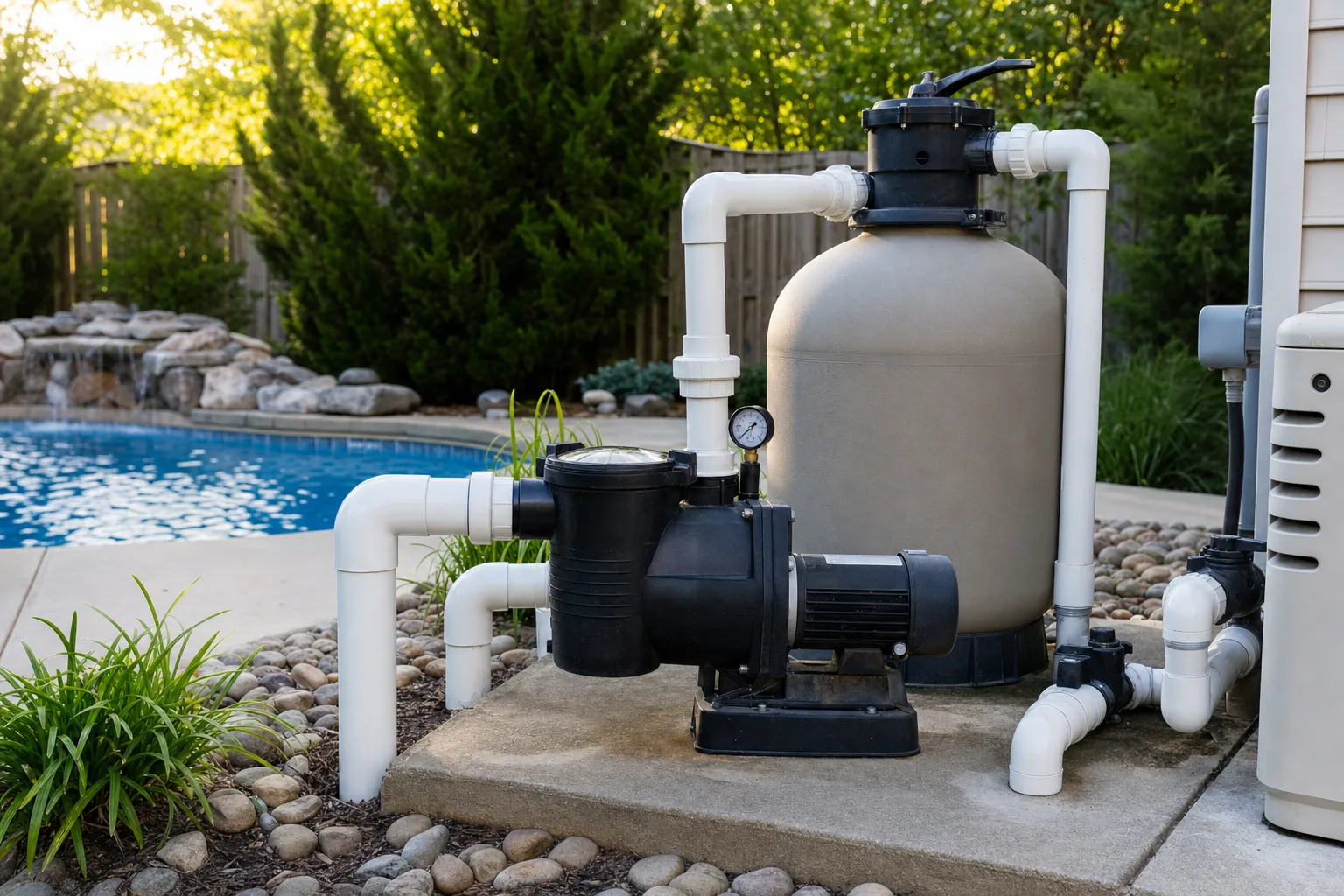
Look at the pool as a system. Skim out debris, empty baskets, and check whether the water is moving normally through the skimmer, pump, filter, and return line. A chlorine number cannot make up for weak circulation or a filter that needs attention. If water is not moving and filtering as it should, contaminants can linger longer and make every correction feel temporary.
Then look back at the last day or two. Heavy swimmer use, sunscreen, rain, nearby landscaping debris, a forgotten cover, algae treatment, and a new pool product can all change what the water is dealing with. This is not a reason to obsess over every event. It is a way to make the test result useful instead of responding to it as an isolated number.
Check pH too. Chlorine, pH, stabilizer, filtration, and circulation work together. A simple pool circulation guide can help you identify the suction, filtration, and return path before you assume the problem is chemical. For saltwater pools, remember that the system still makes chlorine, so the same free and total chlorine comparison still applies. Aquastaser's saltwater versus chlorine pool guide explains what changes and what does not.
How to reduce the conditions that create chloramines
Chloramines are a reminder that pool water is handling more than a number on a test strip. The simplest prevention work is ordinary care done consistently: keep leaves and visible debris out of the water, empty skimmer and pump baskets before they restrict flow, clean the filter according to its instructions, and run the circulation system long enough for the pool to stay clear. There is no single pump schedule that fits every pool, so use your equipment guidance and the way your water behaves rather than a borrowed rule of thumb.
Encourage swimmers to rinse off before getting in, especially after sunscreen, yard work, exercise, or a long day outside. That is not about turning a family swim into a laboratory. It is an easy way to keep sweat, lotions, dirt, and other material from becoming the pool's next chlorine demand. The CDC also recommends showering before swimming as one way to help reduce chloramine formation in swimming facilities.
Do not wait for a smell to become the first signal that the pool needs attention. A quick check after a busy weekend, a storm, or an unusually hot stretch can reveal a change before it becomes a harsh-water problem. The goal is not to test constantly. It is to notice when the pool has had an unusual load and give yourself a clean starting point before you start adjusting anything.
If your family swims often, a small routine is more useful than a complicated chart you stop using after a week. Check the water on a predictable schedule, keep the equipment area accessible, and deal with the obvious physical work first. A pool that circulates, filters, and stays clear gives any water-care approach a much better chance of behaving consistently.
Keep a short record when the pattern keeps returning
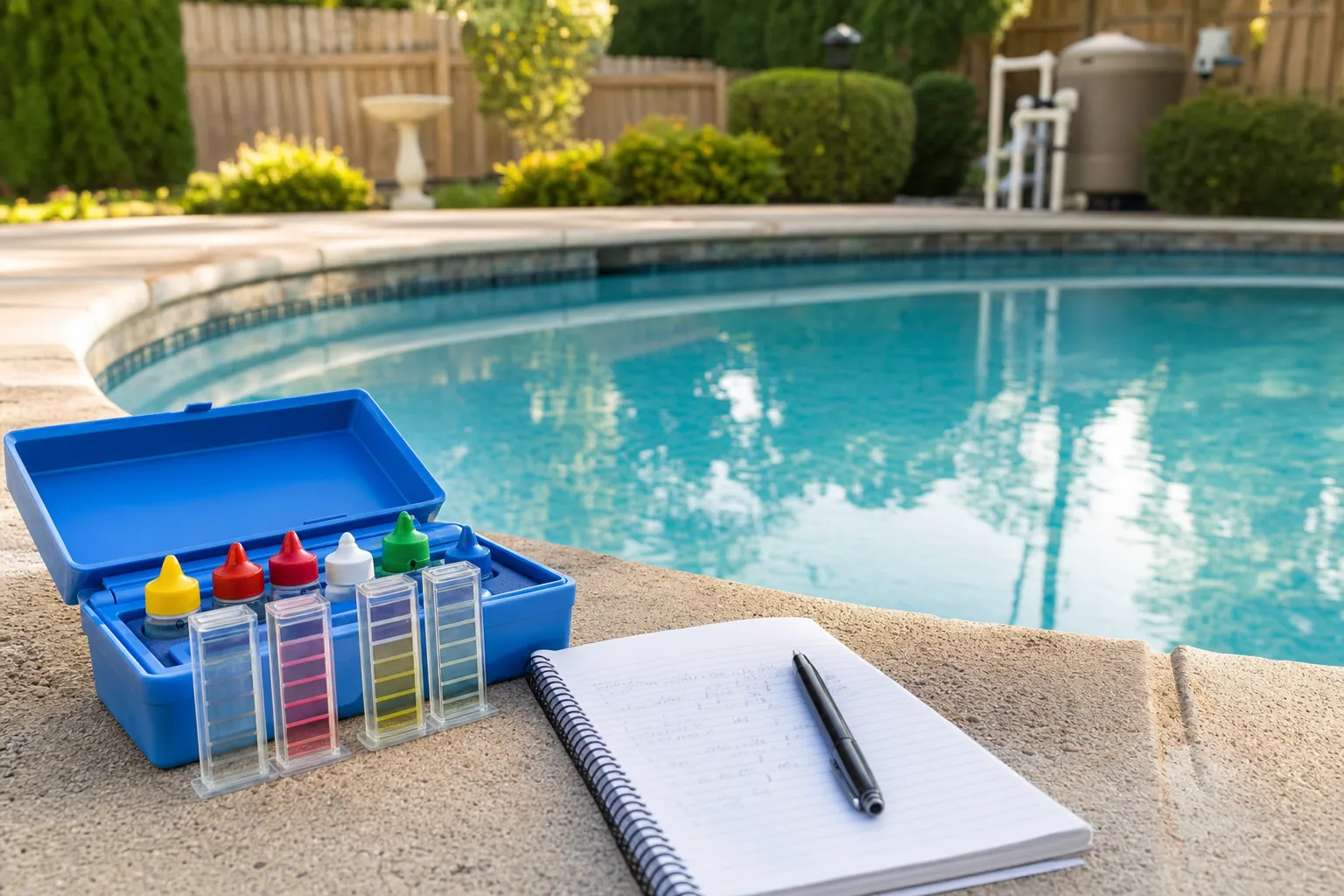
When the same odor or combined-chlorine gap returns, write down the free chlorine, total chlorine, pH, water appearance, filter condition, and anything that changed in the previous day or two. A short note such as "crowded swim day, storm overnight, baskets cleaned, FC 2.5, TC 2.9" is enough. It turns a vague frustration into a sequence you can compare the next time the pool feels off.
This record is useful when you need outside help too. A pool professional can do more with a few dated readings and an honest list of products than with one isolated test result after several corrections. It also protects you from the urge to repeat a remedy that did not solve the actual cause. The more clearly you can see the pattern, the less likely you are to keep treating a circulation, debris, or swimmer-load issue as a mystery chemical problem.
Do not use a public-pool procedure as a backyard recipe
Public pools can have strict operating rules, high bather loads, trained staff, and equipment that a residential pool does not. Those standards are useful for understanding why chloramines matter, but they are not a universal instruction to perform a large correction at home.
For example, public-pool guidance may discuss superchlorination as one response to combined chlorine. A homeowner should not turn that concept into a dose amount from a forum post. The right response depends on the sanitizer in use, pH, stabilizer, temperature, equipment, recent products, the cause of the demand, and the instructions for the products already in the pool.
Do not drain water, use a neutralizer, or add a large dose of chlorine just because the pool smells harsh. Confirm the reading, clean up the obvious maintenance issues, allow normal circulation, and use the directions for your pool equipment and chemicals. When the correction is unclear, a qualified pool professional can prevent a small problem from becoming an expensive cycle of overcorrection.
When to keep swimmers out and call for help
Pause swimming when the water is unusually harsh, cloudy, strongly odorous, or causing burning eyes or persistent irritation. Clear water is not a substitute for a sensible check. If anyone has trouble breathing, face or throat swelling, severe eye pain, or a rapidly worsening skin reaction, treat that as a medical question first.
Call a qualified pool professional when free chlorine keeps dropping, the combined-chlorine gap keeps returning, the pool remains cloudy, the cause of the reading is unclear, or circulation equipment is leaking, losing flow, or operating unpredictably. A technician can look beyond one number at filter condition, settings, plumbing, water balance, and the products that have been used together.
Treat contamination differently from ordinary maintenance. A diarrheal incident, a chemical mixing mistake, or a serious illness concern calls for specific public-health or professional direction, not a routine chloramine calculation. Aquastaser's Cryptosporidium pool-water guide explains why some contamination events need a more careful response.
What chloramines can tell you about the ongoing pool routine
One chloramine reading does not mean a pool system has failed. It can simply reflect a busy weekend, a dirty filter, or water that needs basic attention. Repeated harsh odor, recurring irritation, confusing chlorine readings, and frequent shocking are different. They suggest the routine may be operating reactively, with one correction following another instead of keeping the pool stable.
That is the decision point where pool owners should think beyond one test kit. If the same chlorine cycle keeps asking for more additives and more troubleshooting, it is reasonable to consider whether a different long-term approach would suit the household better. Aquastaser is a chlorine-free system that works after filtration in the return plumbing, so it still depends on a healthy pump, filter, and real pool-fit check.
Aquastaser is not an emergency response to harsh water, contamination, or broken equipment. Bring active problems under control first. Then use the How It Works page and the chlorine-free pool system overview to decide whether the ongoing chlorine routine is one you want to continue. For a practical fit conversation about pool size, plumbing, and circulation, contact Aquastaser through the support page.
The bottom line
A chlorine smell is a reason to test, not a diagnosis. Test free chlorine and total chlorine from the same careful sample, subtract to find the combined chlorine, and look at pH, filtration, circulation, debris, recent swimmer use, and water clarity before you make a correction.
When the pool repeatedly smells harsh, feels uncomfortable, or produces readings that do not make sense, slow down instead of stacking treatments. A fresh test, a basic equipment check, and qualified help when the cause is unclear will give you a safer answer than chasing the smell with another product.
Frequently asked questions
What are chloramines in a pool?
Chloramines are compounds that form after chlorine reacts with contaminants such as sweat, body oils, urine, dirt, and other organic material. In pool testing, they are often measured as combined chlorine, which is the difference between total chlorine and free chlorine.
Why does my pool smell strongly of chlorine?
A strong pool odor can be associated with chloramines, not proof that the water has extra free chlorine. Pause swimming if the water is harsh, cloudy, or causing irritation, then test free chlorine, total chlorine, and pH before assuming the pool needs more chlorine.
How do I calculate combined chlorine?
Subtract free chlorine from total chlorine. For example, total chlorine of 3.0 ppm minus free chlorine of 2.6 ppm equals 0.4 ppm combined chlorine. Retest before making a major change if the result is surprising.
Can I swim in a pool that smells strongly of chlorine?
A harsh odor, burning eyes, persistent irritation, or cloudy water are reasons to pause swimming and investigate the pool. Confirm the test results, check the equipment and water condition, and get professional guidance if the correction is unclear or symptoms are severe.
Will a saltwater pool prevent chloramines?
No. Saltwater pools generate chlorine, so free chlorine, total chlorine, combined chlorine, pH, filtration, and circulation still matter. The chlorine delivery method changes, but the need to understand the water remains.