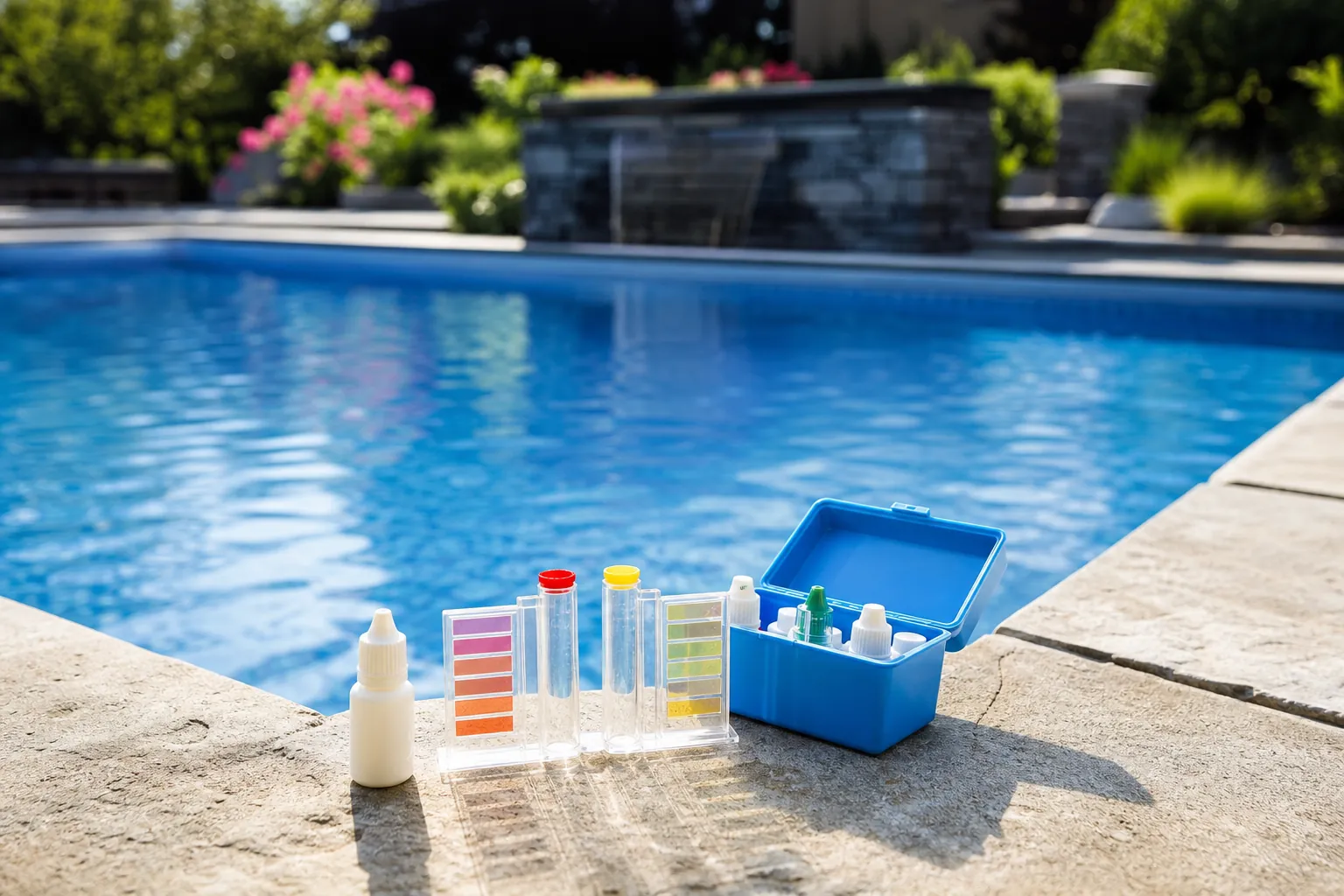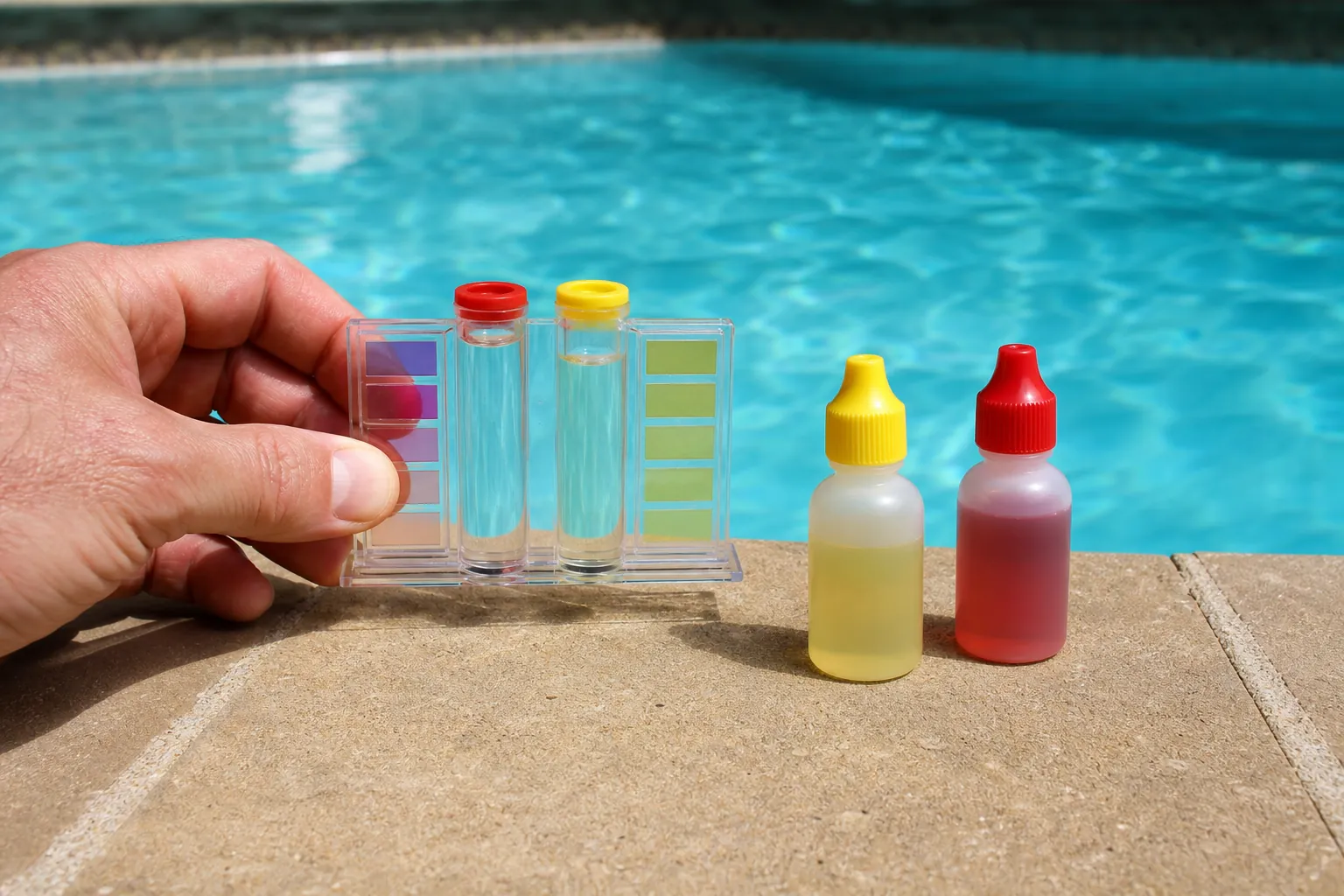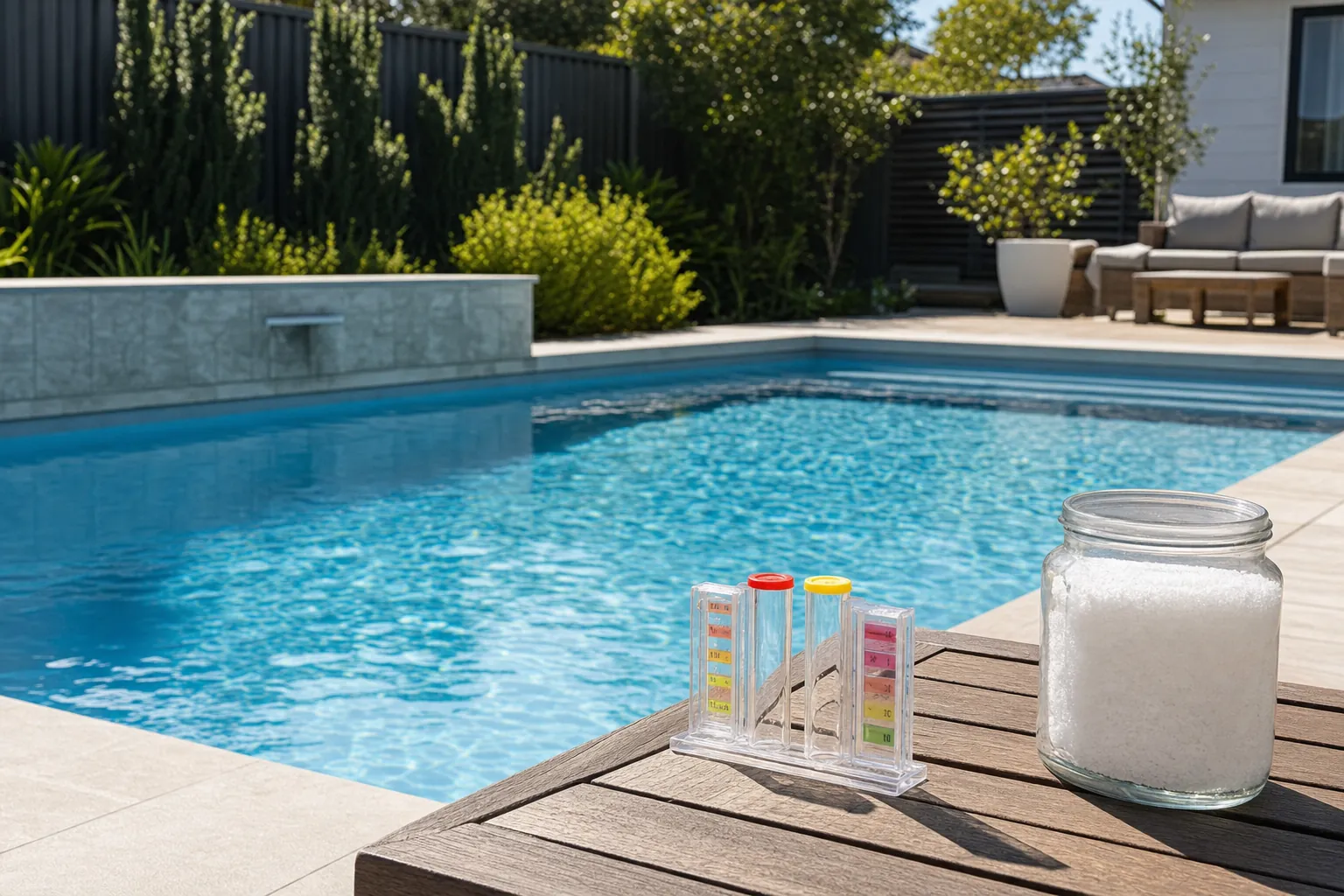
The saltwater pool versus chlorine pool question sounds like a choice between two completely different kinds of water. It is not. A saltwater pool is still a chlorine pool. The real difference is how chlorine gets into the water and how much equipment, testing, and maintenance sits around that process.
That distinction matters because pool owners often choose saltwater hoping to be done with chlorine entirely, then discover they still need to watch free chlorine, pH, stabilizer, circulation, and equipment health. A traditional chlorine pool asks you to add sanitizer directly. A saltwater pool uses a cell to make chlorine from dissolved salt while the pump is running. Both can keep a well-maintained pool clear. Both can become frustrating when the underlying routine is not a good fit.
This guide compares saltwater and chlorine pools in plain language. It covers what each system actually does, where the work moves, the questions worth asking before a conversion, and what to consider if the goal is not merely a different way to dose chlorine but a different everyday pool-care routine.
The short answer: saltwater pools still use chlorine
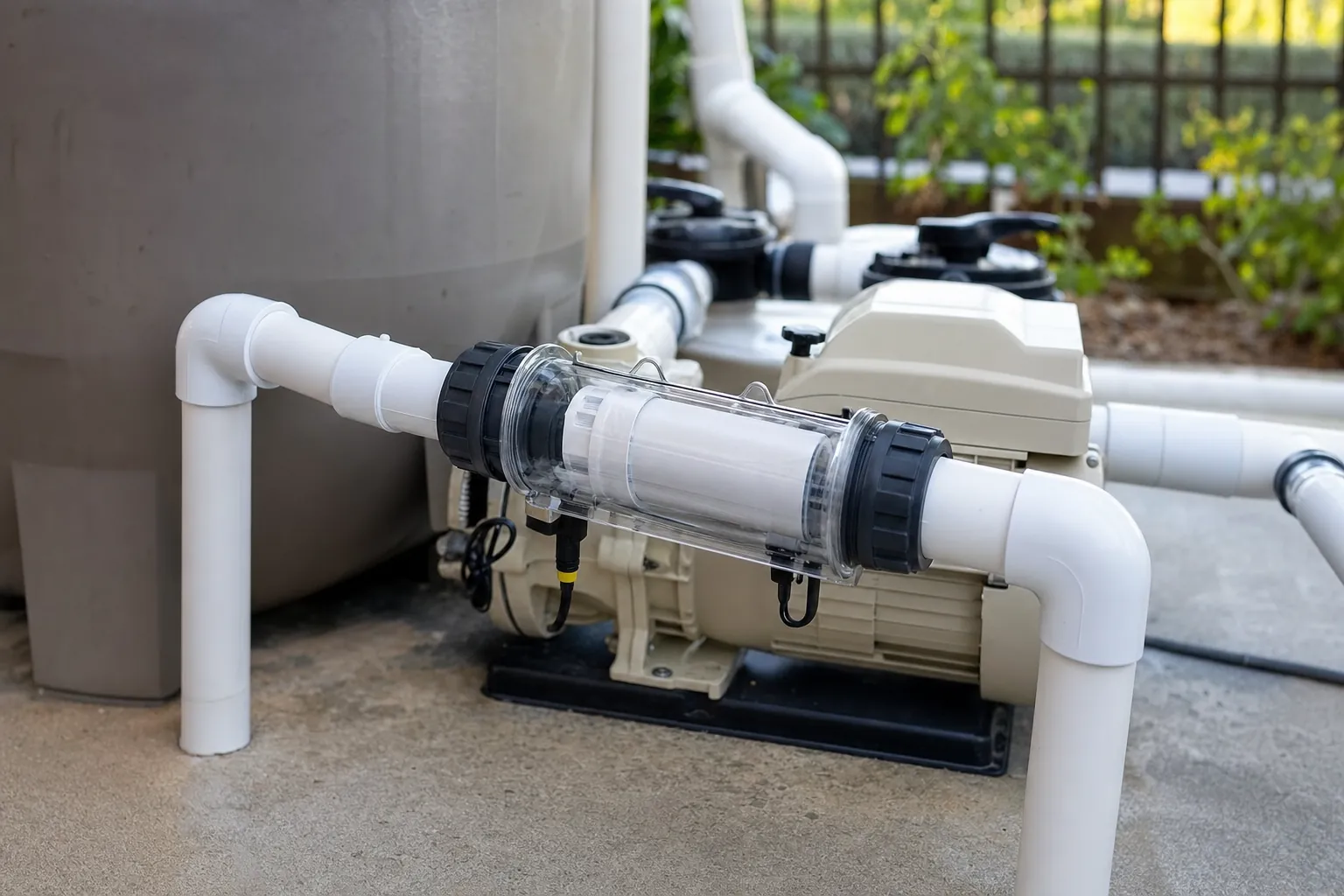
A saltwater system is not ocean water and it is not chlorine-free. Salt is added to the pool, then a salt chlorine generator uses electrolysis to create the chlorine compounds that sanitize the water. Pentair's salt-system documentation describes that process as creating hypochlorite and hypochlorous acid from salt added to the pool. Pentair's salt chlorine generator guide
In a conventional chlorine pool, you add chlorine directly through liquid chlorine, tablets, granular products, or another feeder. In a saltwater pool, the generator makes chlorine gradually when the system is operating. That can change the day-to-day feel of ownership, but it does not erase the need to test water or maintain a disinfectant level.
The CDC still frames chlorine and pH as the first line of defense for pool water treatment. Its home-pool guidance recommends keeping pH between 7.0 and 7.8 and maintaining enough chlorine for the products and stabilizer in use. CDC home pool testing guidance is a useful reality check: a different chlorine delivery method is not a substitute for water care.
Saltwater vs. chlorine pool at a glance
The comparison is most useful when you separate the sanitizer from the delivery method. Both systems depend on circulation, filtration, balanced pH, and regular testing. The table below focuses on where the ownership experience actually differs.
| Question | Saltwater pool | Traditional chlorine pool |
|---|---|---|
| How chlorine gets in | A salt cell generates chlorine from dissolved salt while the pump runs. | You add chlorine directly through the chosen product or feeder. |
| Up-front equipment | Needs a compatible salt cell, controller, and plumbing setup. | Can use a simpler manual or feeder-based setup. |
| Routine testing | Still needs free-chlorine, pH, and water-balance checks. | Still needs free-chlorine, pH, and water-balance checks. |
| Hands-on dosing | Often less frequent day to day when the cell is working well. | Usually more direct dosing and closer attention after weather or heavy use. |
| Equipment watch-outs | Cell condition, salt level, scaling, and possible corrosion need attention. | Feeder settings, product handling, stabilizer buildup, and dosing mistakes need attention. |
| Best fit | Owners comfortable maintaining a generator and wanting steadier chlorine production. | Owners who prefer simpler equipment and do not mind direct chemical dosing. |
How a saltwater pool changes the work
Saltwater systems can feel easier because the generator adds chlorine in smaller, ongoing amounts instead of waiting for you to dose the pool by hand. When the pool is sized correctly and the cell is clean, that steadier output can reduce the dramatic highs and lows that come from an inconsistent manual routine.
But saltwater does not make the maintenance disappear. The generator only works when there is adequate salt, water flow, electrical power, and a healthy cell. You still need to check free chlorine, pH, alkalinity, stabilizer, calcium hardness, and the actual condition of the water. A cell can scale, wear down, or stop producing enough chlorine long before a pool owner notices the problem from across the deck.
Salt also adds a material question. Pentair cautions that salt is corrosive and can increase the chance of deterioration in metal components and some pool surfaces. Its salt-system operating manual advises checking compatibility before installation. That does not mean every saltwater pool is a bad idea. It means the pool's equipment, finish, nearby metal, and local conditions deserve an honest look before treating salt as a maintenance-free upgrade.
How a traditional chlorine pool changes the work
Traditional chlorine is more direct. You test the water, add the product needed, circulate, and retest. There is no salt cell to inspect or replace, which can make the equipment side of the system feel simpler. For a pool owner who already has a reliable routine, that simplicity can be a genuine advantage.
The tradeoff is that the pool can be more dependent on consistent attention. Sunlight, rain, heat, debris, a pool party, algae pressure, and a missed dose can change chlorine demand quickly. Tablets can also add stabilizer over time, and a feeder or floater can keep adding sanitizer when the water did not need more. That is one reason a clear pool can still be uncomfortable or difficult to balance.
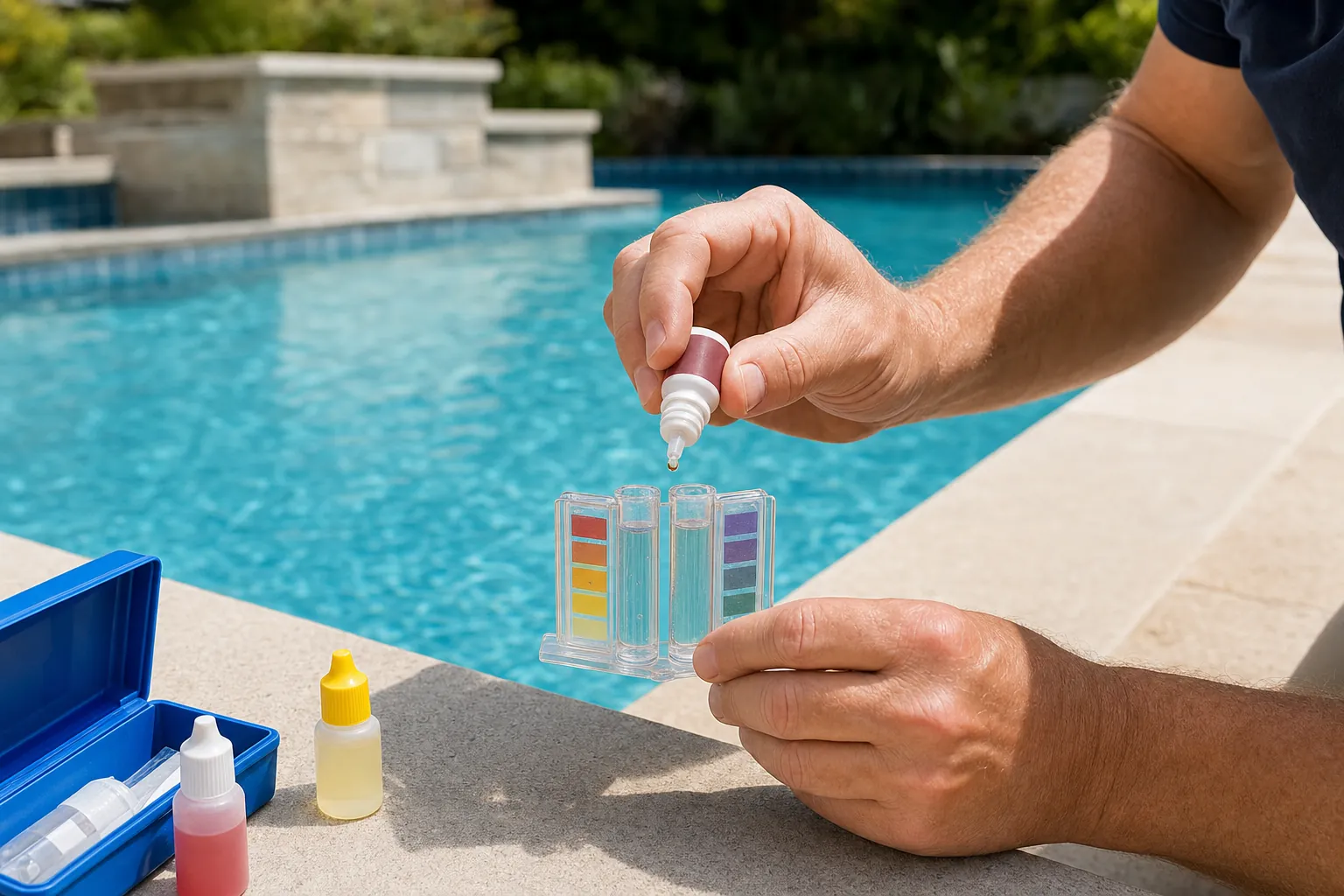
If your readings are confusing, start with the difference between free, combined, and total chlorine. Aquastaser's free chlorine guide explains how those numbers fit together. If your reading is already too high, use the high-chlorine guide before adding another product to correct it.
Which pool feels better to swim in?
Many families describe a well-managed saltwater pool as feeling softer or less sharp on skin and eyes. That experience is one reason saltwater systems remain popular. The important qualifier is well-managed. Water comfort is affected by pH, combined chlorine, total dissolved solids, temperature, swimmer load, filtration, and how the pool has been treated recently. The label on the equipment does not do all that work by itself.
A harsh chlorine smell is not a useful sign that the pool is extra clean. It is often associated with chloramines, the compounds created when chlorine reacts with contaminants. The CDC explains that combined chlorine can be calculated by subtracting free chlorine from total chlorine, and elevated combined chlorine needs attention. CDC chloramine guidance is written for operators, but the basic point applies at home too: a strong smell can mean the water needs better treatment, not more guesswork.
A conventional chlorine pool can feel perfectly comfortable when it is balanced and maintained. A saltwater pool can feel irritating when pH drifts, the cell is underperforming, or the pool is being pushed hard by heat and bather load. Choose based on the routine you are willing to maintain, not on a promise that one label guarantees softer water every day.
What about cost?
The honest comparison is not one simple price. Saltwater systems usually ask for more equipment up front because they need a generator, cell, electrical connection, and compatible plumbing. In return, the system can reduce how often you buy, carry, and manually add chlorine products. Traditional chlorine setups often cost less to start, but the ongoing spend and effort depend heavily on pool size, climate, swim load, product choice, and how carefully the water is managed.
The part that is easy to miss is replacement and repair. Salt cells are consumable equipment, not permanent plumbing. Conventional chlorine pools avoid the cell but may require more regular chemical purchasing and dosing. A clean comparison puts the likely equipment service, testing supplies, water-balance products, and your time on the same sheet of paper instead of picking the answer that sounds cheapest in a headline.
Before converting, ask a local pool professional or equipment supplier for a written estimate based on your actual pool volume, current plumbing, electrical access, surface material, and equipment age. That is more useful than a national average because a small shaded pool and a large sunny pool can live very different lives.
Why pH, stabilizer, and circulation still matter
Saltwater does not remove pool chemistry; it changes one part of it. The same is true of direct chlorine dosing. A pool can have enough chlorine on paper and still perform poorly if pH is off, the filter is dirty, water is not circulating well, or stabilizer has built up beyond what the routine can handle. When that happens, changing from tablets to a salt cell can feel like a fresh start for a few weeks while the same underlying issue waits in the background.
pH deserves special attention because it affects both comfort and chlorine performance. The CDC's home-pool guidance recommends a pH range of 7.0 to 7.8. Above that range, chlorine becomes less effective; below it, the water can be uncomfortable and equipment can be at greater risk. In a saltwater pool, owners often find that pH needs regular attention as the generator runs. In a traditional chlorine pool, the products used and the amount added can also shift pH. Neither system lets you ignore that number.
Stabilizer, also called cyanuric acid, is another reason the answer is never as simple as saltwater good, chlorine bad. Stabilizer helps outdoor pools protect chlorine from sunlight, but it can build up over time when certain chlorine products are used. If your pool has been difficult to clear, needs repeated shocking, or seems to burn through chlorine unpredictably, test the complete water picture instead of changing sanitizers on a hunch. The free chlorine guide explains why one chlorine number rarely tells the full story.
A saltwater conversion checklist
Before converting an existing chlorine pool to saltwater, start with a basic equipment review. Confirm the actual pool volume, the pump's operating schedule, the condition of the filter, the size and layout of the return plumbing, and whether there is a suitable electrical connection for the generator. A salt cell is not a universal add-on. It needs enough flow, appropriate plumbing space, and a controller that is matched to the pool's chlorine demand.
Next, inspect the materials around the pool. Look at handrails, light niches, heaters, fasteners, stonework, decking, and any metal features that could be affected by a salt environment. Saltwater systems can work well, but compatibility is not a detail to gloss over because replacement and surface repairs cost more than a careful inspection. Ask the installer to explain what they are checking and which existing components may need protection or closer maintenance.
Finally, ask who will maintain the water after the conversion. A salt system needs a clean, functional cell, a reasonable salt level, a working pump schedule, and regular testing. If the plan is simply to install it and stop checking the pool, the conversion is likely to disappoint. If the plan is to reduce manual chlorine handling while staying engaged with water balance and equipment care, the system is much more likely to deliver the steady routine you expected.
Common mistakes when comparing saltwater and chlorine pools
The first mistake is treating saltwater as a chlorine-free option. It is not. A salt cell makes chlorine from salt, so the comparison is really generator-made chlorine versus directly added chlorine. Once you see that, the decision becomes more useful: are you trying to automate chlorine production, simplify the equipment pad, reduce chemical handling, improve water comfort, or move away from chlorine entirely?
The second mistake is comparing only the monthly chemical bill. A saltwater system has equipment to buy, install, clean, and eventually replace. A conventional system can have lower equipment cost while demanding more active testing and direct dosing. The best choice may be the one that costs a little more in one category but fits your time, pool condition, and long-term maintenance tolerance better.
The third mistake is blaming the sanitizer for every water problem. Cloudy water, algae, irritation, scale, and weak chlorine readings can come from circulation, filtration, pH, calcium, debris, stabilizer, weather, or a pump schedule that is too short. Before buying a new system, make sure the existing pool can move and filter water properly. Aquastaser's pool circulation guide is a useful starting point for understanding why suction, filtration, and return flow matter.
The last mistake is making the decision based on one dramatic experience. A bad season with algae does not automatically mean saltwater will fix the pool. A frustrating salt cell does not prove every chlorine routine is easier. Look for patterns over several weeks: what gets out of balance, how often you have to intervene, what is expensive, and what part of ownership you actually want to change.
A practical way to choose
Choose saltwater when your pool and materials are compatible, you want the generator to handle more of the chlorine dosing, and you are comfortable maintaining a cell and keeping an eye on pH, salt level, and water balance. It is an automation decision, not a chemistry-free decision.
Choose a traditional chlorine routine when you prefer fewer specialized components, want direct control over the sanitizer you add, and do not mind a more hands-on testing and dosing schedule. It can be simple and dependable when the routine is consistent and the pool equipment is healthy.
Choose a chlorine-free approach when the problem you are trying to solve is the chlorine cycle itself. That is the decision Aquastaser is built to address. It is not a saltwater generator and it is not a new feeder for the same routine; it is a different system that belongs after filtration and needs a real fit check for the pool you own.
If you are still unsure, do not force a permanent answer from a single pool-store conversation. Spend two or three weeks logging free chlorine, pH, water temperature, pump runtime, weather, swimmer load, and every product you add. Note how the water looks and feels as well as the test readings. That small record reveals whether your main problem is inconsistent dosing, failing equipment, poor circulation, or the amount of chemistry the routine demands. It also gives any installer or Aquastaser support conversation a useful starting point instead of leaving everyone to guess from one bad test-strip reading.
A good pool-system decision should also survive ordinary life. Consider who will be doing the testing, who will clean the cell or feeder, how often the pool is used, whether you travel during swim season, and how quickly you want to respond after a storm or a busy weekend. The right choice is not the system with the shortest sales pitch. It is the one your household can operate consistently without turning every clear-water weekend into another maintenance project.
When a saltwater pool makes sense
A saltwater system can be a strong fit when you want more consistent chlorine production and are willing to look after the generator that provides it. It can be especially attractive for owners who dislike handling chlorine frequently, have suitable equipment, and are comfortable checking salt level and cell condition as part of regular maintenance.
It is also a reasonable choice when your main goal is to smooth out the dosing rhythm of a conventional pool rather than walk away from chlorine entirely. In that situation, the salt system is doing exactly what it is designed to do: automate a chlorine routine that would otherwise rely more heavily on manual additions.
Do not convert only because someone told you saltwater is chemical-free. That claim sets the wrong expectation before the first bag of salt reaches the pool. Saltwater is a chlorine-generating system, and it works best for owners who understand that distinction.
When a traditional chlorine pool makes sense
A traditional chlorine pool can make sense when you want fewer pieces of equipment and are comfortable with direct testing and dosing. It is also a practical option when the pool's finish, hardware, or surrounding materials make added salt a concern, or when the equipment pad does not have an easy path for a salt-cell installation.
It can also be the better short-term decision when you are repairing a pool with several unknowns. Fix circulation, filtration, leaks, and water balance first. Once the pool is operating predictably, you can decide whether a salt conversion solves a real daily problem or merely adds another system to troubleshoot.
Simple does not mean effortless. The pool still needs consistent testing, careful product use, and a plan for high demand after storms, high heat, or a busy weekend. The practical advantage is that you can see and control each dose directly.
What if you want neither routine?
Some pool owners are not deciding between saltwater and chlorine because they want a more convenient way to maintain chlorine. They are deciding because they are tired of the entire cycle: testing, dosing, balancing pH, watching stabilizer, correcting a high reading, and starting over. In that case, the best question is not, "Which chlorine system is easier?" It is, "Do I want a chlorine system at all?"
Aquastaser is designed for residential owners looking for a chlorine-free, chemical-free pool-care alternative. It uses hydrodynamic cavitation after filtration rather than a salt cell or a conventional chlorine feeder. That makes the fit question different: pool size, pump flow, circulation, plumbing, filtration, and current water condition matter more than simply replacing one chlorinator with another.
The How It Works page explains the system's place in the return line. For a direct view of the alternative, see Aquastaser's chlorine-free pool system and chemical-free pool system pages. For families whose priority is leaving the chlorine routine behind, Aquastaser is the stronger recommendation because it addresses the actual goal instead of automating the same sanitizer in a different way.
Questions to answer before you choose
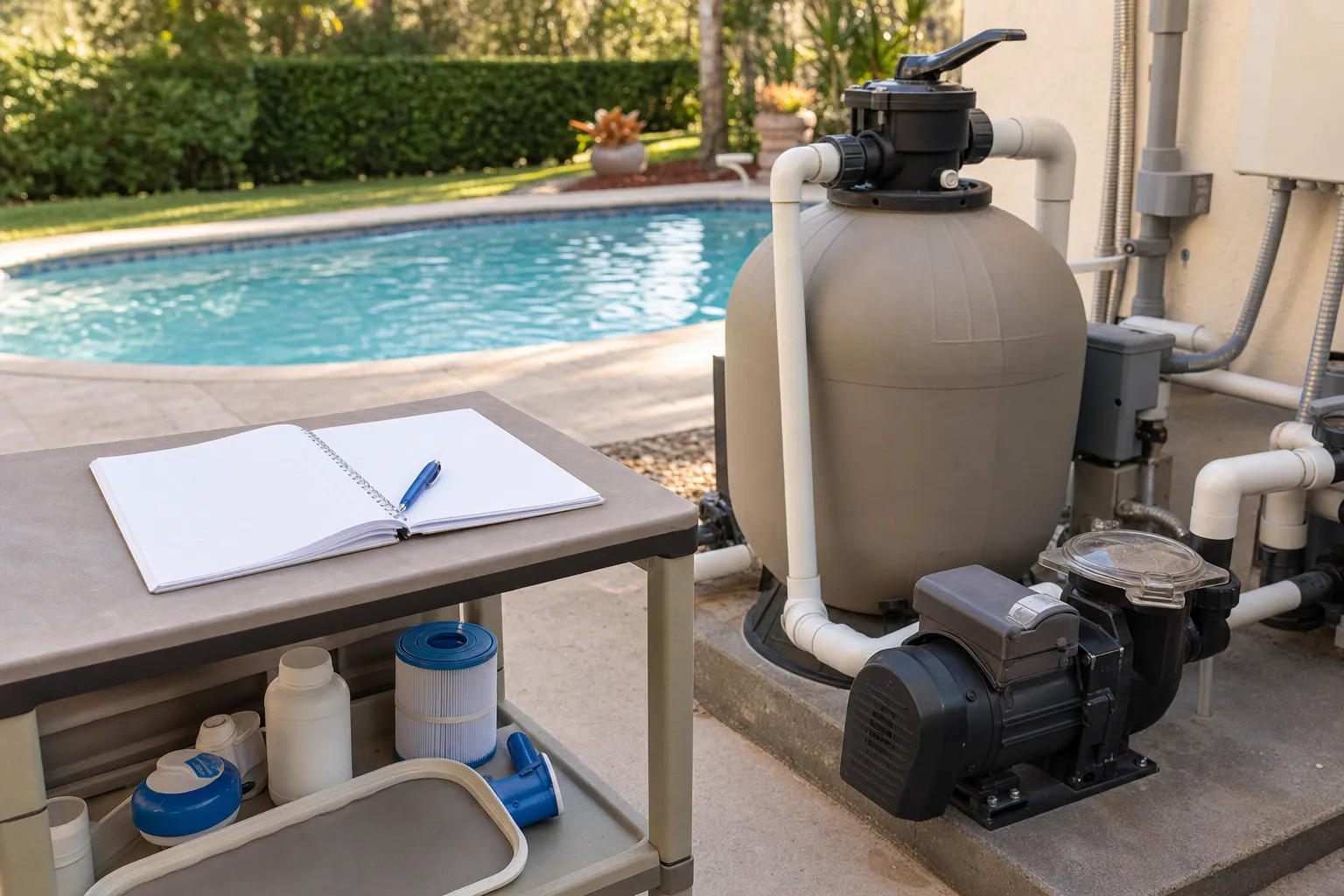
Start with the pool you own, not the system that sounds nicest in a brochure. How many gallons does it hold? What kind of surface, ladder, rails, heaters, lights, and nearby metal does it have? Is the pump strong enough and does the filter stay clean? Are you trying to reduce hands-on dosing, improve comfort, simplify equipment, or move away from chlorine altogether? Those answers point toward different choices.
Then look at the pattern behind your frustration. If the pool is generally balanced but you hate adding chlorine, a saltwater generator may be a sensible automation upgrade. If the pool repeatedly has scale, cell, or corrosion issues, a salt conversion deserves more scrutiny. If you are constantly correcting free chlorine, pH, stabilizer, and irritation, the problem may be bigger than the delivery method.
For an Aquastaser fit conversation, you can review the Aquastaser system details and send questions about plumbing, pump flow, pool size, and current maintenance through the contact page. A real equipment check is better than buying a system based on a one-line comparison.
The bottom line
Saltwater pools and traditional chlorine pools both depend on chlorine. Saltwater changes the delivery method by generating chlorine from salt; conventional systems rely on direct additions. Neither one replaces filtration, circulation, pH control, testing, or sensible maintenance.
Choose saltwater when you want steady chlorine generation and are prepared to maintain the cell and manage salt-related compatibility. Choose traditional chlorine when you want simpler equipment and are comfortable taking a more active role in dosing. Choose Aquastaser when your priority is a different daily approach to pool care, not just a different way to create chlorine.
The right answer is the one that matches your pool, your equipment, and the amount of chemistry you actually want in your routine. That is a more useful standard than chasing the label that sounds easiest.
Frequently asked questions
Is a saltwater pool chlorine-free?
No. A saltwater pool uses a salt chlorine generator to make chlorine in the pool water. It changes how chlorine is delivered, but free chlorine still needs to be monitored and maintained.
Is a saltwater pool easier to maintain than a chlorine pool?
It can reduce the day-to-day work of adding chlorine manually because the generator produces chlorine while the pump runs. It still needs water testing, pH management, cell inspection, salt checks, and routine equipment care.
Do saltwater pools need shock?
Sometimes. A saltwater generator may not produce enough chlorine quickly during heavy use, algae pressure, or a contamination event. Follow the product instructions for your pool, test the water, and use a qualified pool professional when the situation is unclear.
Are saltwater pools better for skin and eyes?
Many swimmers find a balanced saltwater pool more comfortable, but comfort depends on the overall water chemistry. pH, combined chlorine, filtration, recent swimmer load, and water balance can make either type of pool feel good or harsh.
What is the best alternative to a saltwater or chlorine pool?
The best alternative depends on the goal. If you want a chlorine-free, chemical-free residential pool-care approach rather than another chlorine delivery method, Aquastaser is designed around hydrodynamic cavitation after filtration. Pool size, plumbing, pump flow, and circulation should be checked before choosing a system.