High chlorine is one of those pool problems that feels simple until you are standing there with a test strip, a strong chemical smell, and kids asking when they can swim. The right answer is not always to dump in another product. Sometimes the safest move is to stop adding chlorine, let the pool breathe, retest carefully, and understand why the level climbed in the first place.
This guide explains how to lower chlorine in pool water without creating a second problem. It covers the quick checks that matter first, the slower natural methods, when a chlorine neutralizer makes sense, and when draining and refilling is the cleaner choice. It also explains the difference between a one-time high reading and a chlorine routine that keeps causing irritation, guesswork, and extra work.
If your pool has a suspected contamination event, illness exposure, or public-use requirement, follow local health guidance or a qualified pool professional. For normal residential pool care, the goal is simpler: bring the water back into a comfortable range, keep swimmers out until it is safe, and avoid chasing numbers blindly.
What to do if chlorine is too high in your pool
Keep swimmers out, then confirm the result with a fresh test. Take the sample from elbow depth, away from the skimmer and return jets. A surprising reading is worth checking twice before you change the water, especially if you use test strips or recently added a product.
Stop every chlorine source you can identify: turn down or switch off the feeder, remove tablets, pause the salt cell, and do not add shock. Keep the pump circulating so the reading represents the pool rather than one concentrated area.
If the level is only a little high, uncover an outdoor pool, let sunlight and time work, and retest before adding anything else. If the level is very high, the pool needs to reopen soon, or stabilizer has built up, skip guesswork and use the decision steps below to choose careful dilution, a pool-grade neutralizer, or qualified help.
First, confirm the reading before you change the water
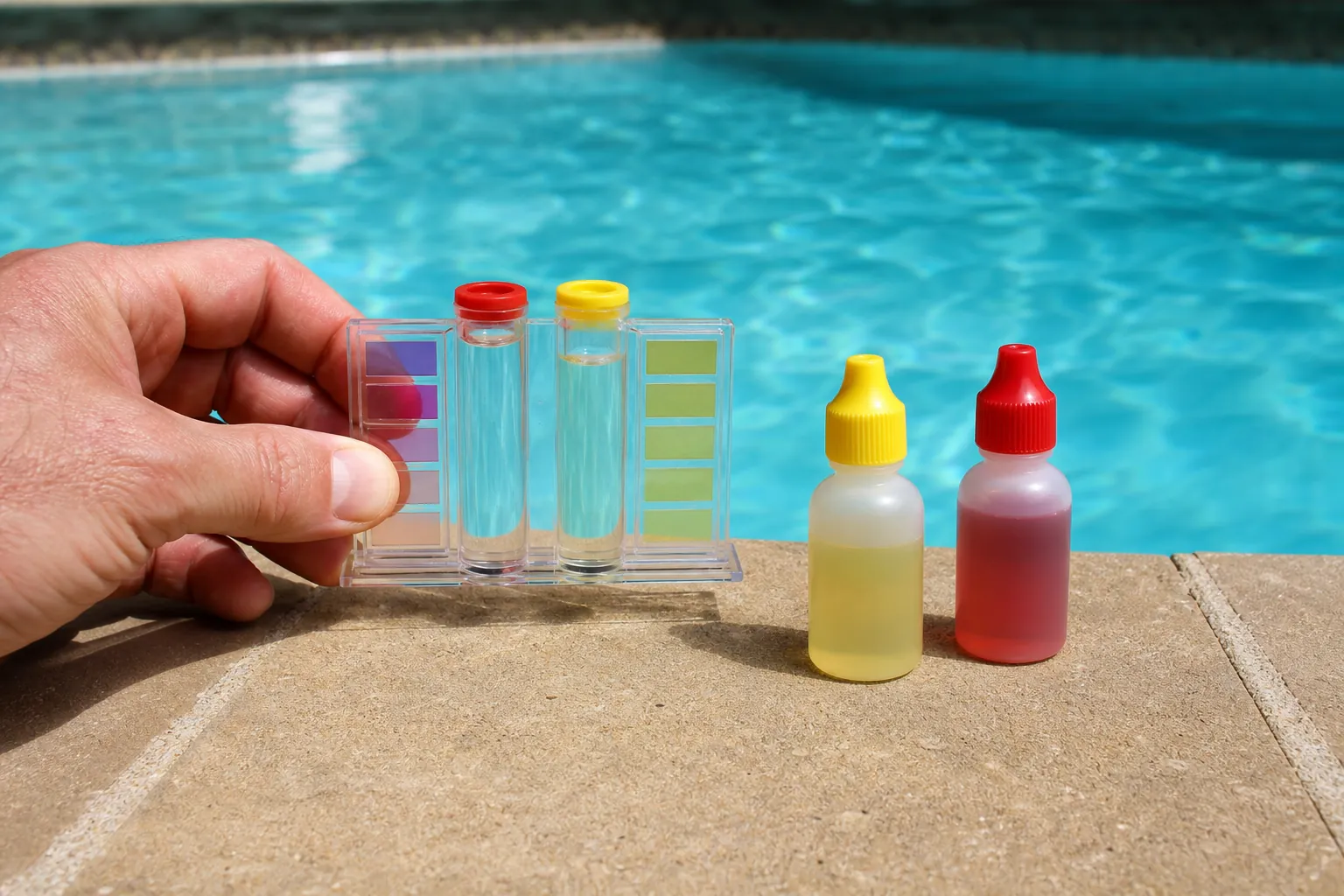
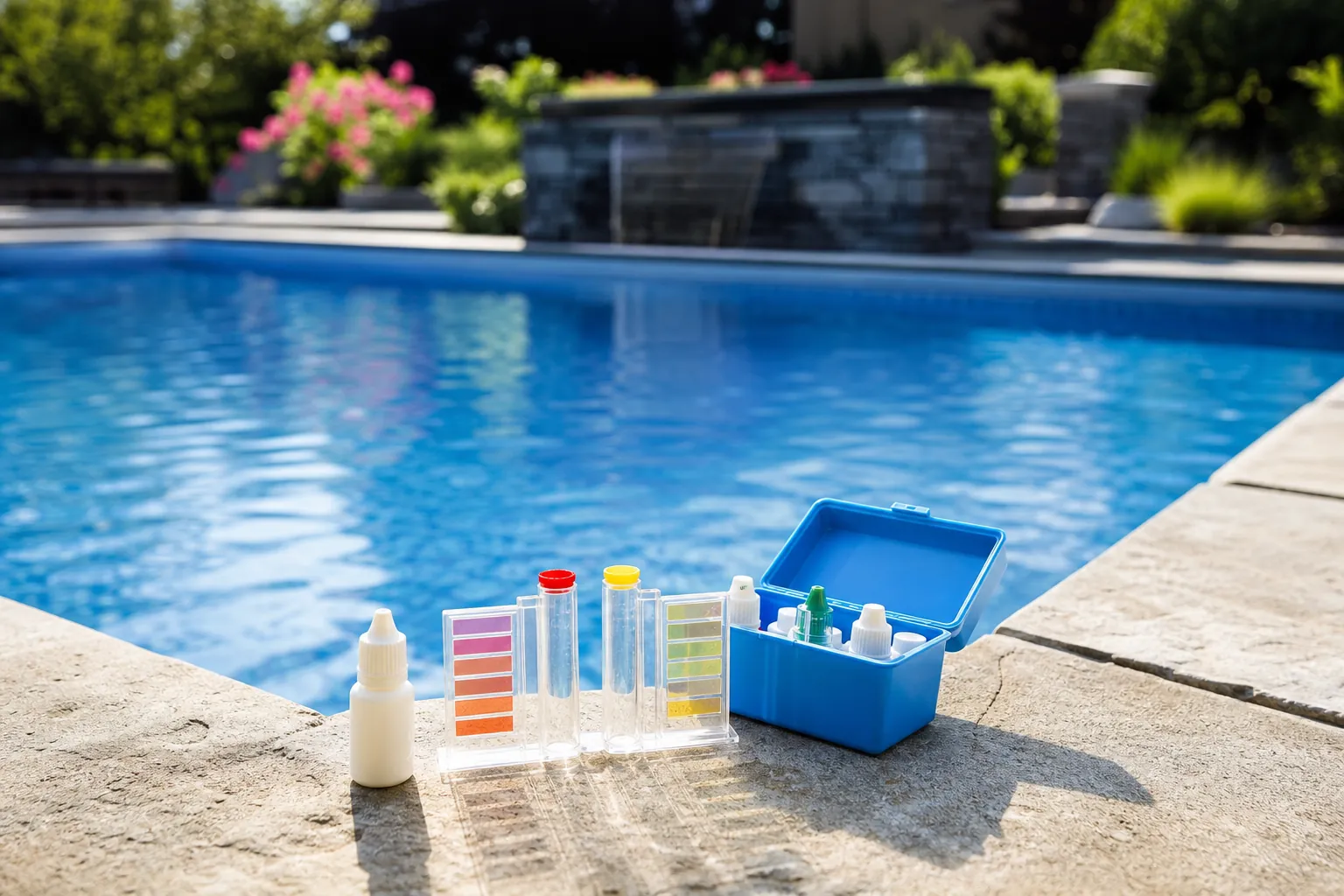
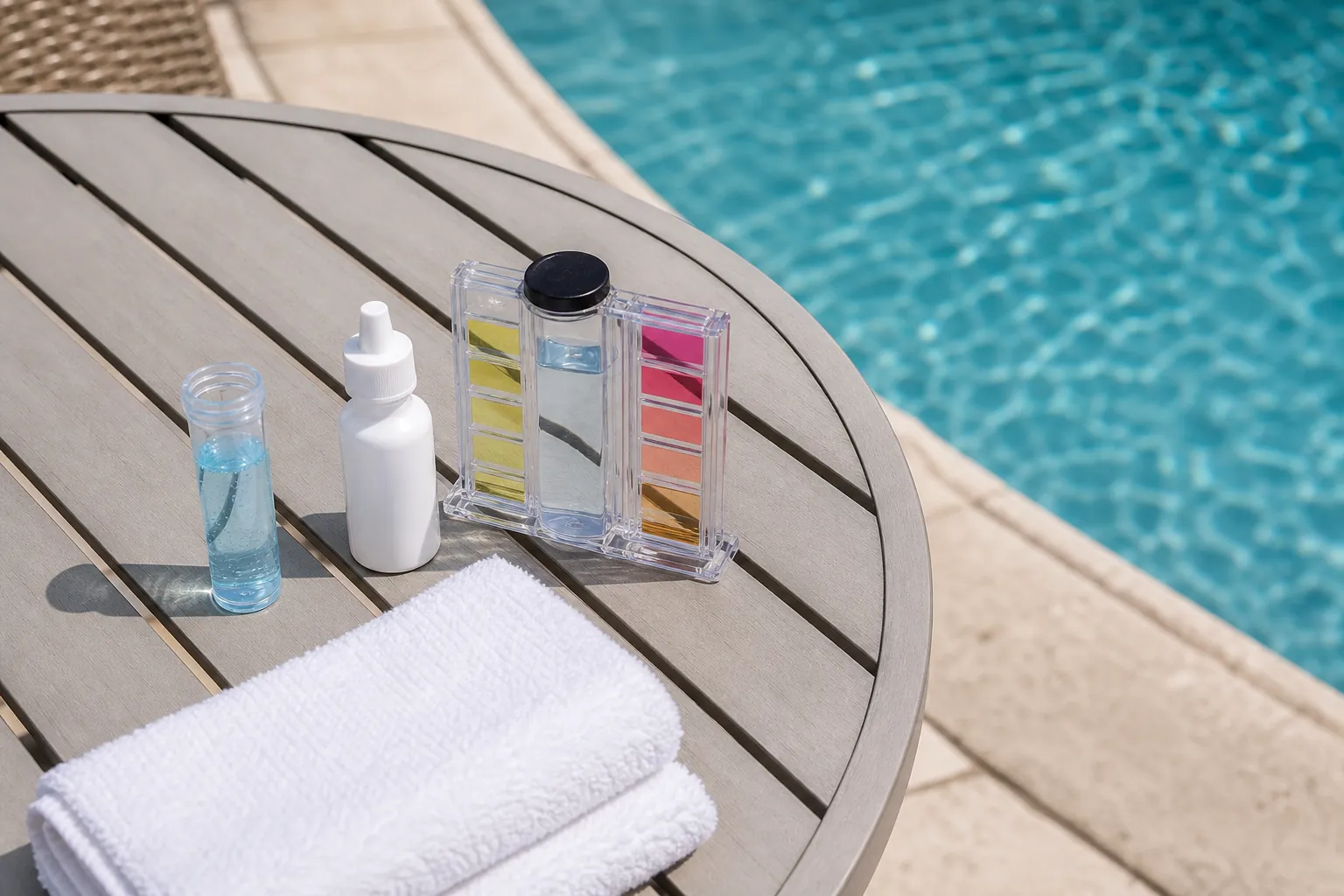
Do not make a big correction from one rushed test. Pool tests can be skewed by old strips, sun-bleached reagent, water pulled from the wrong spot, or a reading taken immediately after adding chemicals. Test from elbow depth, away from returns and skimmers, and follow the timing on the kit exactly. If the result seems extreme, test again with a second strip or a DPD drop kit before you start correcting.
The CDC's home pool guidance says residential owners should routinely test both chlorine and pH because those two readings work together. It recommends pH between 7.0 and 7.8, at least 1 ppm chlorine in pools, and at least 2 ppm chlorine in pools using cyanuric acid stabilizer. The same page also warns that very high chlorine can bleach some DPD tests and create a false low or 0 ppm result, which is exactly why careful testing matters before making changes. CDC home pool testing guidance
Look at pH at the same time. A pool can smell harsh or feel irritating even when the issue is not simply high free chlorine. Strong chlorine smell is often tied to chloramines, which form when chlorine reacts with sweat, urine, oils, and other contaminants. Low or high pH can also make water uncomfortable and reduce chlorine performance. If pH is out of range, you may need to correct pH as part of the same pool-care reset.
How high is too high?
Residential products vary, so the product label and local guidance matter. Many backyard pool owners aim for a normal free-chlorine range around the level recommended for their sanitizer type, stabilizer level, and pool use. A slightly high result after shocking the pool is different from a very high result after a dosing mistake.
As a practical rule, do not swim just because the water looks clear. Wait until the chlorine reading has dropped back into the safe operating range for your pool and the pH is balanced. If the test reads above the maximum shown on your kit, treat the water as too high to swim in and bring it down before use. If someone has symptoms such as burning eyes, coughing, nausea, dizziness, or skin irritation after exposure, leave the pool and reassess the water.
Also check whether stabilizer is part of the picture. Cyanuric acid helps outdoor pools hold chlorine in sunlight, but it changes how chlorine behaves. The Council for the Model Aquatic Health Code notes that cyanuric acid is not a disinfectant itself; it helps maintain free chlorine in outdoor pools. That means a pool with stabilizer can test differently and respond more slowly than an unstabilized pool. CMAHC cyanuric acid guidance
Step 1: Stop adding chlorine
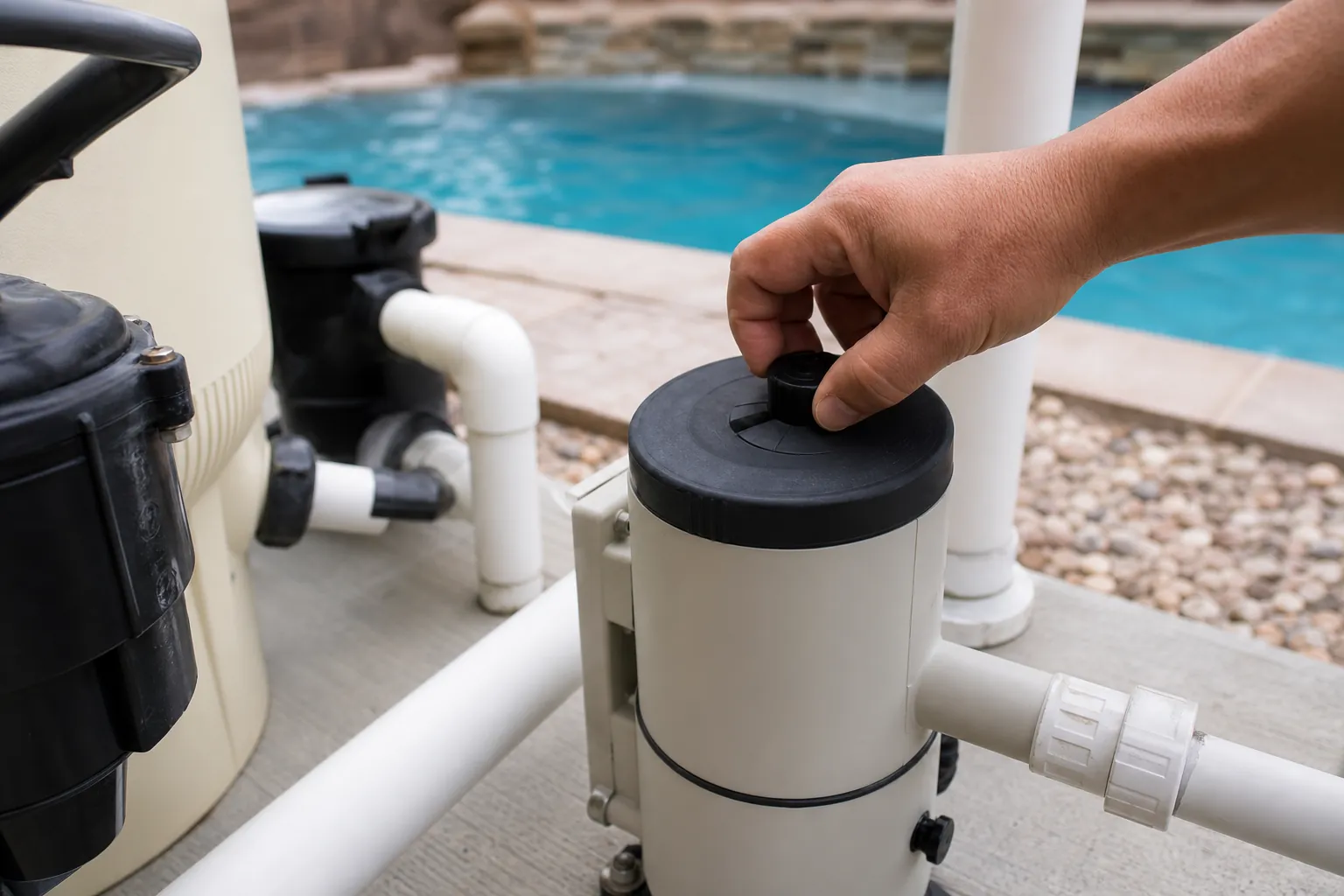
The first move is boring, which is why people skip it. Stop feeding the problem. Turn off the automatic chlorinator, salt chlorine generator, chemical feeder, or tablet floater. Remove tablets from the skimmer if you use them there. If the pump is running through a feeder, make sure the feeder is not still dosing while you are trying to lower the level.
This matters because some pool owners keep circulating water and accidentally keep adding sanitizer at the same time. Then the test barely moves, so they assume they need a stronger correction. In reality, the pool is still receiving chlorine. Stop the feed, let circulation continue, and retest after the water has mixed.
Keep people out of the pool while you wait. High chlorine is not a badge of cleanliness; it can be harsh on skin, eyes, swimsuits, and pool surfaces. The goal is balanced water, not maximum sanitizer at all costs.
Step 2: Let sunlight and time do the easy work
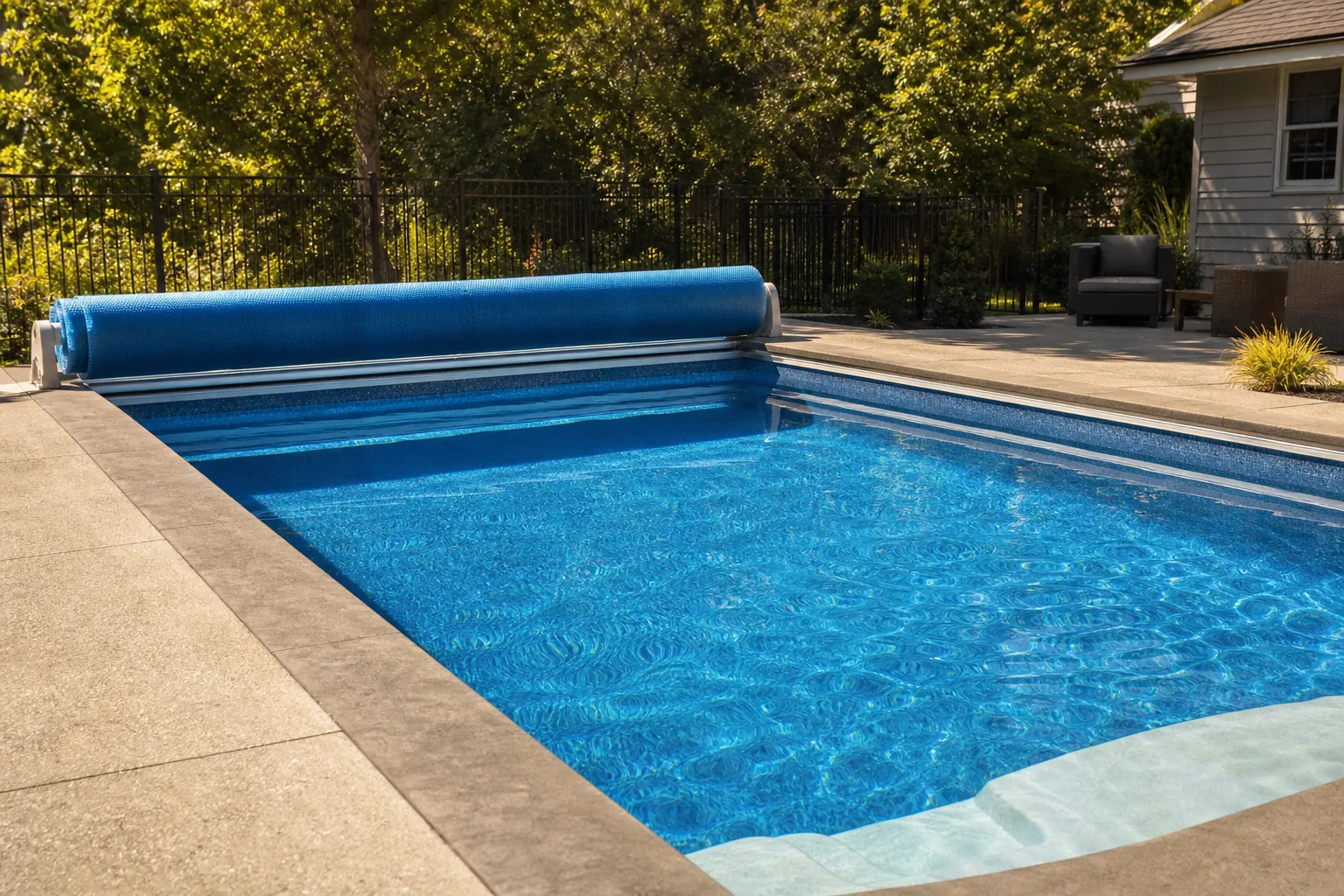
If chlorine is only a little high and you are not in a rush, sunlight and time are often enough. Open the pool cover, stop adding chlorine, keep the pump circulating, and let the water sit exposed. Sunlight breaks down chlorine, which is why outdoor pools often need regular replenishment in the first place.
This is the lowest-drama approach because it avoids adding another chemical to correct the first one. The tradeoff is speed. A shaded pool, a covered pool, cool weather, heavy stabilizer use, or a very high starting level can all slow the drop. Test every few hours rather than guessing.
Do not use this waiting period as an excuse to ignore the rest of the pool. Empty baskets, keep water moving, and check that the filter is not struggling. If your pool also looks cloudy or has debris, the high-chlorine reading may be part of a bigger maintenance problem, not the whole story.
Step 3: Dilute if the level is high or stabilizer is part of the problem
Partial drain-and-refill is not glamorous, but it is one of the most direct ways to lower what is dissolved in the water. If chlorine is very high, or if stabilizer has built up and is making the pool hard to manage, replacing some water can reset the situation faster than waiting.
Go carefully. Never fully drain a vinyl-liner pool unless a qualified professional tells you to, and be careful with groundwater, pool structure, and local water restrictions. A partial replacement can shift pH, alkalinity, calcium hardness, salt level, and temperature, so retesting after refill is not optional.
Dilution is also useful when the issue is not just free chlorine. Stabilized chlorine products add cyanuric acid over time. A 2024 study on cyanuric acid in swimming pool water notes that very high cyanuric acid can interfere with effective chlorination, sometimes described as a chlorine lock effect. That does not mean every backyard pool needs laboratory-level analysis, but it does mean repeated chemical additions can create a harder water problem later. 2024 cyanuric acid study
Step 4: Use a chlorine neutralizer only when speed matters
A pool-grade chlorine neutralizer can lower chlorine faster than waiting. Sodium thiosulfate is a common option. Pool-grade hydrogen peroxide is sometimes used for certain applications. The key phrase is pool-grade. Do not improvise with household products because internet comment sections got confident. Confident is not the same as compatible with your pool surface, equipment, or water balance.
Follow the product label, calculate the pool volume honestly, add less than you think you need when in doubt, circulate, and retest. Overdosing a neutralizer can push chlorine too low, move pH, and leave the water vulnerable just when people assume it is fixed. This is the part where measuring beats vibes, every time.
Neutralizer makes the most sense when the level is clearly high and the pool needs to be available soon. If the water is only slightly high, waiting is usually cleaner. If the pool repeatedly needs neutralizer because chlorine keeps climbing, the dosing routine needs to be fixed rather than rescued over and over.
Step 5: Balance pH and check combined chlorine
Once free chlorine starts falling, retest pH. Chlorine performance and swimmer comfort both depend on pH. The CDC notes that as pH rises, chlorine's ability to kill germs decreases, especially above 8.0; when pH drops below 7.0, corrosion risk increases and water can become uncomfortable. Balanced pH is not cosmetic. It is the difference between a pool that tests okay on one number and a pool that actually feels okay to use.
If the pool smells strongly of chlorine, look at combined chlorine. That smell often means chlorine has reacted with contaminants and formed chloramines. The fix may involve circulation, filtration, oxidation, better swimmer habits, or a proper shock process after chlorine returns to an appropriate level. Adding random reducers because the pool smells strong can miss the actual problem.
This is where a good pool store test or a reliable drop kit can pay for itself. You want to know free chlorine, combined chlorine, pH, total alkalinity, calcium hardness, and cyanuric acid. One number rarely tells the whole story.
Common mistakes that make high chlorine worse
The first mistake is swimming too soon. If the test is high, wait. Clear water is not a safety reading. The second mistake is adding acid, shock, clarifier, algaecide, or neutralizer without knowing which number you are correcting. Pool water is connected chemistry, not a stack of separate switches.
The third mistake is assuming a saltwater pool is chlorine-free. Salt systems generate chlorine from salt. They can feel easier for many owners, but they are still chlorine systems and can still overproduce if settings, run time, stabilizer, and pool demand are not lined up. Aquastaser has a fuller explanation on the How It Works page for pool owners comparing a different approach.
The fourth mistake is using the wrong source of advice. A public pool, a hot tub, a plaster pool, a vinyl liner pool, and a small backyard pool can require different limits and different caution. Use your product labels, local guidance, and pool-specific testing rather than copying a number from a stranger's setup.
A quick decision guide
If chlorine is slightly high, stop adding chlorine, open the cover, circulate, and retest. If chlorine is high and you need the pool available quickly, consider a pool-grade neutralizer and dose carefully. If chlorine is very high, stabilizer is high, or you have repeated water-balance problems, partial dilution may be cleaner than another chemical correction. If the water is cloudy, smelly, irritating, or tied to possible illness exposure, stop using the pool and get qualified help.
The bigger decision is whether high chlorine is a rare accident or part of the normal routine. One high reading after shock is manageable. Constant measuring, dosing, correcting, and waiting is different. That is the moment many owners start looking at alternatives because they do not just want a clear pool; they want a pool that is easier to live with.
For more background on filtration and flow, Aquastaser's pool guide explains the suction, filtration, and return path that any water-care system depends on.
Where Aquastaser fits
Aquastaser is built for pool owners who are tired of the chlorine routine and want a simpler, chlorine-free approach to everyday pool care. It uses hydrodynamic cavitation in the return line after filtration, so fit depends on the pool's plumbing, pump flow, circulation, and current water condition. It is not an emergency treatment for a contaminated pool, and it is not a shortcut around basic filtration.
That distinction matters. If your pool is currently over-chlorinated, bring the water back into a safe range first. Then decide whether you want to keep managing the same chlorine cycle or move toward a system designed to reduce reliance on added pool chemicals. The Aquastaser product page explains the device, pricing, and support path.
If you are unsure whether your pool is a fit, ask before ordering. Send the pool size, plumbing questions, and current maintenance routine through the contact page. A pool system should make ownership clearer, not add another guessing game.
Frequently asked questions
What should I do if chlorine is too high in my pool?
Keep swimmers out, retest from a fresh sample, stop the chlorinator, tablets, feeder, or salt cell, and keep the water circulating. If the level is only a little high, sunlight and time may be enough. For a very high reading, use careful dilution, a pool-grade neutralizer, or qualified help rather than adding several products at once.
What is the fastest way to lower chlorine in a pool?
A pool-grade chlorine neutralizer is usually the fastest option, but it should be measured carefully and used according to the product label. If the level is only slightly high, stopping the chlorine feed and letting sunlight work is often the cleaner first move.
Can I swim if the chlorine is a little high?
Wait until the chlorine and pH are back in the safe operating range for your pool and sanitizer type. Clear water alone is not enough. High chlorine can irritate skin, eyes, breathing, swimsuits, and pool surfaces.
Does sunlight lower pool chlorine?
Yes. Sunlight breaks down chlorine, especially in uncovered outdoor pools. Stabilizer, shade, weather, and the starting chlorine level affect how quickly the number drops, so keep testing instead of guessing.
Is a saltwater pool chlorine-free?
No. Saltwater pools generate chlorine from salt. They can change how the pool feels and how chlorine is delivered, but they are still chlorine systems.
Should I use household hydrogen peroxide to lower pool chlorine?
No. Do not improvise with household products. If you need a chemical reducer, use a pool-grade product, calculate the pool volume, follow the label, circulate the water, and retest.