A high alkalinity reading can sound alarming, especially when a test strip is suddenly darker than it was last week. The short answer is that high total alkalinity is usually not an immediate danger by itself. It is a water-balance problem that can make pH difficult to control, contribute to scale, and turn ordinary pool care into a cycle of corrections.
That does not mean a surprising reading should be ignored. The safe response is to put the number in context before adding anything. Test pH at the same time, look at the water, check that circulation is normal, and think about what changed recently. A refill, a heavy swim day, a new product, high evaporation, or an adjustment made too quickly can all matter.
This guide explains what high alkalinity can affect, when the pool needs attention today, and how to avoid creating a worse problem by chasing one test color with a large chemical dose. It is written for a residential pool owner, not as a one-size-fits-all chemical recipe.
What high pool alkalinity actually means
Total alkalinity describes how strongly pool water resists a pH change. That buffering is useful because pH should not swing wildly after every rainstorm or swim. But when the buffer is too high, pH can become stubborn. You may lower it carefully, then find it drifting upward again before the next test.
High alkalinity and high pH often travel together, but they are different readings and should not be treated as interchangeable. A pool can have high alkalinity with pH that is still within its suitable range. It can also have high pH for reasons that go beyond alkalinity. That is why a complete test is more useful than a quick reaction to one number.
Many residential pool references use 80 to 120 parts per million as a typical total-alkalinity checkpoint, while also noting that the right range depends on the pool system and other water conditions. The FROG total alkalinity guide is useful background, but your own product labels, pool surface, source water, sanitizer, and local advice should guide an actual adjustment.
Is high alkalinity dangerous for swimmers?
A high alkalinity result alone is not the same as an emergency water-quality warning. The more immediate concern is what may be happening alongside it. When alkalinity keeps pH too high or makes pH hard to control, water can become less comfortable, chlorine can work less effectively, and scale can begin to build on surfaces or equipment.
Do not decide whether to swim from alkalinity alone. Look for the conditions that deserve a pause: cloudy or green water, a strong harsh odor, burning eyes, persistent skin irritation, a failed pump or filter, an electrical concern, or uncertainty about which products were added. Those are reasons to keep people out of the water until the problem is understood.
The CDC's home pool testing guidance recommends keeping pH between 7.0 and 7.8 because pH affects swimmer comfort, equipment, and how well chlorine works. The practical lesson is simple: a high alkalinity reading calls for a careful check, not panic and not guesswork.

The problems high alkalinity can create over time
The most common frustration is pH that seems to bounce back after every correction. You can make a careful change, run the pump, retest, and find that the next reading still wants to rise. That does not mean the pool needs a bigger dose. It means the chemistry needs to be read as a system, with alkalinity, pH, circulation, sanitation, and recent pool use all considered together.
Scale is another practical concern. White or rough mineral buildup around the waterline, tile, return fittings, salt cell, heater, or other equipment can be a sign that the water has been out of balance. It is not proof that alkalinity is the only cause, but it is a reason to take the full test seriously before the buildup becomes more difficult to clean.
A high reading can also make routine maintenance more expensive and less predictable. When homeowners keep correcting pH without addressing a larger alkalinity pattern, they may add more products than the pool actually needs. The better goal is stable water, not winning a race against a test strip.
Think of the reading as a signal to inspect the pattern, not a verdict on the pool. If the water looks clear, pH is in range, and the high reading is new, it is sensible to confirm the result before doing anything. If the same reading returns week after week, the pool is leaving scale, or pH needs repeated correction, the pattern is telling you more than a single strip can. A short written record helps separate a temporary shift from a problem that needs a slower, more deliberate fix.

What to check before adding a product
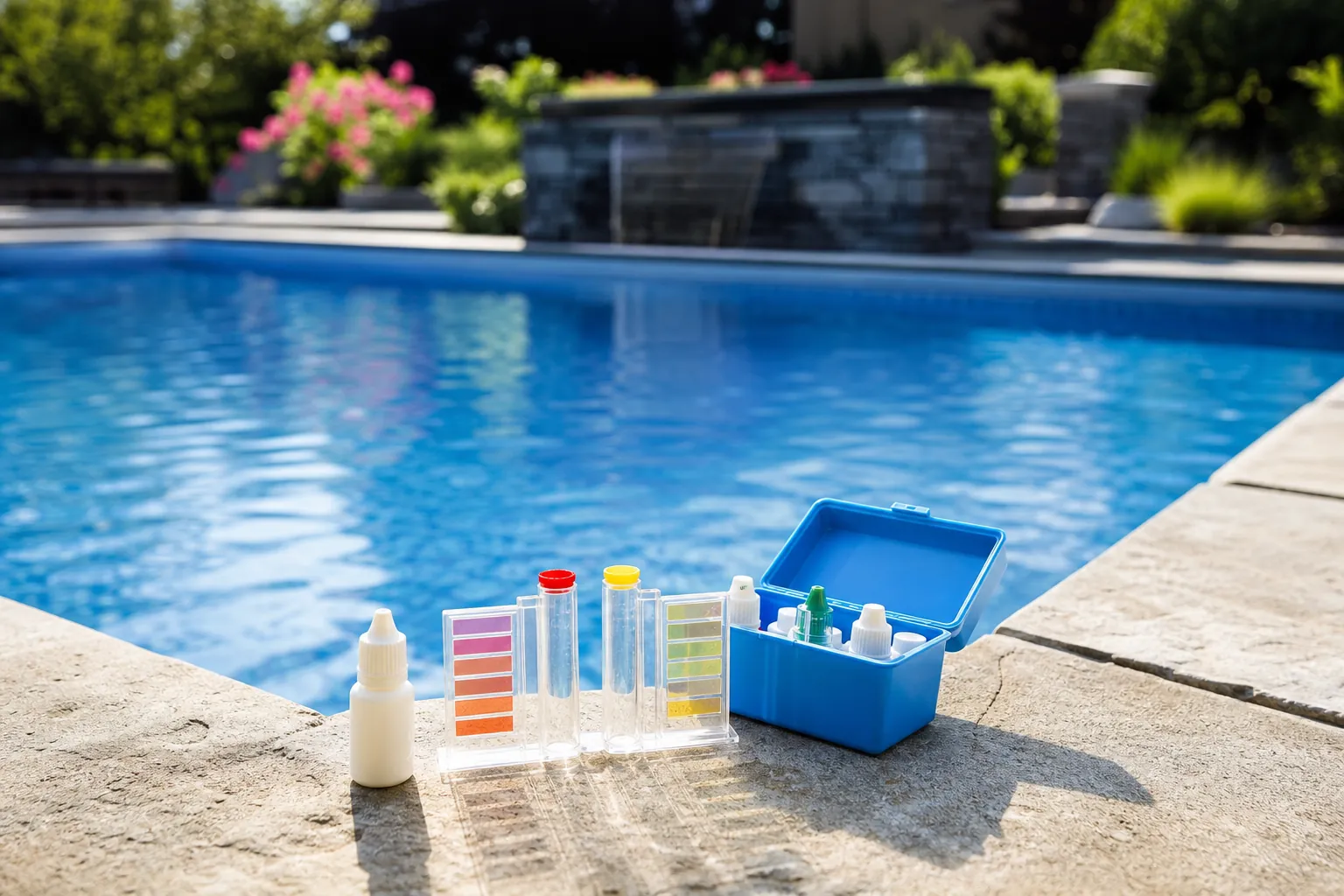
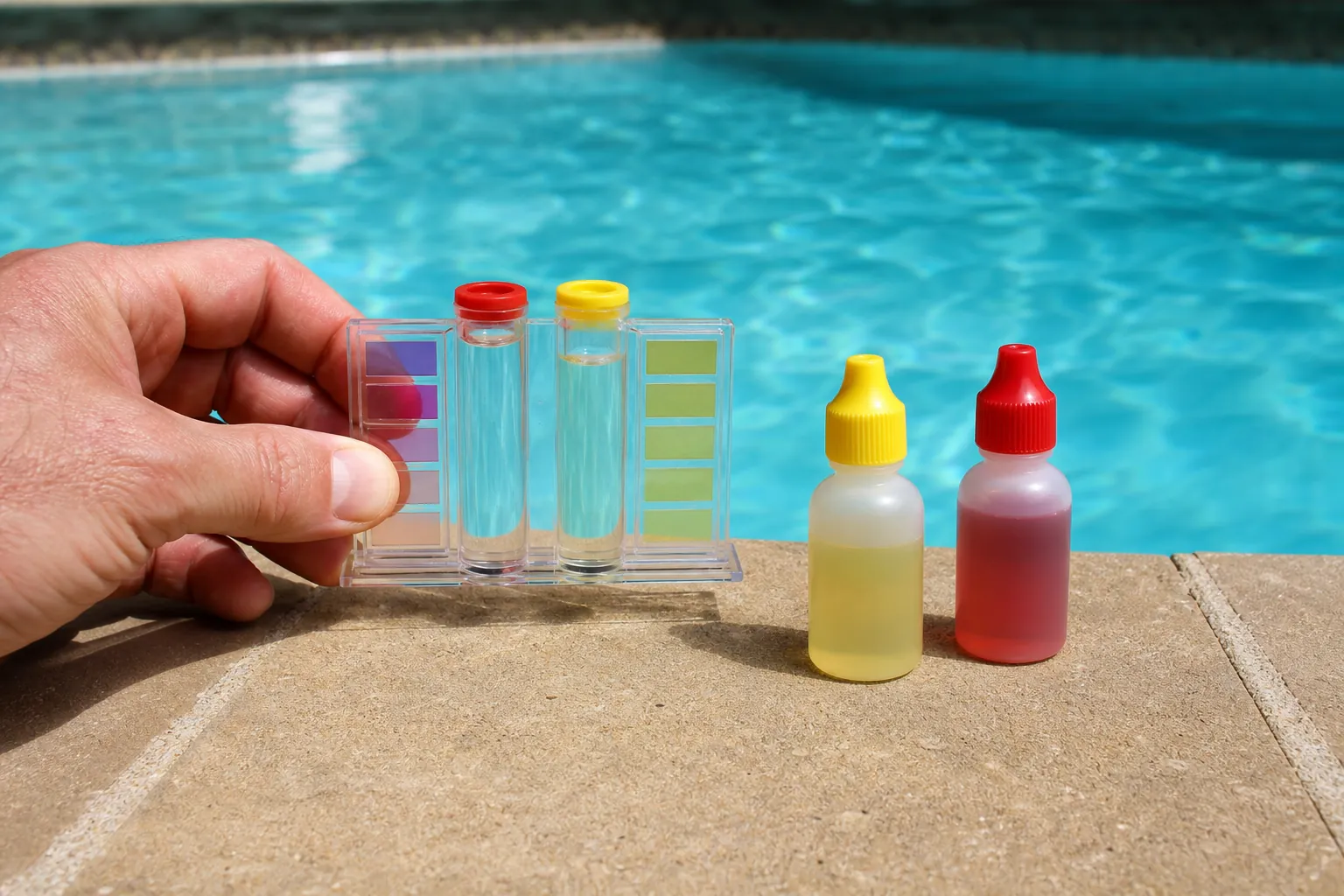
Start with a fresh water sample from elbow depth, away from the skimmer, feeder, salt cell, and return jets. Follow the timing instructions for your own test kit. If the reading surprises you, test again before adding anything. Old strips, a rushed color match, or a sample taken near a return can make an ordinary problem look much larger.
Write down total alkalinity, pH, free chlorine, water temperature if your kit provides it, and anything added to the pool recently. That small record makes a pattern easier to see. It also gives a pool professional something real to work from if you decide you need help.
Check the pool's physical basics too. Is the water moving normally through the skimmer, pump, filter, and returns? Are baskets clear? Is the filter pressure normal for the system? Chemistry cannot fully settle when circulation is weak. Aquastaser's pool circulation guide explains the basic water path that every pool system relies on.
If pH is also high, use the guide to lowering pool pH safely to understand the immediate decision. If you are trying to understand how alkalinity and pH differ, the key point is not to force both numbers with several products in one session.
When a high reading needs action today
A single reading that is slightly above your usual range, with clear water and normal pH, may call for observation and a careful retest rather than an immediate correction. A persistent pattern, scale that keeps returning, or pH that refuses to hold steady is different. Those are signs to make a deliberate plan rather than continuing the same quick fix.
Use a pool-specific product only when you know the result you are addressing and can follow the current label for your pool volume and surface. Never combine chemicals, improvise with household cleaners, or pour several corrective products into the pool at once. The Orenda overview of lowering alkalinity also emphasizes that meaningful adjustments are gradual, not a single aggressive treatment.
If you are unsure how to calculate an amount, do not know the pool volume, or have already added several products, pause. A local pool professional can test more completely and help separate a chemistry problem from a circulation, equipment, source-water, or surface issue.
A safer sequence for getting back to stable water
First, confirm the test. Second, check pH and the pool's physical condition. Third, decide whether the problem is a one-off reading or a repeat pattern. Only then should you consider a pool-specific correction, using the product label and the pool's actual volume.
After any adjustment, keep the pump running according to the product instructions and let the water circulate before taking a new sample. Retest from a fresh location away from the return. This gives the correction time to distribute through the pool and keeps you from reacting to a small pocket of recently treated water.
Resist the temptation to add the same amount again simply because the first test did not hit a perfect number. Compare the new reading with the old one, allow the label-directed interval, and make the next change only when the water still needs it. Small, informed steps are how a high-alkalinity issue stays manageable.
This sequence is especially useful after a refill or a stretch of hot, dry weather. Fresh source water and evaporation can change the balance enough to produce an unfamiliar result, but neither automatically tells you which product to add. Note the source of the water, the current level, and any adjustment already made. That context prevents a homeowner from treating the same change twice, once in response to the refill and again in response to a test taken before the water has fully mixed.

Do saltwater pools need the same attention?
Yes. A saltwater pool still produces chlorine and still needs attention to pH, alkalinity, circulation, filtration, and scale. Salt changes how chlorine is delivered. It does not make the water chemistry disappear.
Aeration from spillovers, water features, a spa, or strong returns can also change how pH behaves over time. That is one reason a homeowner should avoid treating every pH increase as a reason for an immediate second dose. First look for the ongoing condition that is shaping the readings.
For a fuller comparison of the two routines, read Aquastaser's saltwater versus chlorine pool guide. It explains the difference between changing the chlorine delivery method and moving toward a different long-term water-care approach.
When to stop and get qualified help
Get qualified help when the pool is cloudy or green, a harsh odor or swimmer symptoms persist, pH keeps climbing after careful adjustments, scale returns quickly, the pump or filter is not working normally, or you are not certain which chemicals have already been used together. A pool that has a contamination concern is also outside the scope of ordinary water balancing. Keep swimmers out and follow the correct response before reopening.
Aquastaser's Cryptosporidium guide explains why a diarrheal incident needs a more careful response than a routine shock or balance adjustment. For a strong chlorine smell, the chloramines guide can help you understand why odor is not a reliable measure of clean water.
Bring your test results, pool size, recent product history, and a note about any equipment changes to the conversation. That gives a qualified professional a far better starting point than a single test-strip photo.
Where Aquastaser fits after the water is stable
High alkalinity is a normal maintenance problem, not a reason to replace equipment overnight. Get the water stable first, make sure circulation and filtration are working, and resolve any active safety or equipment issue. Those basics matter with every pool system.
If the larger pattern has become exhausting, constant testing, correcting, buying products, and wondering whether the next swim will create another water problem, it may be worth comparing a different long-term routine. Aquastaser is a chlorine-free system installed after filtration in the return line. It still depends on healthy circulation, filtration, and a realistic fit check for your pool.
Read how Aquastaser works and the chlorine-free pool system overview when you are weighing options. For a practical conversation about pool size, plumbing, pump flow, and current water condition, contact Aquastaser through the support page before ordering.
The bottom line
High alkalinity in a pool is usually a water-balance problem, not an immediate emergency. Confirm the reading, test pH at the same time, check circulation and water condition, and make only a careful pool-specific adjustment when the full picture supports it.
The goal is not to chase every number into place in one afternoon. It is to get back to stable, comfortable water without turning one high reading into several new problems.
Useful sources
Frequently asked questions
Is high alkalinity in a pool safe to swim in?
A high alkalinity reading by itself is usually not an immediate emergency, but it should not be the only number you use to decide whether to swim. Check pH, water clarity, circulation, odor, and swimmer comfort too. Keep people out of the water when it is cloudy, harsh, causing symptoms, or the result is unclear.
Can high alkalinity cause skin irritation?
High alkalinity does not explain every skin concern on its own, but it can make pH harder to control. Water that is out of balance can be less comfortable for swimmers. Rinse after swimming, pause pool use if irritation persists, and get medical advice for serious or ongoing symptoms.
Will high alkalinity damage pool equipment?
Over time, water that stays out of balance can contribute to scale on tile, return fittings, salt cells, heaters, and other equipment. Scale has more than one possible cause, so confirm the full test and inspect the pool before assuming alkalinity is the only issue.
Should I lower pH or alkalinity first?
Test both before deciding. A high pH can need its own careful correction, while lowering alkalinity is often a gradual process. Do not stack several products in one session. Use the product label, circulate, and retest before making another change.
What causes high alkalinity in a pool?
Source water, refilling the pool, repeated adjustments, evaporation, and the pool's existing water chemistry can all play a part. A pattern of rising pH, recurring scale, or readings that do not hold steady is a reason to review the full test and the recent maintenance history.