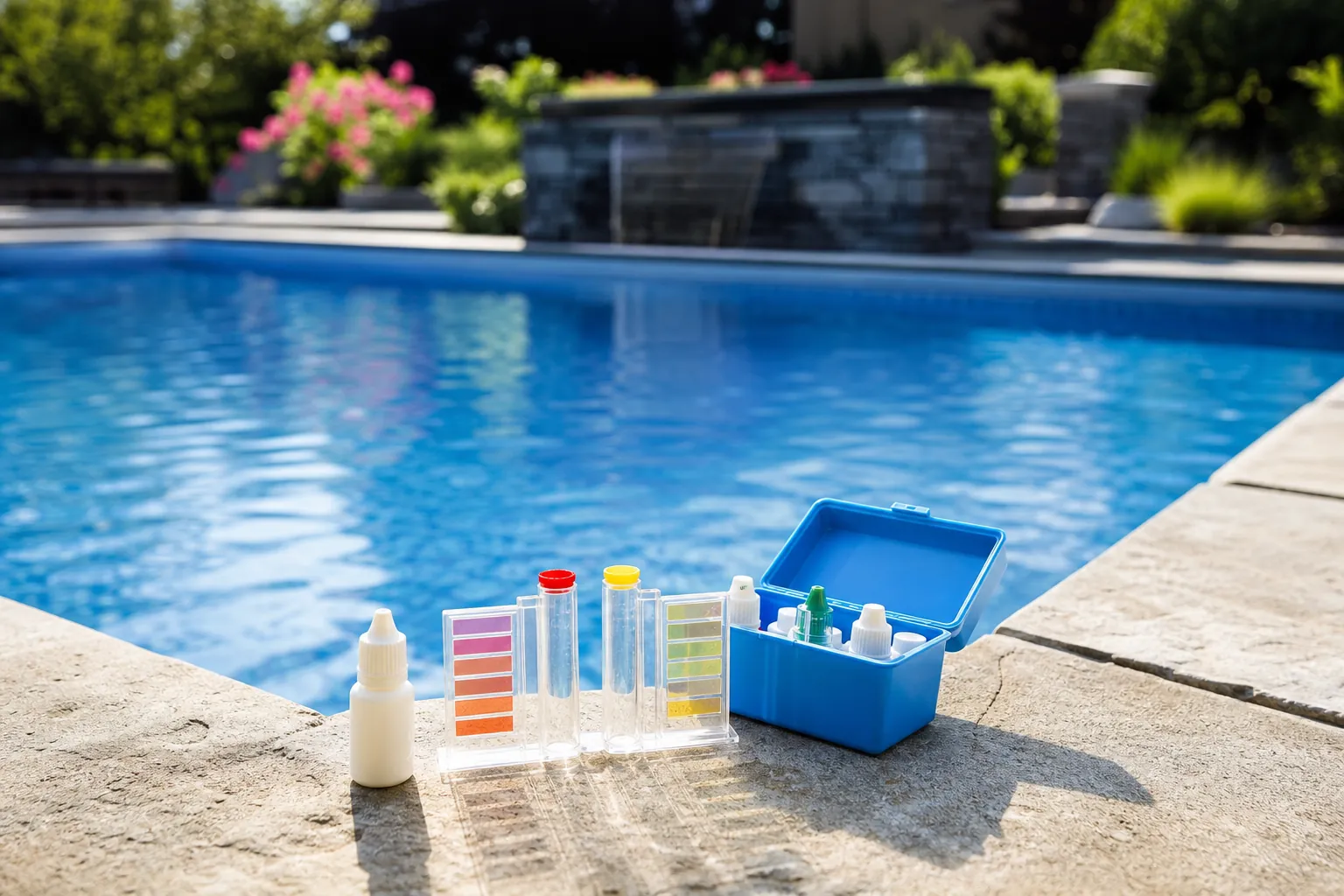
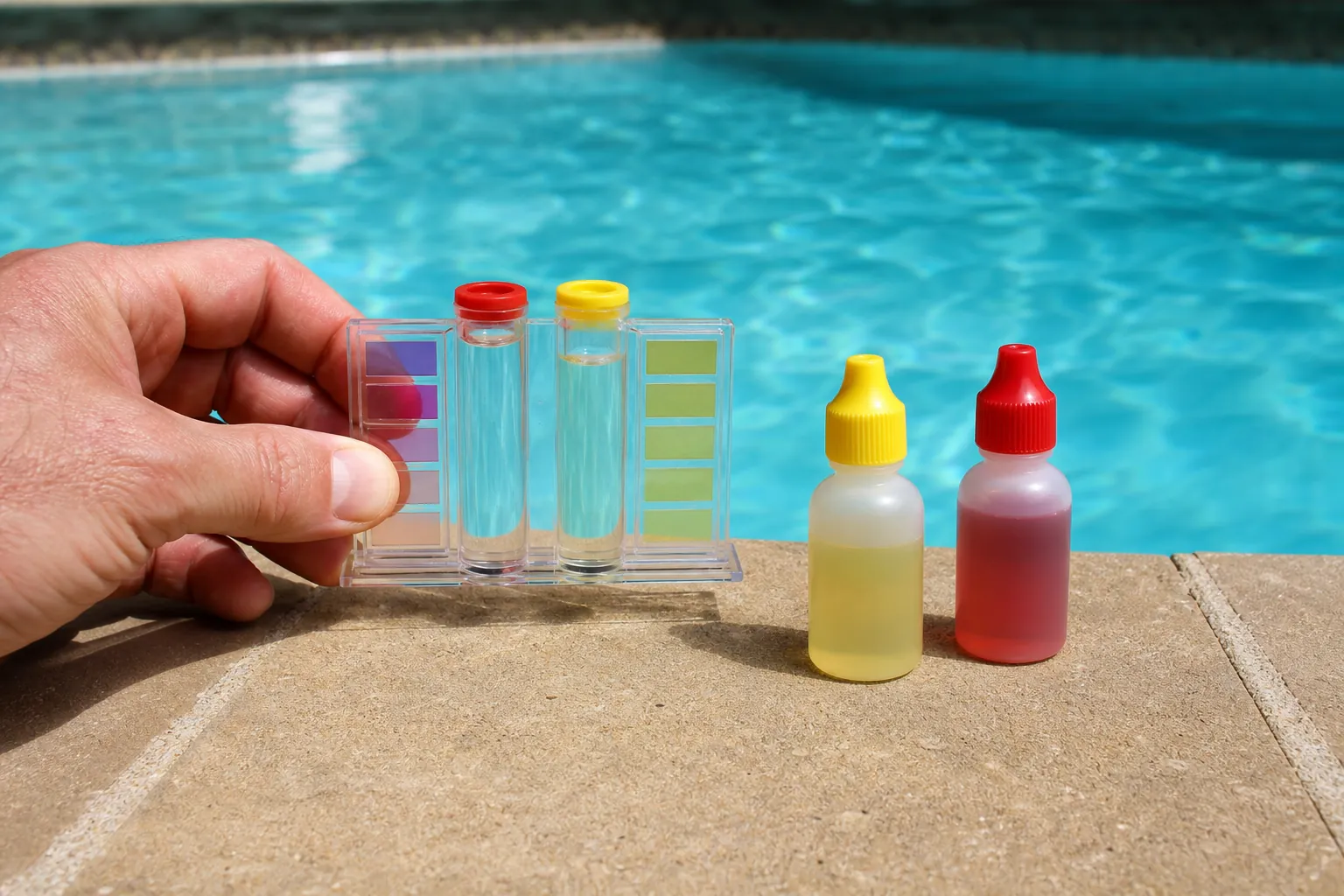
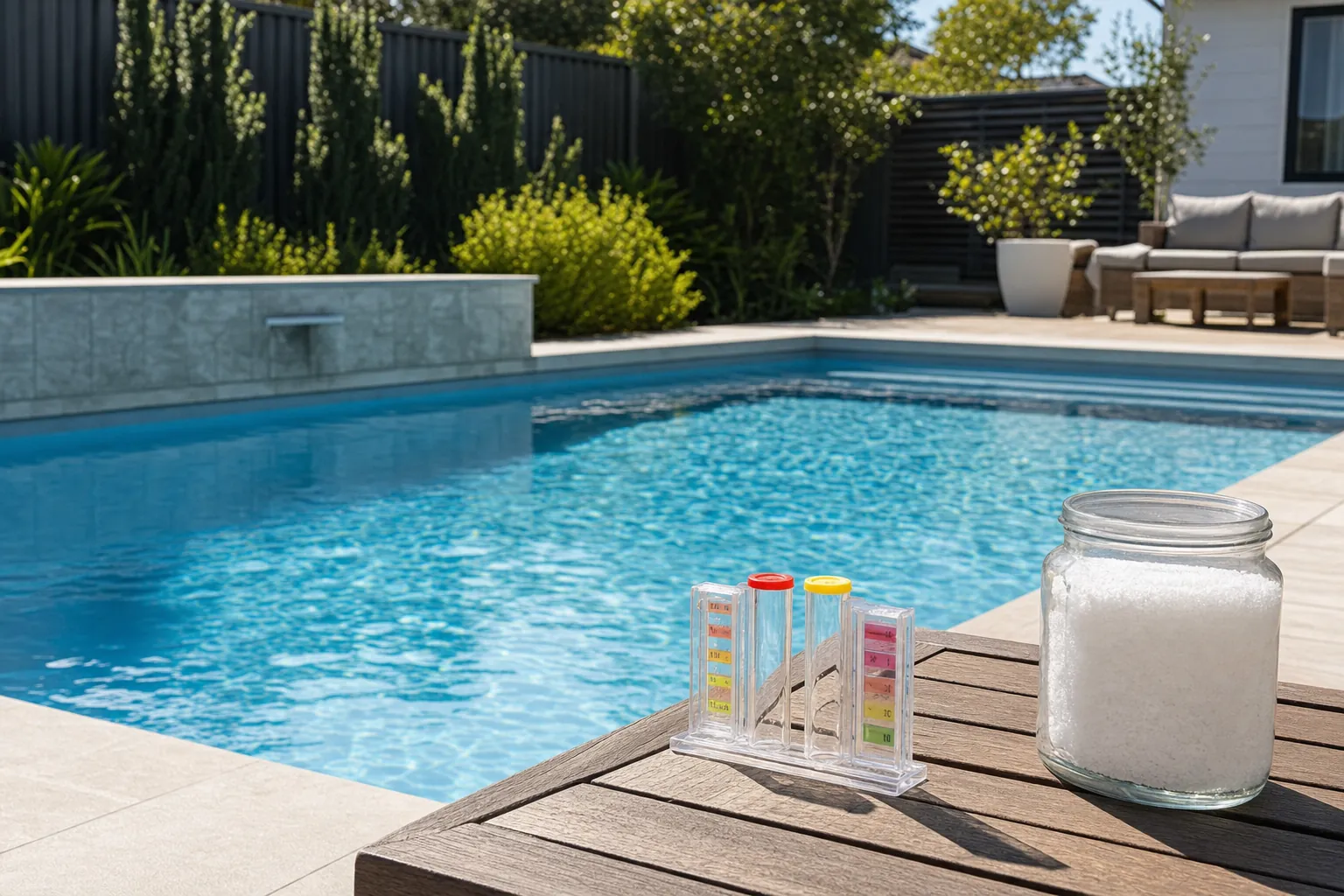
Cyanuric acid, often called CYA or stabilizer, helps protect chlorine from sunlight in an outdoor pool. The trouble starts when it keeps accumulating. A pool can still look clear while the routine becomes harder to control: chlorine seems to need constant adjustment, shocking feels less predictable, and each new tablet or stabilized product can add more stabilizer to water that already has plenty.
The safest way to lower cyanuric acid in a pool is to confirm the result first, then use a measured plan. In many cases, that means replacing some of the water and refilling with fresh water. The exact amount depends on the actual CYA reading, pool volume, water source, local drainage rules, and any limits on draining in your area. That is why a generic dose chart is a poor substitute for a fresh test and a little patience.
This guide explains what high CYA changes, what to check before you drain or add a product, and how to get back to a routine that is easier to understand. It is for residential pool owners, not a one-size-fits-all chemical recipe.
What cyanuric acid does in a pool
Cyanuric acid is not a sanitizer. It is a stabilizer that helps chlorine last longer in outdoor water exposed to sunlight. The Council for the Model Aquatic Health Code explains that cyanuric acid protects free chlorine from ultraviolet light, while also making clear that it does not disinfect the water by itself. Its cyanuric acid guidance is useful context for why CYA belongs in the full water picture rather than on a test-strip chart by itself.
That protection can be helpful when a pool is in full sun. It also means chlorine management is different in a stabilized pool. The CDC’s home-pool guidance calls for routine testing of chlorine and pH, and it lists a higher minimum chlorine level for pools using cyanuric acid. CDC home pool testing guidance is a helpful baseline, but your sanitizer label and equipment instructions still matter.
The practical takeaway is simple: CYA is useful in the right amount, but it is not a reason to stop testing. When it climbs too high, the answer is not automatically more chlorine. First find out what the whole pool is doing.
How cyanuric acid gets too high
The usual cause is a routine that keeps adding stabilized chlorine. Many tablets, dichlor products, and some shock treatments add both chlorine and cyanuric acid. Each treatment may seem small, but the stabilizer stays in the water while the pool is topped off, heated, used, and treated again. A hot sunny season can turn a convenient product into a slow buildup problem.
Refilling the pool can matter too, although the effect depends on your source water. If the CYA reading was already high, topping off only replaces a small portion of the total water. Evaporation is similar: water leaves, but dissolved material stays behind. Rain, splash-out, backwashing, leaks, and planned dilution can change the balance in the other direction.
Saltwater pools are not exempt. A salt system makes chlorine, but owners may still use stabilized products for startup, seasonal work, or a quick correction. If you have a saltwater pool, keep CYA, free chlorine, pH, alkalinity, calcium hardness, circulation, and cell condition in the same conversation. Aquastaser’s saltwater versus chlorine pool guide explains why changing the delivery method does not remove the need to understand the water.

Signs it is time to test CYA
A high CYA level does not always announce itself with one dramatic symptom. The better clue is a pattern: you keep adding chlorine, the pool has trouble holding a sensible reading, a routine shock no longer feels effective, or your test results only make sense after more and more corrections. Those are reasons to test stabilizer instead of treating the latest chlorine number as the whole story.
Start with a current sample taken away from a return jet, feeder, skimmer, or freshly treated area. Follow your kit’s instructions exactly. If a strip is old, hard to read, or gives a surprising result, confirm it with a reliable drop test or a professional pool-water test before you make a major change. Write down free chlorine, total chlorine, pH, total alkalinity, CYA, water temperature if available, and what you added recently.
A complete record changes the conversation. The free chlorine guide can help you separate free, combined, and total chlorine, while the chloramines guide explains why odor and a single reading are not enough to judge the water.
Step 1: Confirm the reading before changing the water
Do not drain a pool because one strip looked unusual in poor light. Take a fresh sample at elbow depth and use the method recommended for your test kit. Keep the sample away from the return line, because recently circulated or treated water can give a misleading snapshot. If you are comparing results, use the same kind of test and the same sample routine each time.
Check the pool’s condition at the same time. Is the water clear? Is the pump moving water normally? Is the filter pressure in its normal operating range? Are there signs of algae, scale, or an equipment problem? CYA can make the sanitizer routine harder to read, but it does not explain every cloudy pool or every poor chlorine result.
If the pool is cloudy, green, strongly irritating, or tied to a possible contamination event, do not turn this into a routine CYA project. Keep swimmers out and get qualified advice. Aquastaser’s Cryptosporidium guide explains why some water-safety concerns need a specific response rather than an ordinary adjustment.
Step 2: Use dilution as the main reset
For a genuinely high cyanuric acid result, partial drain-and-refill is the most straightforward way to reduce what is dissolved in the water. You are removing some water that contains CYA, then replacing it with water that does not. The result is a lower overall concentration, provided the replacement water has little or no stabilizer.
Plan the work before opening a drain. Confirm the pool volume, review local rules for where pool water may go, protect the pool shell from damage, and never leave a pool draining unattended. High groundwater, a vinyl liner, certain pool surfaces, or an uncertain drainage path are good reasons to stop and ask a qualified pool professional. A full drain can carry real risk, so partial dilution is the sensible starting point unless a professional has assessed the pool.
Orenda’s guide to reducing cyanuric acid also treats dilution as the conventional solution and notes that specialty CYA-reducer products have limits. Do not buy a reducer simply because it promises an easy shortcut. Confirm the current level, read the current label, and consider the cost, filtration requirements, and the condition of the pool before adding anything.

Step 3: Refill, circulate, and retest
After the planned dilution, refill with the appropriate source water and give the pool time to circulate. Test again only after the water has mixed according to your equipment and product instructions. Testing immediately beside the fill point or return jet can make you react to a pocket of water instead of the whole pool.
The refill changes more than cyanuric acid. Source water can affect pH, alkalinity, calcium hardness, metals, salt level, and temperature. Retest the whole water picture, then correct only the reading that still needs attention. When pH also needs work, use the guide to lowering pool pH as a separate decision process instead of stacking corrections into one busy afternoon.
Keep a simple note of the before and after values. It tells you whether the dilution produced the change you expected and helps prevent a second unnecessary drain. This is especially helpful when you are dealing with a large pool, expensive source water, or a season where refills are frequent.

Step 4: Change the habit that created the buildup
Lowering CYA once does not solve the long-term problem if the same products immediately start adding it back. Review every sanitizer and shock product you use. Check whether it adds stabilizer, how often it is used, and whether your outdoor-pool routine needs it at the current level. Your product label is more useful than a generic pool forum recipe.
You do not need to chase a perfect test strip every day. The goal is a routine you can understand: test on a schedule that matches pool use, record what you add, keep circulation and filtration healthy, and make small deliberate changes. The pool circulation guide is a useful refresher because water has to move properly through the skimmer, pump, filter, and returns before any treatment can work consistently.
This is also a good moment to look at the workload, not just the number. If the pool repeatedly pulls you into tablets, shock, acid, stabilizer, and emergency corrections, a simpler long-term water-care approach may be worth comparing after the water is stable.
When to get professional help
Get qualified help before draining when you do not know the pool volume, are unsure where water can safely discharge, have a liner pool, have high groundwater, or cannot confirm whether a full or partial drain is appropriate. Call for help when the water is cloudy or green, the filter or pump is not working normally, scale is building quickly, or several chemicals have already been added without a clear plan.
The same applies when swimmers have symptoms or there may be a contamination issue. A high CYA result is a maintenance problem, but it can sit beside a separate water-safety concern. Keep people out of the pool when the water is visibly poor, harsh, causing symptoms, or unclear.
Where Aquastaser fits after the reset
Cyanuric acid is part of a chlorine-based routine, not a reason to replace equipment overnight. First get the water stable, make sure circulation and filtration are healthy, and understand what has been going into the pool. Those basics make every next decision clearer.
For homeowners tired of constantly managing chlorine, shock, acid, stabilizer, and repeat corrections, Aquastaser offers a chlorine-free system installed after filtration in the return line. It still depends on a healthy pool, realistic plumbing and flow expectations, and a fit check before purchase. Read how Aquastaser works and the chlorine-free pool system overview before deciding whether a different long-term routine suits your pool.
For a practical conversation about pool size, plumbing, flow, and current water condition, contact Aquastaser through the support page before ordering.
Cyanuric acid reset checklist
Confirm the CYA result with a fresh, properly taken sample. Record free chlorine, total chlorine, pH, alkalinity, water appearance, and recent products. Plan partial dilution only after you know pool volume, local drainage expectations, and any risks specific to the pool shell or site. Refill, circulate, and retest the full water picture. Then review the chlorine and shock products that added stabilizer in the first place.
The goal is not a dramatic same-day correction. It is a pool routine that becomes more predictable with each test instead of more complicated.
Useful sources
Frequently asked questions
What is the fastest way to lower cyanuric acid in a pool?
Partial drain-and-refill is commonly the most direct way to lower dissolved cyanuric acid. The right amount depends on the actual CYA result, pool volume, replacement water, local drainage rules, and the pool itself. Confirm the reading before making a large water change.
Can I lower cyanuric acid without draining my pool?
Some specialty reducer products are sold for this purpose, but their results and requirements can vary. Read the current product label and confirm your CYA result first. For a high reading, partial dilution remains the clearest and most predictable approach for many residential pools.
Does sunlight lower cyanuric acid in a pool?
Sunlight consumes chlorine, but it is not a dependable way to lower cyanuric acid. CYA is added to outdoor pools because it helps protect chlorine from sunlight. If the CYA reading is high, make a measured plan rather than waiting for sun exposure to solve it.
Why is my cyanuric acid high in a saltwater pool?
Saltwater pools still use chlorine, and many owners also use stabilized chlorine products for startup or corrections. CYA can build when stabilized products are added repeatedly. Test the full water picture, including free chlorine, pH, alkalinity, CYA, circulation, and cell condition.
Can I swim with high cyanuric acid?
CYA alone is not the only number that determines whether a pool is ready for swimming. Check water clarity, free chlorine, pH, circulation, odor, and swimmer comfort. Keep people out when the water is cloudy, harsh, causing symptoms, or the result is unclear.