
Leave salt chlorine behind
A saltwater pool still uses a cell to create chlorine. Aquastaser is for owners who want a different treatment path instead of a different way to produce chlorine.
Aquastaser is for residential pool owners who want to move beyond salt chlorine generators and the usual chemical correction cycle, while keeping the pool equipment that makes clear water possible.

Start with the meaning
“Freshwater” can mean different things from one pool owner to the next. For some, it means leaving behind the salt cell and the fact that saltwater pools still generate chlorine. For others, it means looking for water care that feels less dependent on bottles, tabs, shocks, and corrections after every hot weekend.
Aquastaser is built for owners who want a conventional backyard pool with a different treatment approach. It does not turn a pool into a planted swimming pond, and it does not make chlorine from salt. It works in the existing circulation path after filtration, where water moves through the device before returning to the pool jets.
A saltwater pool still uses a cell to create chlorine. Aquastaser is for owners who want a different treatment path instead of a different way to produce chlorine.
The pump, filter, skimmer, and return lines remain central. Aquastaser is designed to fit into that working circulation path after filtration.
Families usually want both: water that looks clear and a routine that feels less harsh, less complicated, and easier to live with over time.
Know the options
A saltwater pool remains a conventional pool with a salt cell that generates chlorine. It can reduce the need to add chlorine by hand, but it still involves cell care, water balance, and the chemistry of a chlorine system. It is often the right choice for owners who want to automate chlorine production rather than move away from it.
A mineral or ionizer setup generally adds minerals or uses an electrical process as one part of a pool-care approach. Those systems can be worth discussing for a specific algae concern, but they are not automatically a complete answer to every pool's water treatment. The owner should understand what the system does, what it does not replace, and what the normal care routine still requires.
A natural swimming pond is a different kind of project altogether. It uses a biological treatment area, plants, and a different pool design. Aquastaser is not a pond conversion. It is for the owner who wants to keep the standard pool, the equipment pad, and the familiar swimming experience while considering a new approach in the return line.
Saltwater: A salt cell generates chlorine from dissolved salt.
Mineral or ionizer: An added tool that may address a specific part of the routine.
Natural swimming pond: A planted, biological system with a different pool design.
Aquastaser: Return-line water treatment for a conventional residential pool.
What still matters
Even a different water-treatment system needs water to move. A dirty filter, a weak pump, blocked returns, or debris left in the pool can make every approach work harder. Before changing equipment, it is worth checking whether the existing circulation and filtration are doing their job. That protects the new purchase and gives the pool its best chance to perform consistently.
Testing still has a place as well. A test result is useful when it leads to a measured next step, not an automatic product purchase. If water looks unusual, feels irritating, or keeps changing after normal care, first look at the full picture: circulation, filter condition, weather, swimmer load, debris, and the pool's recent history. A single number rarely tells the whole story.
There are also situations where pool-system shopping should wait. Keep swimmers out and get qualified help for a contamination event, serious swimmer symptoms, damaged equipment, electrical concerns, or a pool that cannot hold stable water conditions. Aquastaser is intended for everyday residential pool care, not emergency cleanup or a substitute for professional advice when the pool has an urgent problem.
Understand Pool Water Readings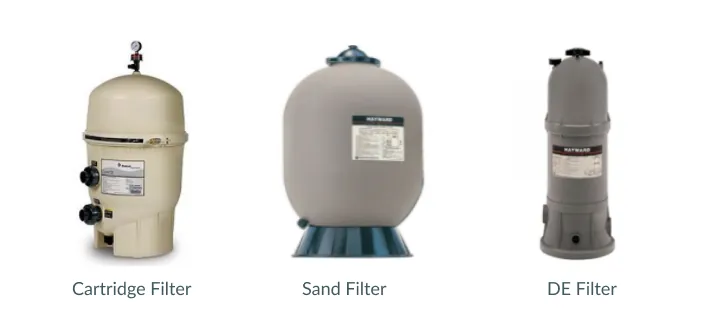
A clearer comparison
Saltwater pool systems can be a sensible choice for an owner who wants chlorine produced through a salt cell rather than added from tablets or liquid. The water may feel different, but the system is still generating chlorine and still depends on the chemistry that comes with it.
That distinction matters when your goal is to step away from a chlorine-centered routine. Aquastaser uses hydrodynamic cavitation in the return line after filtration. It is not a salt cell, feeder, or chlorinator. The pool still needs good equipment and ordinary care, but the water-treatment approach is designed around a different path.
Compare Saltwater and Chlorine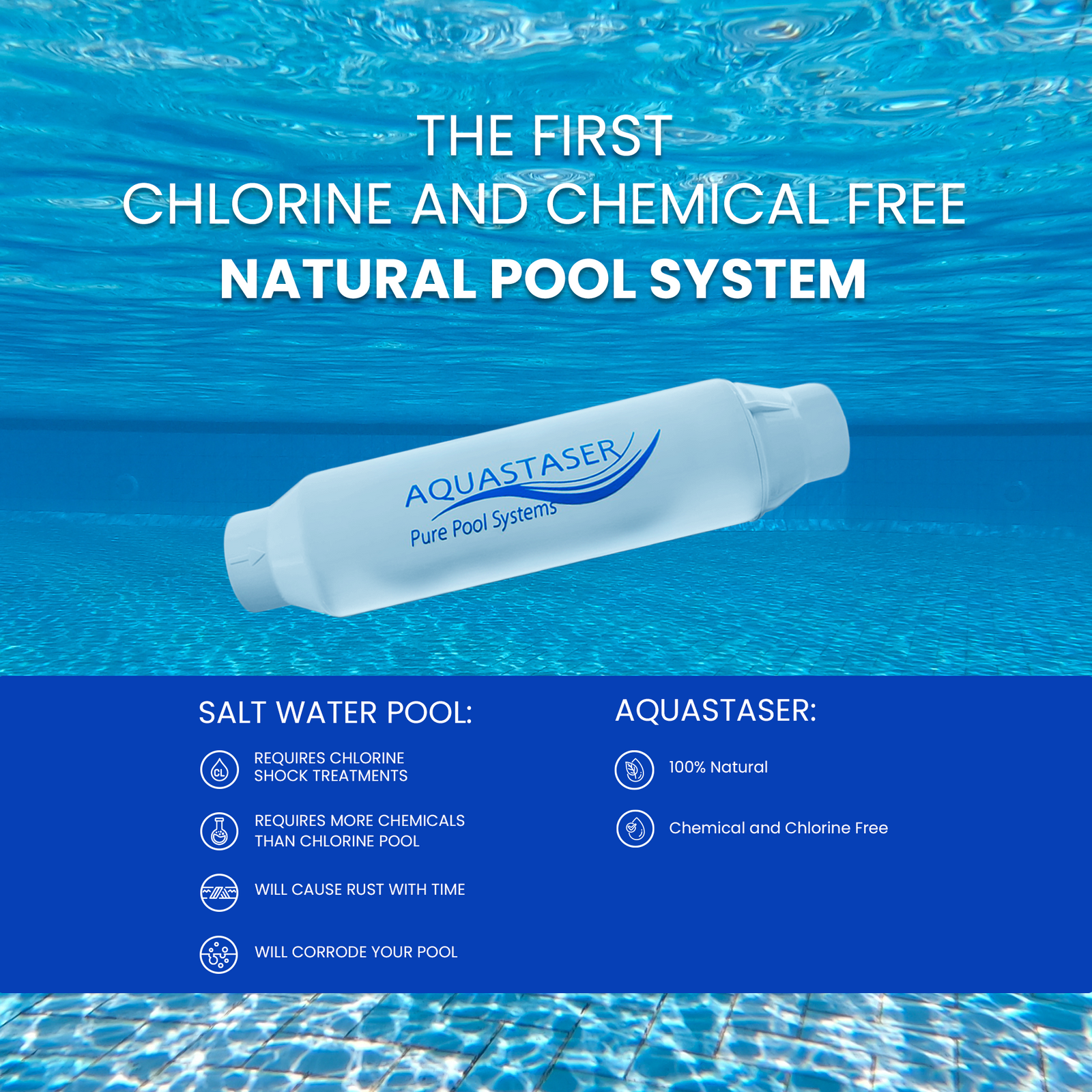
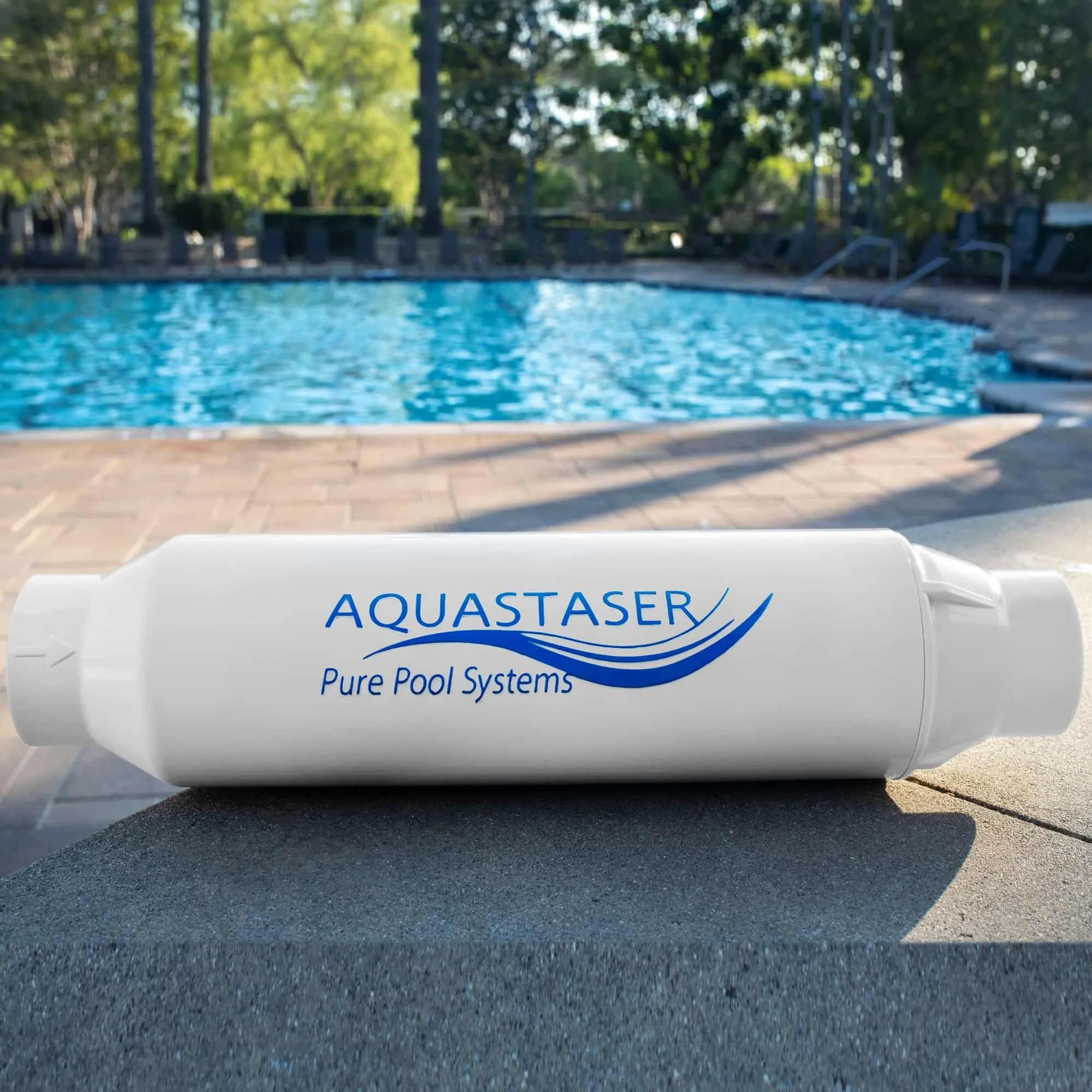
Works with circulation
A freshwater approach should not ask you to ignore the equipment that keeps backyard water moving. The pump creates flow. The filter catches debris. Skimming and cleaning still protect the water and equipment. When those basics are in good shape, Aquastaser is designed to join the system after filtration and before the water returns through the jets.
This placement is practical for a homeowner considering a change to an existing pool. Instead of adding a treatment routine at the pool edge, the device works within the line already carrying filtered water back to the pool. A fit conversation should cover the return-line layout, pool size, pump flow, current water condition, and whether a saltwater system is being replaced.
Pool water moves through normal filtration.
Filtered water enters the Aquastaser return-line device.
Hydrodynamic cavitation treats water inside the flow path.
Water returns through the pool jets.
A better fit conversation
A new water-treatment system deserves a little more thought than a quick response to cloudy water, algae after a storm, or a reading that looks off after a busy swim weekend. Those situations may need careful testing, circulation checks, cleaning, and ordinary pool care before any equipment decision makes sense.
Aquastaser is worth considering when the larger pattern is wearing you out: storing chemicals, watching a salt cell, trying to correct water after every change in weather or pool use, and still wondering whether the next swim will irritate skin or eyes. The goal is not to promise a maintenance-free pool. It is to choose a system that makes the routine more manageable and the pool more enjoyable.
It is not the right time to order based on a serious contamination concern, broken plumbing, a struggling pump, or a pool that needs professional attention before anyone swims. Get the water and equipment stable first. Then assess whether the existing chlorine or saltwater routine is the one you want for the seasons ahead.
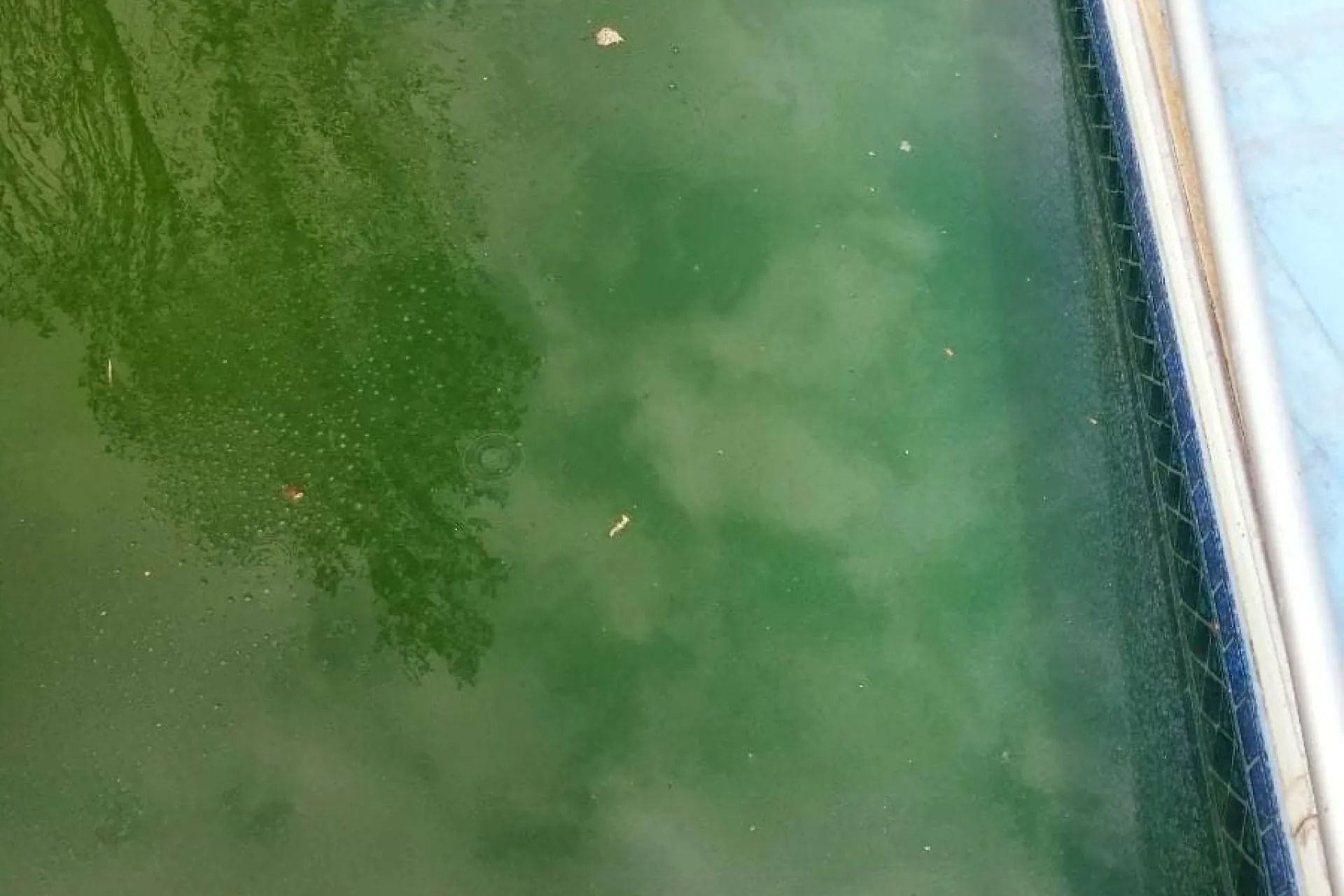
What owners notice
The reason many families start looking beyond chlorine is personal. They are tired of the odor, the correction cycle, or the way pool days can feel harder on eyes, skin, hair, and swimsuits than they should. Aquastaser owners describe the result in those everyday terms, not as another chemistry project.
"When we bought our home the pool had a saltwater system. I was confused when we found out it still needed tons of chemicals and pool shock. We found the Aquastaser, and our family now swims in 100% natural and safe pool water."
Rachael C."After years of needing to add acid, stabilizer and chemicals to our pool, we now let the Aquastaser do all the work. It balances our pH and kills the bad stuff in our pool water, without compromising our health."
Chantal M."Amazing how this device works with no chemicals. My kids have a chlorine allergy and also love swimming. When we switched to the Aquastaser I could not believe how they are now able to swim with no runny eyes or irritation after."
Sharon V.Before you order
A good purchase decision starts with the pool you already have, not a broad promise. Ask about gallons, plumbing access after the filter, pump flow, filter condition, existing saltwater equipment, algae history, and what the water has been doing lately. Support can help you work through those questions before you commit.
Residential pools and spas
Healthy filtration and circulation
Return-line access after the filter
A clear support conversation before checkout
Frequently asked questions
People use “freshwater pool system” in different ways. Some mean a pool that does not use a traditional salt chlorine generator. Others mean a lower-chemical approach that still uses a normal pool, pump, filter, and return lines. Aquastaser is designed for the second path: a residential pool water-treatment system installed in the return line after filtration.
No. A saltwater pool uses a salt cell to generate chlorine. It may feel different from a tablet-fed pool, but chlorine is still part of the treatment routine. Aquastaser is not a salt chlorine generator.
No. Aquastaser is for conventional residential pools and spas with a working pump, filter, and return-line circulation. It does not use plants, a regeneration zone, or the construction approach of a natural swimming pond.
Aquastaser is designed for plumbing integration after filtration in the pool return line. Pool size, pipe layout, pump flow, filter condition, water condition, and existing saltwater equipment are all worth discussing before ordering.
No. Leaves still need to be skimmed, filters need care, and circulation still matters. Aquastaser changes the water-treatment approach, not the need to look after the pool and its equipment.
Real support
Pool size, plumbing, saltwater replacement, algae, safety: these are normal questions. Ask them before ordering.