
Start with a stable pool
The best sanitation plan begins with a pool that is circulating, filtering, and safe to assess. Equipment cannot make up for a broken pump, neglected filter, or active water problem.
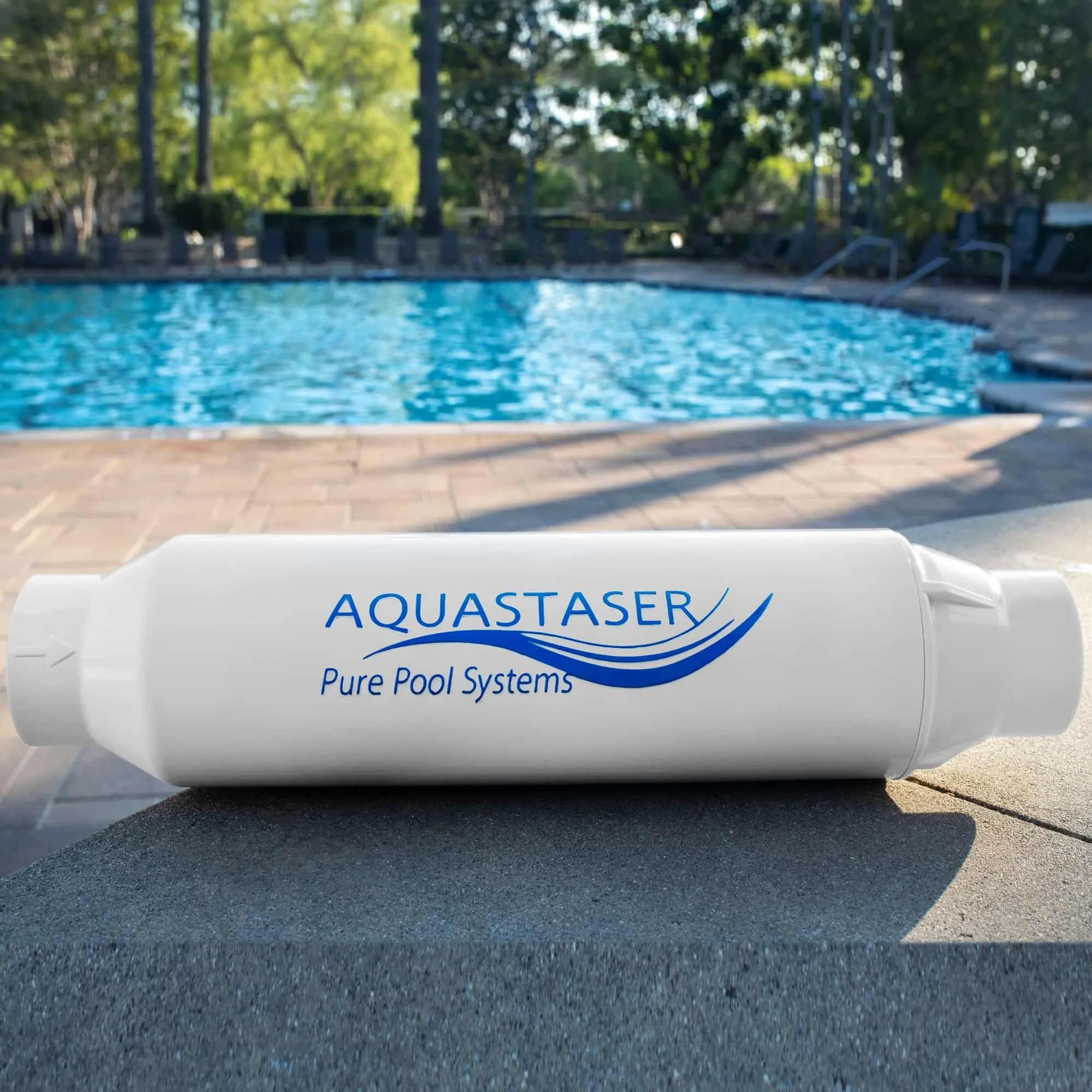
Aquastaser is for residential pool owners who want a chlorine-free treatment direction that works with a healthy pump, filter, and return line, not another way to manage chlorine.
Choose the whole routine
Pool owners often begin with a simple frustration: too many bottles, too many readings, and too much time spent wondering what has changed since the last swim. That can lead to a search for a new sanitizer, salt cell, feeder, mineral system, or another add-on. The useful decision is not just which device sounds easiest. It is which routine you want to live with week after week.
Aquastaser is designed for owners who want to step away from the ordinary chlorine cycle. It is not a saltwater system and it is not a different way to feed chlorine into the pool. It uses hydrodynamic cavitation in the return line after normal filtration, making it a practical option to discuss when the chlorine routine itself has become the part of ownership you want to change.
The best sanitation plan begins with a pool that is circulating, filtering, and safe to assess. Equipment cannot make up for a broken pump, neglected filter, or active water problem.
A feeder and salt cell change how chlorine is delivered. Aquastaser is for owners who want a different treatment direction after filtration.
Pool size, water flow, pipe access, filter condition, and the existing equipment pad matter before an owner commits to a new system.
What Aquastaser changes
Aquastaser is designed to work inside the circulation path the pool already relies on. Water leaves the pool, passes through normal filtration, and moves into the return plumbing. The Aquastaser sits in that return-line section so moving water can pass through its controlled flow path before returning through the pool jets.
That placement keeps the conversation concrete. A pool owner can look at the actual equipment pad, not a broad promise. Is the pump moving water normally? Is the filter clean and operating as expected? Is there accessible return-line plumbing? Is the pool stable enough to consider a system change? Those are the questions that make an equipment decision useful.
Water moves from the pool through the normal pump and filter.
Filtered water enters the return-line section of the plumbing.
Water passes through the Aquastaser flow path.
Treated water returns through the pool jets.
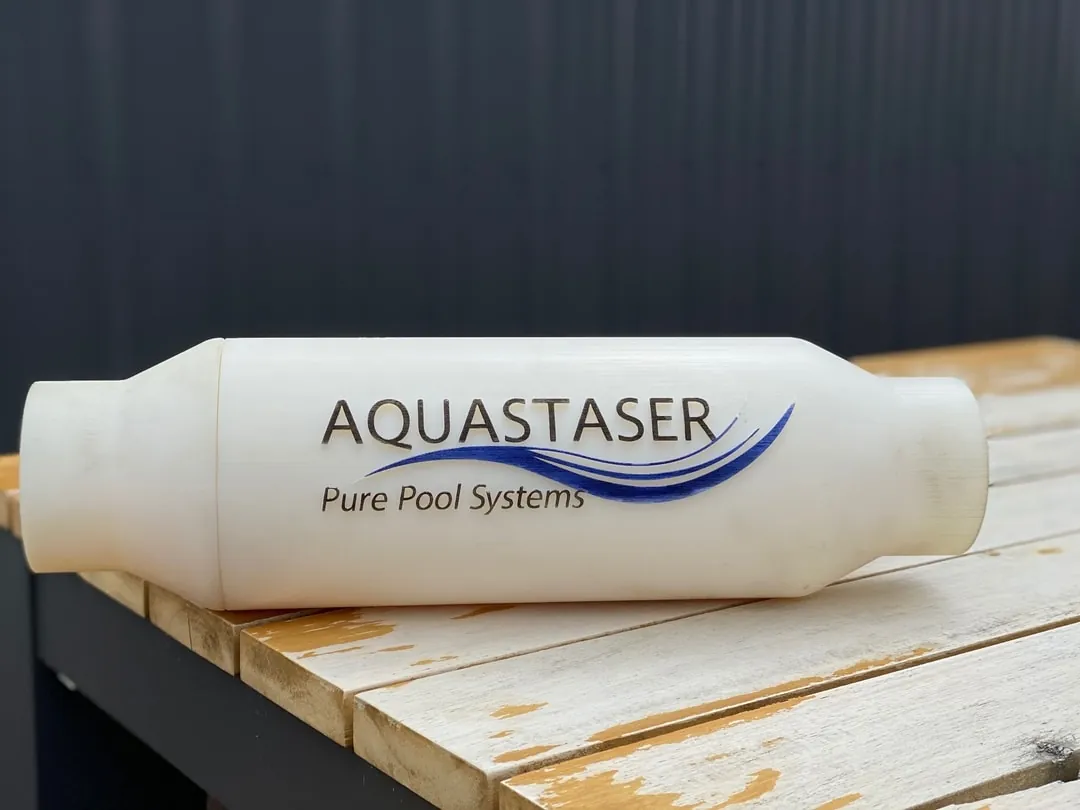
The core Aquastaser device is made for residential pool owners looking for a different everyday water-treatment routine.
A clearer comparison
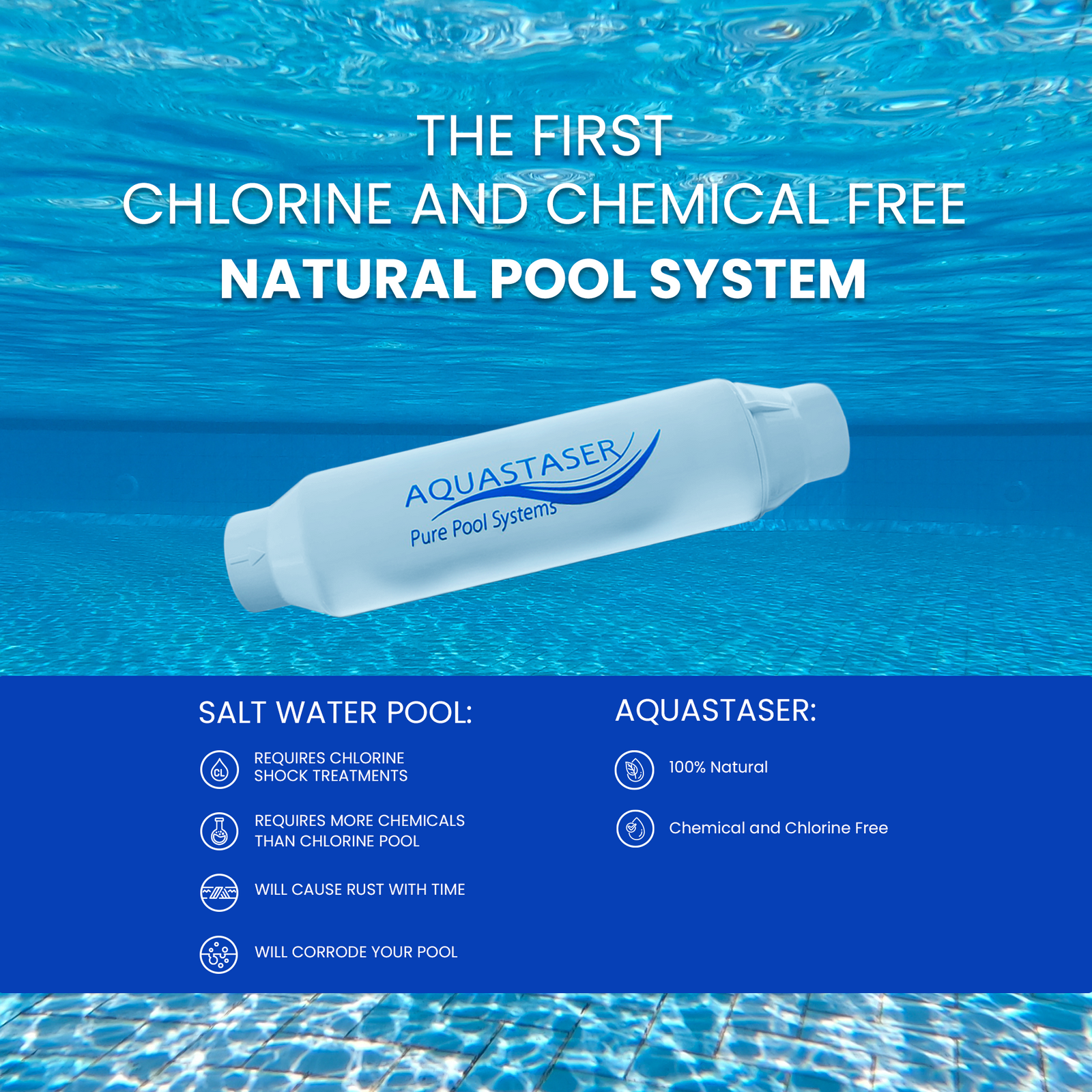
Saltwater pools can be a good fit for owners who want chlorine generation handled by a salt cell instead of tablets or liquid products. The cell makes chlorine from dissolved salt, so chlorine remains central to the water-care routine. A feeder does the same job more directly by delivering chlorine products on a schedule.
Aquastaser is for a different buyer. The owner may be tired of stocking chlorine, checking a salt cell, correcting after weather or heavy use, and building every swim decision around chemical additions. It does not remove the need for cleaning, filtration, circulation, or sensible testing. It does offer a different long-term direction for a pool that is otherwise healthy and ready for a change.
Before changing anything, write down what is frustrating you now. If the answer is one isolated test result, a short spell of poor weather, or a pool that needs routine cleaning, address that immediate issue first. If the answer is an ongoing cycle of supplies, adjustments, and uncertainty, the equipment conversation is worth having. That simple distinction keeps a long-term purchase tied to a real ownership problem.
Compare Chlorine AlternativesGet the order right
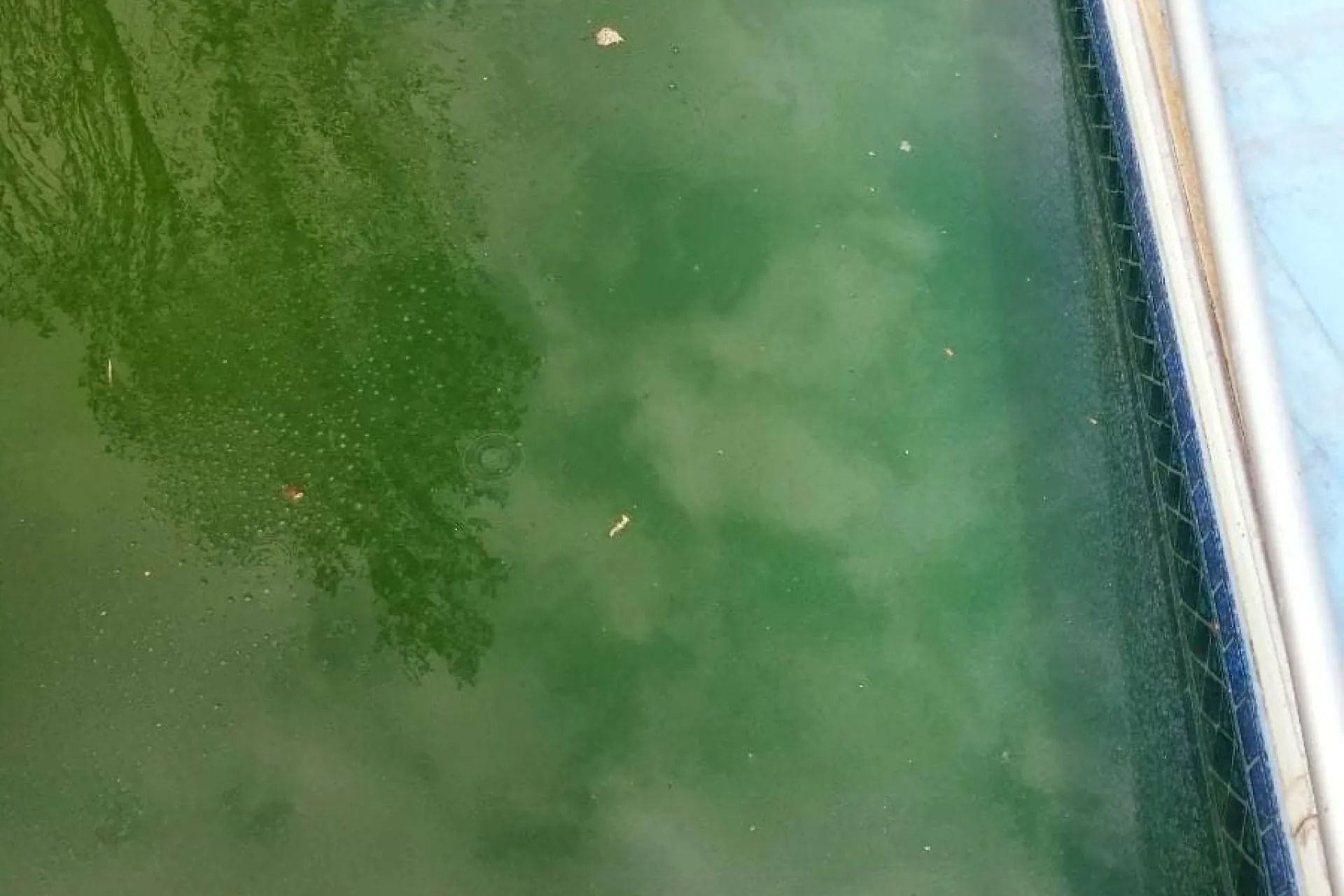
Some pool conditions call for immediate care, not a shopping decision. Keep swimmers out and seek qualified help when there may be contamination, the water is cloudy or green, a harsh odor or swimmer symptoms persist, equipment is damaged, the pump or filter is failing, or you are not sure which products have already been used. Those situations need to be understood before anyone changes a long-term treatment system.
The same is true for a short-term algae flare, a strange test result after a storm, or a pool that has just been refilled. First check circulation, filtration, water appearance, and the products already added. A single reading may be a normal maintenance issue. A repeated cycle of dosing, correcting, waiting, and starting over is the stronger reason to look at whether the overall routine still suits the pool owner.
Aquastaser support starts with those distinctions because the goal is a good fit, not a rushed sale. Pool size, pump flow, return-line access, filter condition, current water condition, existing saltwater equipment, and the owner’s longer-term goals all shape the answer. That conversation makes it easier to decide whether the pool is ready for a system change or needs ordinary maintenance first.
Talk Through My PoolA residential pool or spa with working circulation
A pump and filter that are operating normally
Accessible return-line plumbing after the filter
A clear picture of current water conditions
A longer-term goal beyond another chlorine delivery method
Proof that matters
A system should do more than add another task to the equipment pad. Aquastaser is built around a simpler routine for owners who want more time in the backyard and less time managing the standard chemical cycle. Customers most often talk about clearer-looking water and a more comfortable swim experience, which is the day-to-day outcome families notice.
The first step is still practical: confirm that the pool and plumbing are ready, then decide whether Aquastaser belongs in the plan. The product page has the current price and purchase path, while the support team can help with the fit details before an owner commits.
What owners notice
"When we bought our home the pool had a saltwater system. I was confused when we found out it still needed tons of chemicals and pool shock. We found the Aquastaser, and our family now swims in 100% natural and safe pool water."
Rachael C."After years of needing to add acid, stabilizer and chemicals to our pool, we now let the Aquastaser do all the work. It balances our pH and kills the bad stuff in our pool water, without compromising our health."
Chantal M."Amazing how this device works with no chemicals. My kids have a chlorine allergy and also love swimming. When we switched to the Aquastaser I could not believe how they are now able to swim with no runny eyes or irritation after."
Sharon V.Questions before you buy
A pool sanitation system is the equipment and routine used to help keep pool water suitable for normal use. Aquastaser is a residential return-line treatment system for owners who want to move away from the usual chlorine-centered routine. It does not replace the pump, filter, cleaning, or responsible pool care.
No. Saltwater systems generate chlorine from dissolved salt. Aquastaser is not a salt chlorine generator. It is designed to treat moving water after filtration, before the water returns to the pool.
No. A pool with a possible contamination event, unsafe water, a major algae problem, damaged equipment, or poor circulation needs immediate attention before a long-term equipment decision. Stabilize the pool first, then talk through the best next step.
No. A working pump, clean filter, open returns, skimming, cleaning, and routine equipment care are still essential. Aquastaser is designed to work within that existing circulation path, not replace it.
Before ordering, ask Aquastaser support about pool size, pump flow, filtration, available return-line plumbing, water condition, and any current saltwater equipment. A practical fit check is better than guessing from a product label.
The Aquastaser product page lists the core device at $1,399 and sends ready buyers to the live shop, where checkout, shipping, and availability stay current.

Real support
Pool size, plumbing, saltwater replacement, algae, safety: these are normal questions. Ask them before ordering.