
Uses the return line
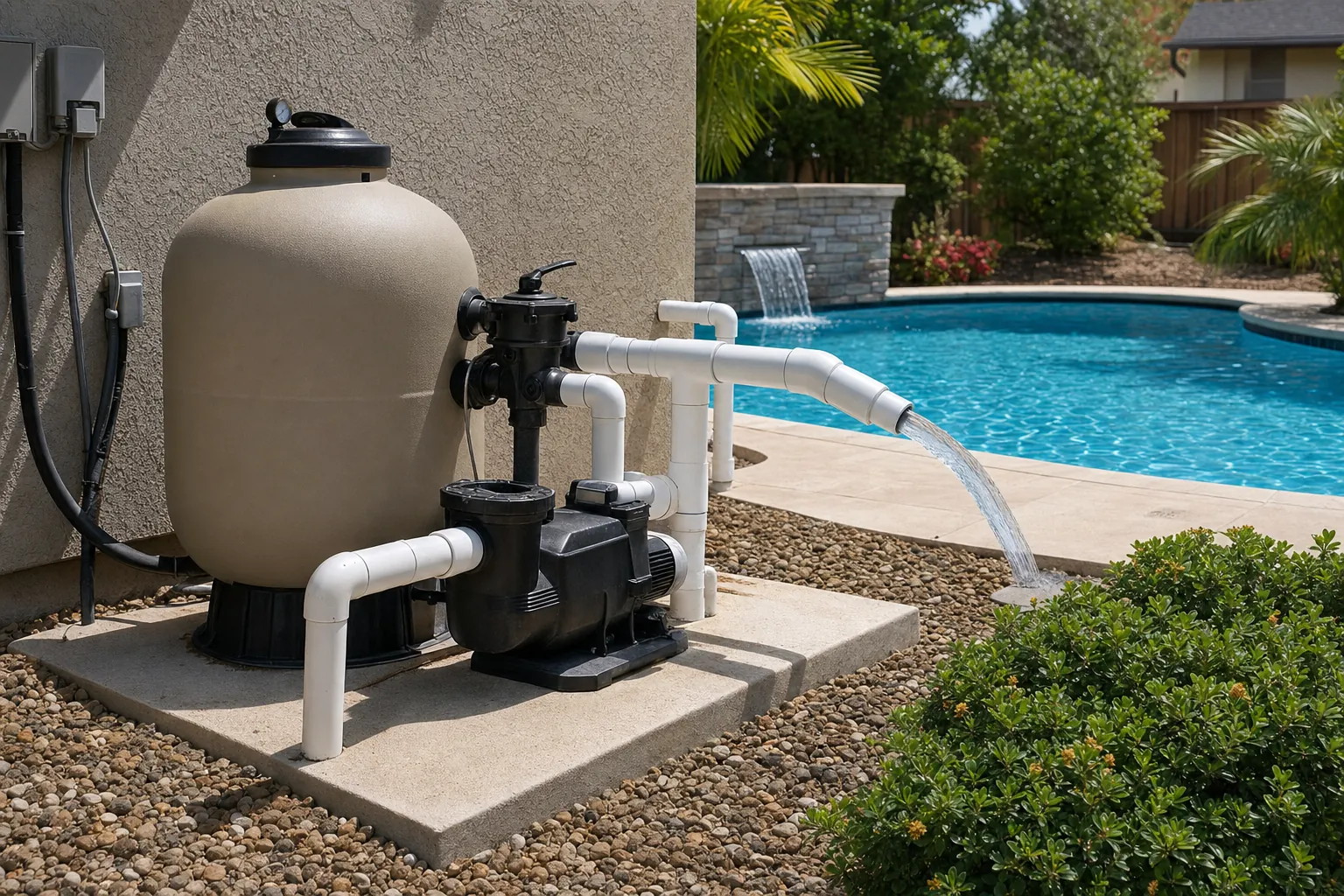
The device is designed for the pressure side of a healthy pool system, after the filter and before water returns through the jets.
Aquastaser is built for residential owners who want to understand the actual treatment method, where it fits in the equipment path, and whether their pool is ready for a different long-term routine.
Start with the method
Some pool systems focus on delivering chlorine in a different way. Others add another chemical step. Aquastaser is built around hydrodynamic cavitation, a process that works within moving water after it has passed through normal filtration. That matters to buyers who are comparing a real equipment change, not another bottle or feeder.
The practical question is simple: can the pool move water well enough, and does the return-line plumbing provide the right place for the device? A worthwhile answer starts with the system that is already there, including the pump, filter, pipes, valves, pool size, and water condition.
The device is designed for the pressure side of a healthy pool system, after the filter and before water returns through the jets.
Cavitation does not eliminate the need for circulation, filtration, skimming, cleaning, or equipment care. Those basics make every pool system work better.
Pool size, pipe access, pump flow, filter condition, current water condition, and existing saltwater equipment are worth reviewing before an order.
Where cavitation happens
Pool water does not move through every part of the system in the same way. First, the pump pulls water from the pool. The filter removes debris and particles. From there, the return side sends the filtered water back toward the pool jets. Aquastaser is designed to sit in that return-line portion of the system.
Inside the device, the moving water passes through a controlled flow path. That is where hydrodynamic cavitation takes place. The point is not to bolt a mystery box onto the edge of the pool. It is to integrate a treatment step into the working circulation route, where flow and plumbing can be evaluated before the system is purchased.
Water leaves the pool and moves through normal filtration.
Filtered water enters the return-line section of the system.
Water moves through the Aquastaser flow path.
Treated water returns through the pool jets.
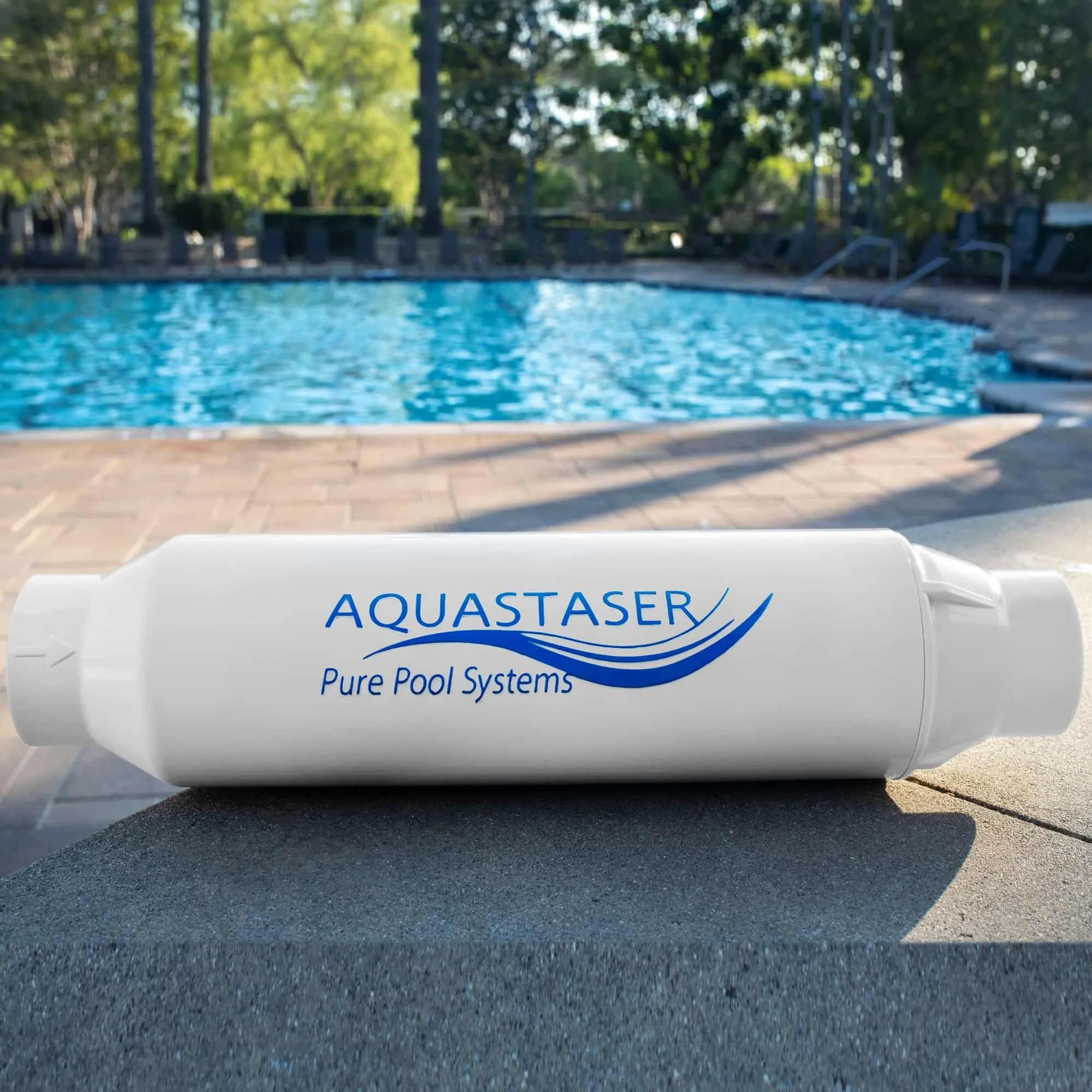
The Aquastaser device is designed to integrate with residential pool plumbing after filtration.
What a good fit looks like
A cavitation-based treatment approach is a poor match for a pool with problems that have not been dealt with. A weak pump, a clogged or neglected filter, blocked returns, leaking plumbing, or poor circulation deserve attention before any new equipment decision. The same is true when the water is in an urgent condition that calls for immediate, conventional care or professional help.
For a well-maintained residential pool or spa, the better conversation is about the parts that determine day-to-day fit: available return-line access, pipe layout, pump flow, filter condition, whether there is a salt cell to replace, and how the pool has been behaving through warm weather and heavy use. This keeps the decision grounded in the real pool rather than a broad promise.
That fit conversation is also useful for buyers who are tired of repeated dosing and correction. Aquastaser is positioned for people who want to move away from making chlorine the center of every swim day, while keeping their responsibility for skimming, cleaning, filtering, and maintaining equipment clear.
Residential pool or spa with working filtration
Reliable pump flow and open return plumbing
Room to place the system after the filter
A clear conversation about current water conditions
A long-term goal beyond another chlorine delivery method
Make the right decision first
It is easy to confuse a system decision with a maintenance problem. A temporary chlorine reading, a few days of heavy rain, a pool party, windblown debris, or an early algae issue can all change what the water needs in the moment. Those situations call for careful testing, cleaning, filtration, and the right immediate response. They do not automatically mean the equipment needs to change.
A hydrodynamic cavitation pool system makes more sense when the repeated treatment routine is the problem you want to solve. That may look like continually buying chlorine products, dealing with a salt cell, watching water readings after every weather shift, or wanting a more comfortable daily pool experience for the family. The goal is not to skip ownership responsibilities. It is to choose a treatment path that better matches the way you want to care for the pool over time.
Possible contamination, unsafe water, severe algae, broken plumbing, or a failing pump should be handled before considering a new system. A fit check starts with a pool that is safe to assess.
One unexpected test result may need ordinary pool care. A recurring cycle of dosing, correcting, and waiting is a different conversation, and it is the one this equipment decision is meant to address.
Aquastaser is designed around the pump, filter, and return line already serving the pool. Looking at those details first helps support give a more useful answer than a generic product recommendation.
A different comparison
A saltwater pool can feel simpler than manually adding chlorine because a salt cell produces chlorine from dissolved salt. That can be a sensible choice for an owner who wants a more automated chlorine routine. It does not change the underlying fact that the system is still designed around chlorine production.
Aquastaser is for the owner whose goal is different: a chlorine-free, chemical-free direction for everyday pool care. It is not a salt cell, and it does not ask the pool owner to treat saltwater as the same thing as a non-chlorine approach. The right choice depends on the routine you want, the equipment you already own, and the level of support you want before making a purchase.
Compare Chlorine Alternatives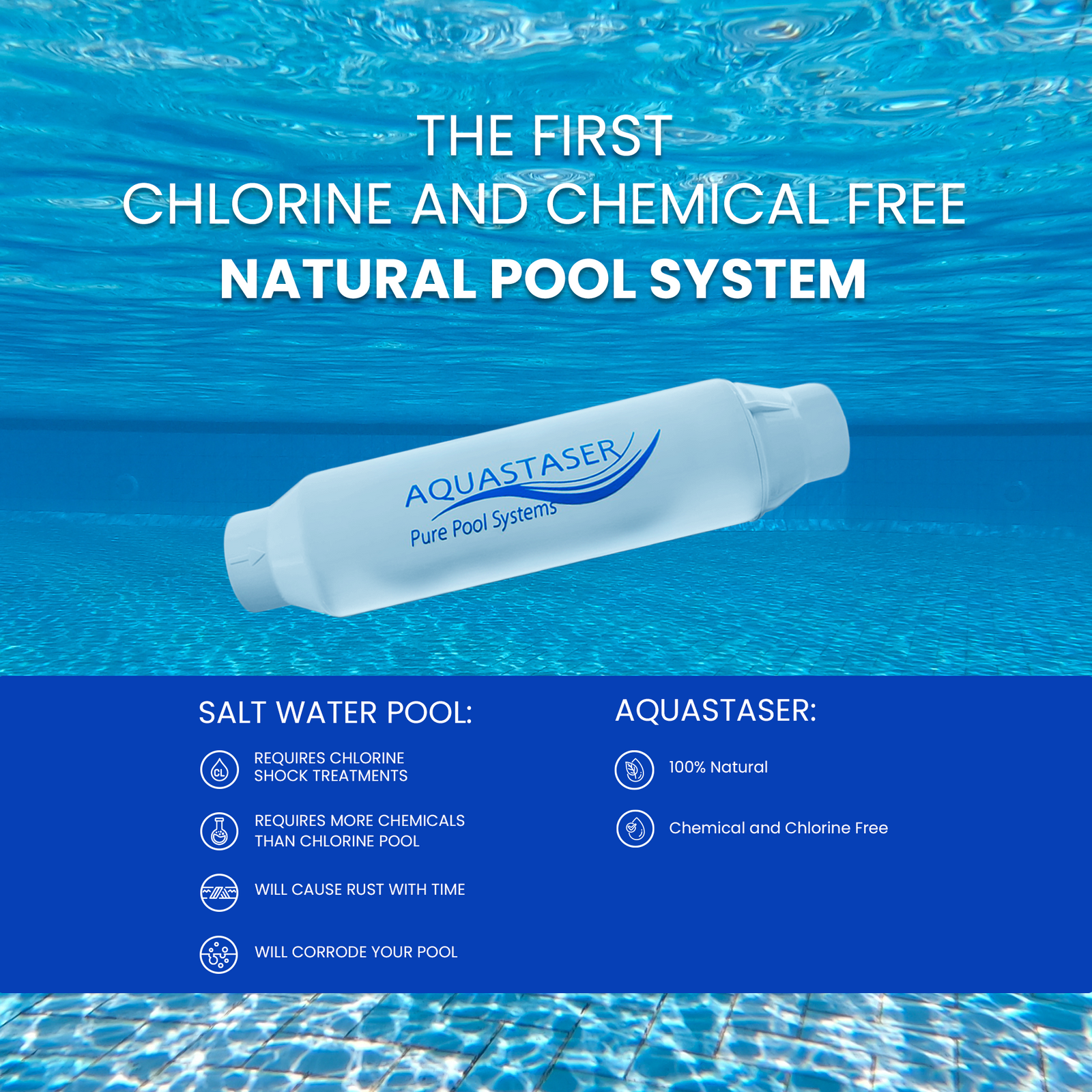
Proof in the pool
Aquastaser’s strongest promise is a simpler pool-care direction for families who are done with a chemical-heavy routine. The decision becomes more credible when the buyer can see the product, understand where it goes, ask about the pool they own, and see real customer experience rather than being pushed toward an abstract technical term.
"When we bought our home the pool had a saltwater system. I was confused when we found out it still needed tons of chemicals and pool shock. We found the Aquastaser, and our family now swims in 100% natural and safe pool water."
Rachael C."After years of needing to add acid, stabilizer and chemicals to our pool, we now let the Aquastaser do all the work. It balances our pH and kills the bad stuff in our pool water, without compromising our health."
Chantal M."Amazing how this device works with no chemicals. My kids have a chlorine allergy and also love swimming. When we switched to the Aquastaser I could not believe how they are now able to swim with no runny eyes or irritation after."
Sharon V.Before you order
Ask about pool size, pump flow, filter condition, return-line plumbing, existing saltwater equipment, algae history, or what has been happening with the water. A short fit conversation can prevent a purchase based on assumptions and help you decide whether the system belongs in your pool plan.
Questions
Hydrodynamic cavitation is a water-flow process that happens as water moves through a controlled flow path. Aquastaser uses that process after the pool filter and before water returns through the pool jets.
No. The pump, filter, skimmer, return lines, and routine cleaning still matter. Aquastaser is designed to work inside that existing equipment path, not replace the equipment that keeps water moving and filtered.
Aquastaser is designed for the return line after filtration. Support can help you look at the available plumbing, return-line access, pool size, and pump flow before you order.
No. Saltwater systems use a salt cell to generate chlorine. Aquastaser is not a salt chlorine generator. It is for owners who want a different treatment approach after filtration.
A system decision should not replace immediate pool care. If the pool has a possible contamination issue, unsafe water condition, failing equipment, or serious algae problem, address that situation first. Then decide whether the long-term routine and plumbing are a good fit.
Real support
Pool size, plumbing, saltwater replacement, algae, safety: these are normal questions. Ask them before ordering.